
Lieferung heute & morgen

Qualitätsgarantie

Willkommens-Angebote freischalten: KOSTENLOSE Lieferung | Bis zu 80 % RABATT | Kostenlose 30-Tage-JoyPlus-Testphase
App herunterladen
A reliable pill organizer is more than just a storage container—it's an essential tool for your daily health routine. But the market is flooded with models whose flaws often only become apparent with use. An unreliable clasp that pops open in your bag, or labelling that fades after a few weeks, can quickly render a product useless. This guide will help you identify the crucial features and make an informed choice that genuinely simplifies your daily life.
Many users share similar negative experiences. Certain design flaws repeatedly lead to frustration and unnecessary expenses. Pay close attention to these three points:
To avoid a bad buy, you should focus on objective and verifiable criteria. The following three aspects are crucial for the functionality and safety of your pill organizer.
The safe storage of your medications and vitamins is the top priority. Therefore, look for products explicitly labelled as BPA-free. BPA (Bisphenol A) is a chemical compound found in some plastics and should be avoided. Ideally, the pill organizer should be made of food-grade PP (Polypropylene) plastic, as this material is considered stable, odourless, and safe for contact with food and pharmaceuticals.
The right size depends on your individual needs. Consider how many pills you take per day and how large they are.
A robust locking mechanism is essential. Firm snap-shut clasps that click audibly into place or sliding mechanisms generally offer more security than simple flip-top lids. For people with limited dexterity or arthritis, there are special, easy-to-open systems.
For labelling, engraved or embossed markings are a more durable alternative to simple prints. They remain clearly legible even after long-term use and repeated cleaning.
Based on the criteria mentioned, we have selected a few models for different user groups.
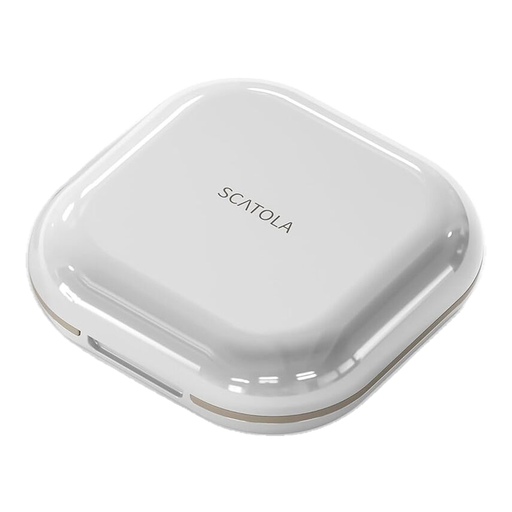
Why it's a good fit: Ideal for professionals or travellers who only need a small number of pills for the day or a short trip. The compact design fits discreetly into any pocket or handbag.
The robust clasp closes securely and prevents accidental opening in a bag—a typical problem with low-quality travel pill cases.
Compact and discreet design with four separate compartments for separating different medications.
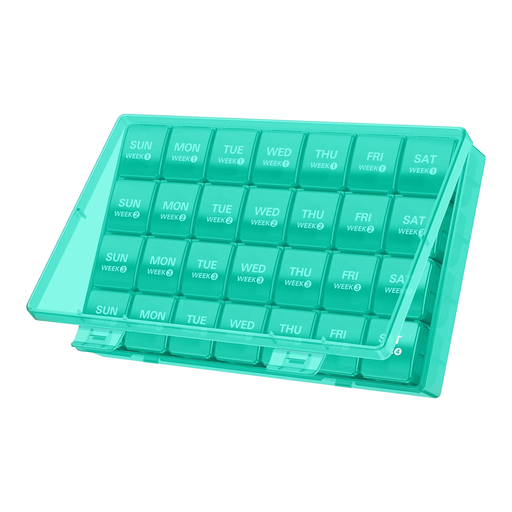
Why it's a good fit: Perfect for users who want to organize their medication for an entire month in advance. This reduces the weekly effort of refilling and provides peace of mind for long-term planning.
The durable silk-screen labels are wear-resistant. A dust-proof outer container provides additional protection for the individual weekly trays and keeps everything organized.
Organization for 28 days with removable weekly strips that can be taken individually on the go. Made from BPA-free PP plastic.

Why it's a good fit: Specifically designed for users who take large capsules daily, such as fish oil, vitamin preparations, or other supplements. The extra-large compartments provide ample space.
Reinforced hinges and a material thickness of 1.6 mm ensure stability and prevent the lids from breaking, which can be an issue with large, frequently used boxes.
Very high capacity (e.g., up to 12 fish oil capsules per compartment) and an easy-to-open clasp that is also suitable for seniors.
We have compiled a complete, up-to-date list of products that fully meet these strict selection criteria and current safety regulations.
Most plastic pill organizers can be easily cleaned with a damp cloth and mild soapy water. Rinse them with clean water afterwards and let all compartments air dry completely before refilling. Avoid harsh cleaning agents or washing in the dishwasher unless the manufacturer explicitly states it is safe, as high temperatures can warp the plastic and damage the labels.
Reputable manufacturers clearly mark BPA-free products on the packaging or in the product description. Look for terms like "BPA-free" or for the material specification, e.g., PP (Polypropylene), which is considered a safe choice. If such a label is missing, it's best to be cautious.
The durability of the labelling is a clear indicator of quality. Simple ink prints can wear off after just a few months. Silk-screen printing methods are more durable. The most reliable are engraved or embossed markings, as they are permanently part of the material and cannot be rubbed off. If clear and permanent labelling is important to you, you should choose a model with this feature.