
Lieferung heute & morgen

Qualitätsgarantie

Willkommens-Angebote freischalten: KOSTENLOSE Lieferung | Bis zu 80 % RABATT | Kostenlose 30-Tage-JoyPlus-Testphase
App herunterladen
A pill organiser keeps medicines, vitamins and food supplements neatly organised. In practice, though, it soon becomes clear that not every pill box suits your daily routine. Small compartments may not fit large fish oil capsules, clasps can come undone while you’re out, or the labels may be unclear when you have several doses a day.
To avoid buying something that quickly proves impractical, focus on the product’s actual features rather than general marketing claims. Our recommendations are based on clear criteria such as number of compartments, closure, material, portability and cleaning.
A daily pill box with a single compartment may be enough for one dose. But if you take different products in the morning, at lunchtime and in the evening, you’ll need clearer divisions. A seven-compartment weekly pill box won’t necessarily be suitable if you take several doses a day.
Check that the layout suits your routine:
A medicine organiser is no substitute for advice from a doctor or pharmacist. Medicines should be stored and prepared according to the relevant instructions.
The term waterproof pill box shouldn’t be taken to mean that it offers protection in every situation. A closure may protect against splashes or everyday moisture without making the box suitable for submersion. Check the product information for details of the seal, closure type and intended use.
For a travel pill box, it’s also a good idea to:
An airtight closure won’t automatically prevent changes caused by temperature. Avoid direct sunlight, excessive heat and damp bathroom environments.
A pill organiser with a tablet splitter can save space when you’re out and about. However, not all tablets can be split. Capsules, softgels and certain types of tablet may not be suitable for splitting. Check the patient information leaflet or ask a pharmacist before splitting a tablet.
A tablet splitter is a handy extra feature, but it’s no substitute for checking that the medicine can be split.
Compare the internal dimensions or the capacity stated by the seller with the products you take. Large vitamins and fish oil capsules need more room than small tablets. So when choosing a pill box for vitamins and food supplements, don’t base your decision on its outer shape alone.
If you take several products each day, make sure the compartments won’t be overfilled. A lid that only closes when pressed may be more likely to open in transit.
Snap-lock closures are easy to use and found on many models. For older people, clearly marked days and times may be more important than a particularly small size. Engraved or permanently applied labels may be less likely to come loose than stickers; check the product description for details of the specific design.
PP and ABS plastic are used for a range of pill organisers. The material alone doesn’t tell you whether a box is suitable for every medicine. Check whether the manufacturer provides guidance on cleaning, temperature and moisture.
Many models should be washed by hand with a mild detergent and dried thoroughly. They aren’t automatically suitable for the dishwasher, microwave or freezer. Only fill the box once all the compartments are dry and free from residue.
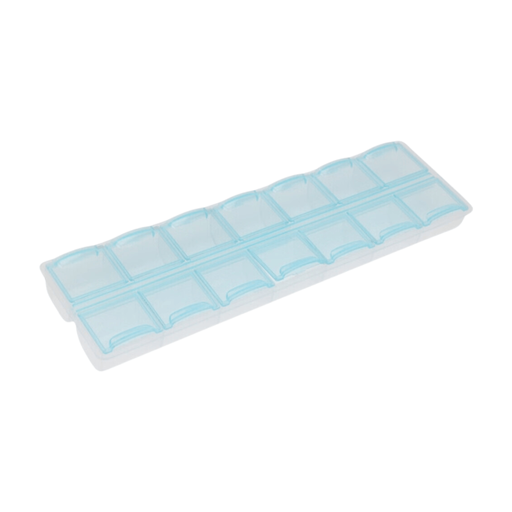
Why this product suits this profile: Its simple design is ideal if you’re looking for basic medicine storage with separate compartments and don’t need a complex weekly schedule.
The separate compartments help keep different products apart. Before buying, check that they’re the right size for your tablets.
Made from PP, with separate storage compartments. The box is suitable for keeping at home or in a cupboard.
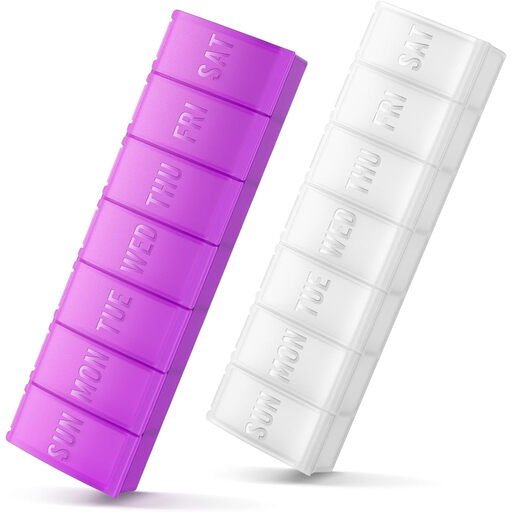
Why this product suits this profile: Its labelled daily compartments and easy-to-open lid, as described, make it a good choice if clear labelling and ease of use matter to you.
The permanent day labels may help reduce mix-ups caused by fading stickers. There’s no information about dividing each day into separate dose times.
BPA-free plastic described as medical-grade, two boxes in the set and larger compartments for vitamins, food supplements and fish oil.

Why this product suits this profile: Designed for weekly planning with four compartments per day, this model suits more complex dose schedules or several food supplements taken each day.
Four compartments per day avoid an overly basic layout. Make sure the snap-lock closure, as described, is fully closed before carrying the box.
28 compartments, compact dimensions of approximately 23,1 × 13,0 × 3,0 cm and a sealed design according to the product description.
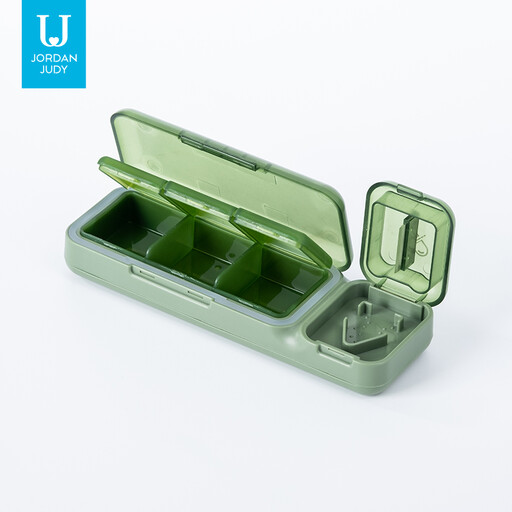
Why this product suits this profile: The mini size is ideal if you want to carry a few doses in a handbag, jacket pocket or your luggage.
Its compact design is intended for short periods and avoids taking up unnecessary space with a large weekly box. The splitter isn’t designed for capsules.
Integrated tablet splitter, several small compartments and a portable design. Take care when using the sharp blade.
We’ve put together a complete, regularly updated list of products that meet these strict selection criteria and the safety regulations in force in the EU.
For longer trips, it may be useful to take the original packaging, patient information leaflets and, where relevant, a certificate. The documents you need depend on the medicine and your destination.
There’s no set lifespan that applies to every model. It depends on the condition of the material, how well the hinges work and how securely the box closes. Replace your medicine organiser if it has cracks, is warped, has sticking lids or has labels that are no longer legible.
That depends on the storage instructions for each product. Solid tablets and capsules can often be sorted in a box, as long as you take moisture, light and temperature into account. Don’t put liquid medicines in a standard pill box unless the manufacturer specifically says it’s suitable.
Large labels, easy-to-open lids and a clear daily layout may be helpful for older people. If hand strength is limited, try the closure before buying. Family members can also check that the compartment layout suits the dose schedule set by a doctor or pharmacist.