
Lieferung heute & morgen

Qualitätsgarantie

Willkommens-Angebote freischalten: KOSTENLOSE Lieferung | Bis zu 80 % RABATT | Kostenlose 30-Tage-JoyPlus-Testphase
App herunterladen
Covering individual spots instead of squeezing them can be practical in everyday life. Pimple patches create a physical barrier and, depending on the material, may absorb fluid from surface blemishes. However, not all acne patches, spot stickers or so-called pimple patches are designed for the same purpose.
If you only look for terms such as “invisible”, “intensive” or “for all skin types”, you can easily overlook important details. The key factors are the material, size, adhesion, ingredients and intended use. Our selection helps you compare pimple patches for blemish-prone skin objectively.
Transparent pimple patches may be less noticeable on the skin. However, with glossy surfaces or thicker materials, the edge may still be visible in daylight. For daytime use, ultra-thin, matt or semi-transparent edges are therefore often more practical than a highly glossy patch.
The fit also matters: a patch should cover the affected area completely without unnecessarily covering too much healthy skin.
Hydrocolloid is a moisture-binding material. It can absorb fluid from surface blemishes that have already opened or are weeping. However, its absorption function is limited when it comes to deep-seated, unopened spots or under-the-skin lumps.
A blackhead patch is also not automatically the same as a classic hydrocolloid patch. Depending on the product, the term may refer to different materials and uses. You should therefore check the actual product description and ingredients list.
Alongside the backing material, some anti-spot patches contain active ingredients such as salicylic acid or tea tree oil. These ingredients are not inherently problematic, but they may pose an additional risk of irritation for sensitive or already irritated skin.
If you are looking for a simple covering, you may prefer a patch without an additional active-ingredient blend. Stop using it if redness, stinging, itching or swelling occurs.
The functional layers of classic hydrocolloid patches often contain, among other things, Cellulose Gum, Polyisobutene or comparable polymer components. The material forms an adhesive covering and can absorb fluid. The exact composition varies from product to product.
Look out for the following information:
Small blemishes can be covered with round patches measuring around 9 to 12 millimetres. Different sizes are useful when spots are not always the same size. Special formats are available for larger areas, although these are not required for every individual blemish.
Star-shaped spot stickers may look more decorative, but they are not automatically more functional. What matters is whether the affected area is fully covered and the edge adheres properly.
Before applying the patch, the skin should be clean and completely dry. Cream, oil, serum or sun protection on the area where the patch is applied can affect adhesion. Place the patch on carefully and press it down for a few seconds.
Depending on the product, changing it after several hours, when it becomes visibly cloudy or after one night may be recommended. An individual patch should not be worn for longer than stated on the packaging. The following recommendations are subject to the respective manufacturer's instructions on the product packaging.
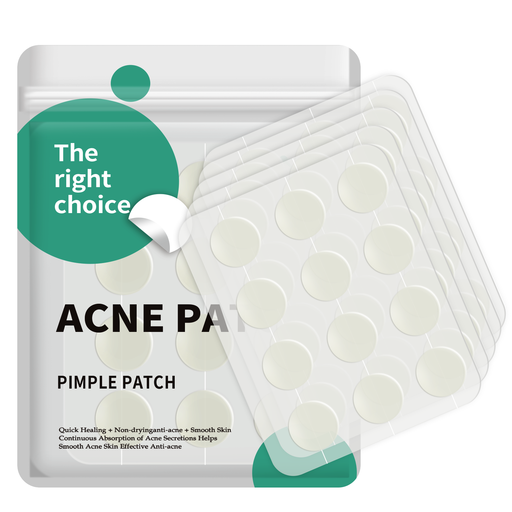
Why this product suits this profile: The pack contains five sheets with 12 patches each, making it suitable for people who want to try spot stickers in a smaller quantity first.
The stated quantity makes it easier to compare this pack with larger multipacks. Before buying, check the material, patch size and usage instructions on the packaging.
Five sheets with a total of 60 stated individual patches; suitable for gradually getting to know pimple patches.
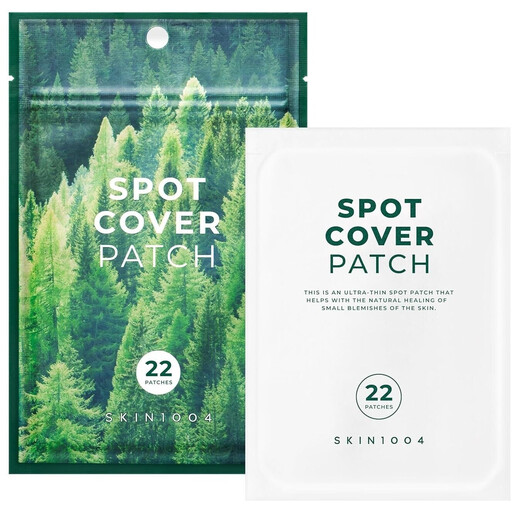
Why this product suits this profile: The stated combination of two sizes, ultra-thin semi-transparent hydrocolloid and a water-resistant design is well suited to discreet use during the day or overnight.
The dimensions of 10 × 12 millimetres and 10 × 10 millimetres are clearly stated. This makes it easier to adjust the coverage to the size of the blemish.
22 patches in two sizes; semi-transparent, ultra-thin material; stated by the product information to be made in Korea.
Do not apply to open wounds, severely irritated skin or the immediate eye area. Pimple patches are not a substitute for dermatological assessment in the case of persistent, painful or extensive skin changes.
We have put together a complete, regularly updated list of products that fully meet these strict selection criteria and the safety regulations applicable in the EU.
This depends on the individual product. Several hours or overnight use is often recommended. The instructions on the packaging are the deciding factor. A patch should be changed if it starts to come away, becomes noticeably cloudy or reaches the stated wear time.
For closed, deep-seated blackheads, the fluid absorption of a hydrocolloid patch is usually limited. However, the patch can cover the area and reduce touching. For blackhead patches containing additional ingredients, follow the relevant usage instructions and tolerance information.
Ongoing costs depend on the number of patches, patch size and replacement interval. A pack containing many individual patches can be practical for regular users. For beginners, a smaller pack is a sensible choice for assessing the material, adhesion and skin tolerance first.