If you want to quickly prepare several glasses of pineapple juice for friends, a centrifugal juicer with suitably sized juice and pulp containers is a good place to start. A slow juicer may be a better fit if you can allow more time for juicing or want to adjust the juice’s texture using the features of a particular model. The juicing method alone won’t tell you how much juice you’ll get from a pineapple. Peel the fruit and follow your appliance’s instructions.
Which type of juicer is right for you?
Hosts short on preparation time
If you want to quickly prepare several glasses while your guests are there, consider how easy the juicer is to use and the size of its juice and pulp containers. ETM TESTMAGAZIN’s comparison of juicer types identifies speed as an important factor when choosing.
Hosts focused on juice texture
If consistency and pulp content matter to you, compare the filters and settings on each model. Bosch Hausgeräte DE lists settings for pulp quantity and consistency for the MESM731M.
Occasional juicers
If you’ll mainly use the juicer when you have guests, factor cleaning and storage into your decision. Bosch Hausgeräte DE describes the MESM500W as having a cleaning brush and dishwasher-safe parts.
What should you look for when buying?
Centrifugal juicer
A good fit if: you want to prepare several portions quickly for your guests. In its comparison of juicer types, ETM TESTMAGAZIN describes centrifugal juicers as faster when processing larger quantities.
Bear in mind: The test also describes them as noisier and notes that they may produce less juice than slow juicers. This isn’t a model-specific test using pineapple.
Slow juicer
A good fit if: you can allow more time for juicing and the features of a particular model suit the type of juice you want.
Bear in mind: ETM TESTMAGAZIN’s comparison of juicer types describes longer juicing times and the potential for a higher yield, but it doesn’t compare the models mentioned here using pineapple.
When making pineapple juice for friends, four questions can help you choose based on what matters most to you: speed, cleaning, juice texture and storage space.
| What matters to you |
What to check when buying |
Who should pay particular attention? |
| Preparing several glasses in time |
Compare the juice and pulp containers, feed chute and model-specific guidance on piece size. |
If I’m preparing several glasses for friends just before serving, quick processing matters to me. Around 36% of consumers put speed first. |
| Cleaning up after guests |
Check the instructions to see which parts can be removed and are dishwasher-safe, and how to clean the sieve. |
If I only use the appliance occasionally when I have guests, I want to be able to clean the parts that come into contact with juice afterwards without a fuss. Around 29% of consumers say cleaning is their main concern. |
| Juice texture and yield |
Check the filters and settings on the specific model; only assess yield using comparable measurements. |
If my guests have different preferences, I want to cater for their preferred consistency without assuming the juicer type determines how much juice I’ll get from a pineapple. Around 21% of consumers prioritise juice texture and yield. |
| Purchase and storage space |
Check the appliance dimensions and container size against the space available and how often you plan to use it. |
If I only juice when I have guests, I want to know in advance whether the appliance will be easy to store between uses. Around 14% of consumers prioritise purchase and storage space. |
Avoiding common misconceptions
-
A wide feed chute doesn’t mean you can put in a pineapple with its skin on
The size of the chute tells you how ingredients are fed into the juicer, not how the fruit should be prepared. A pineapple recipe from Kuvings says to remove the tough skin.
Peel the pineapple and cut it according to the instructions for your specific appliance.
Peeling and cutting the fruit adds to your preparation time.
-
Container capacity isn’t the same as the amount of pineapple juice you’ll get
The capacity of a juice container or hopper tells you how much it can hold, not how much juice you’ll get from a given quantity of pineapple.
Compare container sizes to suit your routine, and only assess yield using comparable measurements.
Depending on the container size, you may need to stop and empty or refill it when preparing several portions.
-
A slow juicer isn’t the best choice for every occasion
ETM TESTMAGAZIN describes centrifugal juicers as faster when processing larger quantities, while slower juicing methods may offer a higher yield. These general differences between juicer types don’t prove how much juice a particular model will produce from pineapple.
First decide whether serving quickly or having the right features for your preferred juice texture matters more to you. Then compare specific models.
If serving quickly is a priority, a slower juicing method may take more time.
Juicer brands to consider
Bosch
The Bosch product ranges considered here include both centrifugal juicers and slow juicers.
- Bosch Hausgeräte DE lists a 73-mm feed chute for the MES3500 and settings for pulp quantity and consistency for the MESM731M.
- These model specifications aren’t a comparison of pineapple juice yields. Check the cleaning instructions for the specific model.
Braun
The MultiJuice 7 SJ7000GY is a centrifugal juicer among the Braun models considered here.
- Braun Household DE lists a 75-mm feed chute and a large pulp container for the SJ7000GY.
- The preparation time stated by the manufacturer doesn’t show how quickly the juicer can process pineapple.
Philips
The Avance Collection HR1921/20 is another centrifugal option for making juice.
- Philips lists a 1,100 W motor, a drip stop and dishwasher-safe parts for this model.
- Philips’ preparation guidance applies to the models specifically listed, so check the instructions for the version you’re considering.
Hurom
The H320N series is a slow-juicer option with a feed container and sieve filter.
- Hurom Europe lists an operating voltage of 220–240 V for the series.
- Hurom notes that accessories vary by country. Check the features and warranty terms for the specific version.
Kuvings
According to Kuvings Deutschland, the AUTO10S is designed to process ingredients in a large hopper.
- Kuvings Deutschland gives the hopper capacity as 3,000 ml; this isn’t the amount of juice produced.
- Kuvings’ pineapple recipe says to remove the tough skin. Manufacturer claims about yield aren’t an independent comparison using pineapple.
Joybuy products for juicing
The Joybuy products below include centrifugal juicers and slow juicers for making juice. When juicing pineapple, follow the instructions for your appliance on peeling and cutting the fruit, regardless of the size of the feed chute.
 No image available
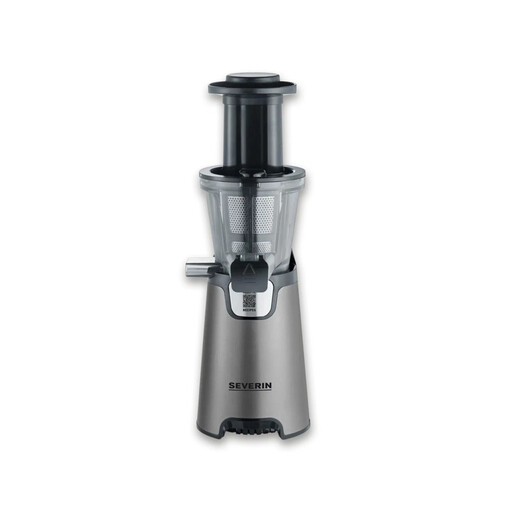
Severin ES 3571 slow juicer
For slow juicing, with a choice of fine or coarse sieve inserts.
1-litre juice container; 150 W; fine and coarse sieve inserts; clean with a brush or, according to the product description, in the dishwasher. Check the instructions to see which parts are dishwasher-safe.
View at Joybuy
 No image available
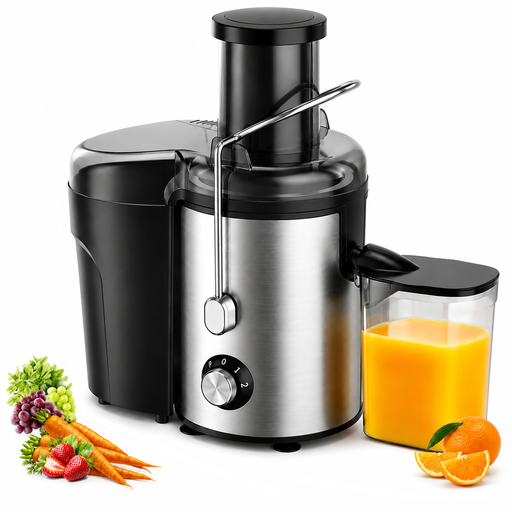
600 W centrifugal juicer with 75-mm feed chute
A centrifugal option if making juice quickly when you have guests is one of your priorities.
600 W; 75-mm feed chute; two speed settings; cleaning brush. The feed chute doesn’t mean you can skip peeling and cutting the pineapple according to the instructions.
View at Joybuy
 No image available
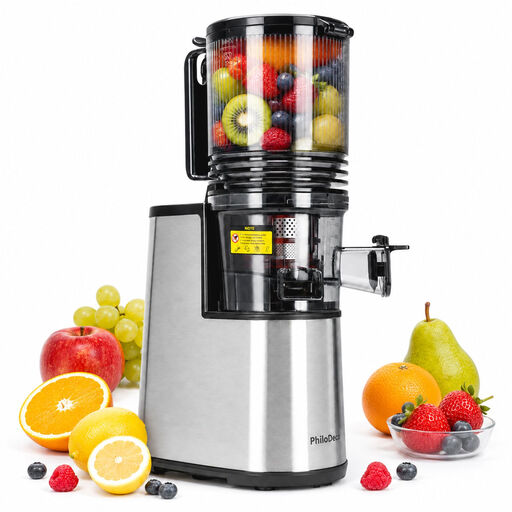
PhiloDeco JE-06 cold-press slow juicer
A slow-juicer option with a reverse function and a wide feed chute, as stated in the product title.
250 W; 145-mm feed chute; 1,000-ml pulp container; reverse function. The chute size doesn’t prove that a whole pineapple will fit; follow the instructions for this model.
View at Joybuy
 No image available
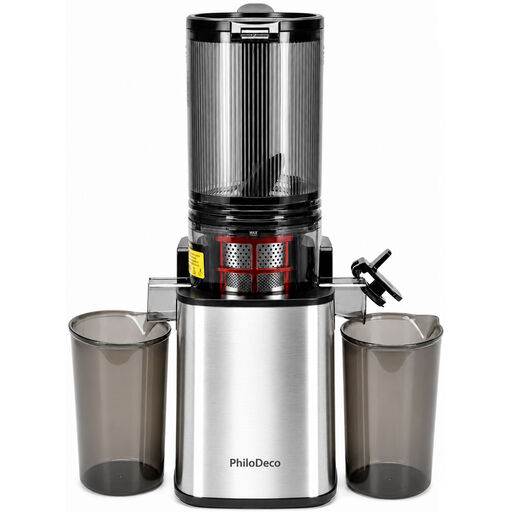
Cold-press slow juicer with 110-mm feed chute
A slow-juicer option if you want to compare the features of this type of appliance with your needs.
110-mm feed chute; dual filter; reverse function; 40 Nm according to the product name. The chute size alone doesn’t tell you what size pineapple pieces are suitable.
View at Joybuy
 No image available
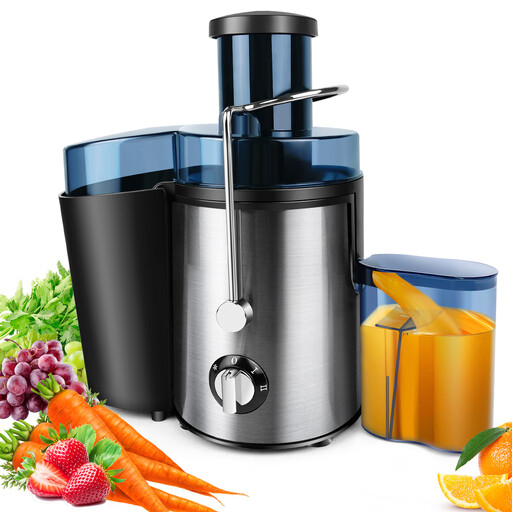
DayPlus 1,000 W centrifugal juicer
A centrifugal option for making juice if speed is an important factor in your choice.
1,000 W; 65-mm feed chute; two speed settings; cleaning brush for the filter and corners. Follow the instructions for preparing pineapple.
View at Joybuy
Frequently asked questions
Do I need to peel a pineapple before juicing it?
Yes. Remove the tough skin and cut the pineapple according to your appliance’s instructions. Kuvings says to peel the fruit in its pineapple recipe. Philips’ guidance on peel and piece size applies to the models specifically listed there.
What should I clean after juicing?
Clean the parts that come into contact with juice according to the instructions for your specific model, and check which components are dishwasher-safe. The Verbraucherzentrale also recommends clean hands and clean kitchen utensils when preparing food.
What rights do I have if my juicer is faulty?
If there’s a fault, you have statutory rights against the seller. A voluntary manufacturer’s warranty is separate and is subject to its own terms. The Verbraucherzentrale explains this distinction and your rights to have the fault remedied.
What does the CE marking mean on an electric juicer?
Electrical appliances covered by the relevant harmonised EU rules must carry a CE marking. According to information from the European Union, the manufacturer uses it to declare that the product meets the applicable requirements; it isn’t an official EU quality certificate. Check the marking and product documents for the specific version.


