For a quick juicing break
You want to get prepared pineapple into your glass quickly, and factor in refilling and washing up as part of the overall effort.


For a quick pineapple break, a centrifugal juicer could be a good option if speed matters to you. A slow juicer may suit you better if you prefer slow pressing or a particular juice consistency. In ETM TESTMAGAZIN’s comparison, centrifugal juicers were faster with larger quantities of ingredients, but noisier; their yield could be lower. These results are not specific to pineapple. For the pineapple preparation referenced here, both types require you to remove the skin and core, then cut the fruit into pieces.
You want to get prepared pineapple into your glass quickly, and factor in refilling and washing up as part of the overall effort.
You’d juice regularly if the sieve and other parts were easy to clean after making a single serving.
You want to control how much pulp remains in your juice, so you compare the sieves or settings actually included.
A good fit if: you want to juice quickly during a short break and process prepared pieces without having to keep refilling the machine.
The trade-off: ETM TESTMAGAZIN describes centrifugal juicers as faster with larger quantities of ingredients, but also noisier; their juice yield could be lower.
A good fit if: you prefer slow pressing or a particular pulp consistency, and the extra steps involved in using the appliance fit into your routine.
The trade-off: The slow juicers tested by ETM TESTMAGAZIN worked more slowly than centrifugal juicers; sieves and cleaning vary by model.
A good fit if: you’re happy with a drink containing pulp and don’t want to buy a juicer just yet.
The trade-off: Blending doesn’t separate juice from pulp in the same way as the juicers considered here.
| What matters to you | What to check before buying | Who it matters most to |
|---|---|---|
| Preparation time | Check the feed chute, ease of use and quantity processed per cycle for the specific model. | If I want to make a glass during my break, the time it takes to peel, cut and refill matters too. Around 36% of consumers say preparation time is their top priority. |
| Cleaning after one serving | Check the number of parts, how easy it is to reach the sieve and which parts are explicitly listed as dishwasher-safe. | If I regularly juice just one glass, I want to know how much washing up there’ll be afterwards. Around 29% of consumers say cleaning is their top priority. |
| Juice consistency | Check whether fine and coarse sieves are included, or if the consistency is adjustable, as well as how much cleaning is involved. | If I want to decide how much pulp remains in my juice, I compare the filter options. Around 21% of consumers say their preferred consistency is their top priority. |
| Occasional use | Before buying, think about how often you’ll actually juice and whether a dedicated appliance fits into your routine. | If I only juice pineapple occasionally, I want to weigh up whether a dedicated appliance makes sense for my everyday life. Around 14% of consumers say infrequent use is their top priority. |
For the pineapple recipe referenced by Hurom, you need to remove the skin and core, then cut the fruit into suitable pieces. A wide opening doesn’t remove the need to prepare it.
Factor peeling and cutting into your break-time routine, and check that the prepared pieces fit through the feed chute.
A faster cycle alone doesn’t tell you how long it takes to make a single glass overall. Preparation, refilling and cleaning all count too.
Compare the instructions for the specific model, the sieve parts and how much cleaning is needed after one serving.
These are separate rights. If a product is faulty, the retailer is generally responsible for your statutory rights.
Keep your proof of purchase and the model name, and check whether the manufacturer offers a voluntary warranty and what its terms are.
The HR1921/20 is a centrifugal juicer for shoppers comparing a pre-clean function and adjustable juice consistency.
The Kult X is a centrifugal juicer with a 74-mm feed chute and a 1.2-litre juice jug.
The H320N comes with fine and coarse sieves, while the H400 has a simplified set of parts and a large hopper. These models have different features.
The MES4010 is a centrifugal juicer with an 84-mm feed chute and a 1.5-litre juice container.
The ES 3570 is a centrifugal juicer with a 7-cm feed chute and two speed settings.
This selection includes centrifugal and slow juicers, so you can weigh up preparation, cleaning and your preferred juice consistency for a quick break.
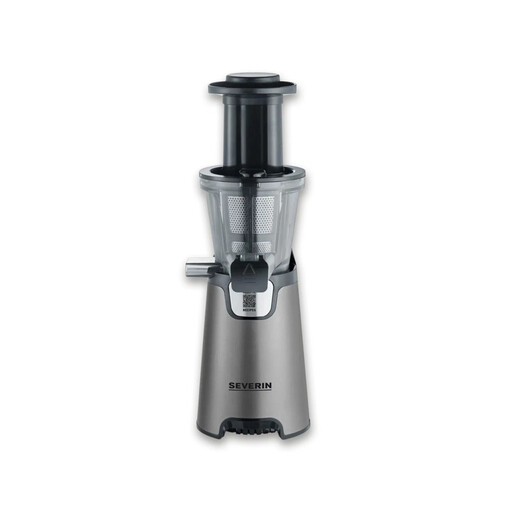 No image available
This could suit you if you want to choose between a fine and coarse sieve and factor in the cleaning involved. The product information lists a fine and a coarse sieve, as well as an Easy-Clean design; it also says the appliance can be cleaned with a brush or in the dishwasher. The juice container holds 1 l and the power is 150 W. To make pineapple juice, remove the skin and core, then cut the fruit into suitable pieces.
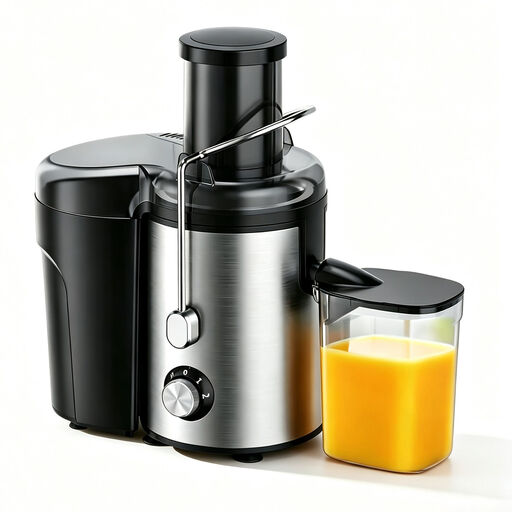 No image available
This could be an option if a wide feed chute for prepared pineapple pieces matters to you. The product information lists a 75 mm feed chute, three speed settings, a stainless steel filter and a cleaning brush. To make pineapple juice, remove the skin and core, then cut the fruit into suitable pieces.
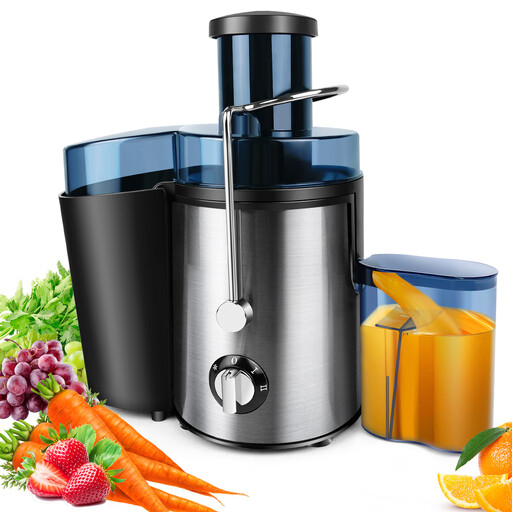 No image available
This could suit you if you’re comparing a 65 mm feed chute and two adjustable speeds. The product information also lists a 500 ml container, removable parts and a cleaning brush. To make pineapple juice, remove the skin and core, then cut the fruit into suitable pieces.
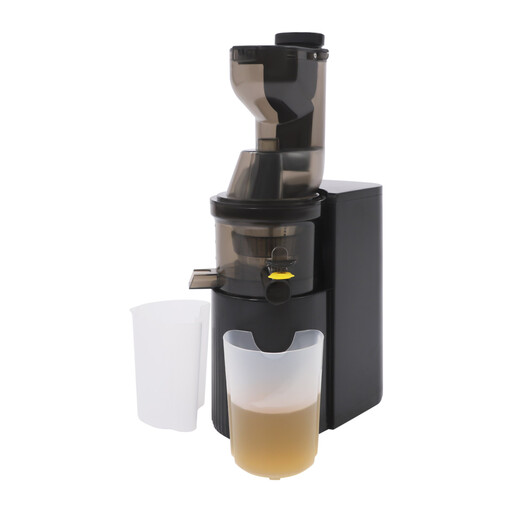 No image available
This could be an option if you want slow pressing with removable, rinse-clean parts. The product description lists an 8 cm feed chute and a 500 ml container. To make pineapple juice, remove the skin and core, then cut the fruit into suitable pieces.
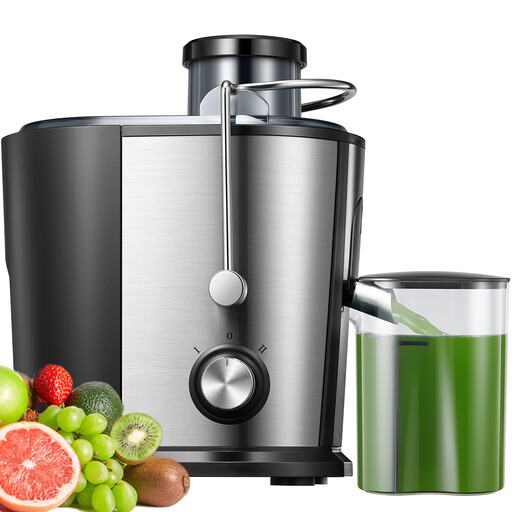 No image available
This could suit you if you’re looking for a 65 mm feed chute and two speed settings. The product description also lists a drip-stop function and dishwasher-safe parts. To make pineapple juice, remove the skin and core, then cut the fruit into suitable pieces.
Yes. For the pineapple recipe referenced here, Hurom recommends removing the skin and core, then cutting the fruit into suitable pieces. Philips also recommends removing inedible skins and cutting ingredients to fit the feed chute for the models listed on its support page. Follow the instructions for your specific model.
For the Philips HR1921/20, Philips describes a pre-clean cycle using around 300 ml of water on setting 2, and recommends running it straight after juicing. For other appliances, check the relevant instructions and which parts are explicitly listed as dishwasher-safe.
If a product is faulty, you generally need to claim under your statutory rights from the retailer; a voluntary manufacturer’s warranty is separate. The Verbraucherzentrale states that statutory rights generally last for two years. For sales contracts from 31 July 2026 onwards, it describes a one-off 12-month extension if you choose a repair instead of a replacement within the relevant period.
Electrical appliances must comply with the relevant EU product rules; CE marking is required where the applicable harmonised rules require it. Parts that come into contact with food must meet the relevant requirements, particularly Regulation (EC) No 1935/2004. These general requirements do not prove that a specific product listing is compliant.
No. Don’t apply the shelf-life information for unopened packaged juices to freshly squeezed juice. The Verbraucherzentrale notes that freshly squeezed juices spoil easily, so drink yours as soon as possible.