Families with busy mornings
If you want to juice pineapple for several people in the morning, preparation time, the feed chute and the juice jug are key considerations.


For a family breakfast when time is tight, a centrifugal juicer is an obvious place to start. ETM TESTMAGAZIN describes this type as faster when preparing larger quantities, but also noisier. A slow juicer may suit you better if a quieter routine matters more and you’re happy to allow extra preparation time and cut the pineapple according to the model’s instructions. Also compare the juice jug, feed chute and cleaning requirements of the specific appliance.
If you want to juice pineapple for several people in the morning, preparation time, the feed chute and the juice jug are key considerations.
If you juice regularly, look for accessible filters and fruit-contact parts that can be cleaned after breakfast in line with the instructions.
If you’re happy to allow more time for preparation in exchange for a quieter breakfast routine, check how to prepare pineapple for the specific slow-juicer model.
| What matters | What to look for when buying | Who should pay particular attention? |
|---|---|---|
| Preparing pineapple in time | Check the type of juicer, feed chute and model-specific instructions for pineapple pieces. | If you need to have several portions ready in the morning, preparation time and how ingredients feed into the appliance matter. Around 33% of consumers say speed is their main concern. |
| Catching enough juice for several people | Check the stated capacity of the juice jug or juice container, not the pulp container. | If several people are having juice, I want to collect enough without confusing the different container capacities. Around 27% of consumers say juice capacity is their main concern. |
| Cleaning after regular juicing | Compare the cleaning instructions, access to the filter and which individual parts are specifically stated to be dishwasher-safe. | If I juice often, I want to be able to reach and clean the filter and fruit-contact parts easily after breakfast. Around 27% of consumers say cleaning is their main concern. |
| A quieter routine | Weigh up the different types; if noise is a deciding factor, check the specifications or a test of the specific model. | If other people are still having breakfast, a quieter routine matters more to me than the shortest preparation time. Around 13% of consumers say quiet operation is their main concern. |
According to the manufacturer, the pulp container on the nutribullet NBJ100G holds 1.5 l, while the juice jug holds 800 ml. If you only look at the larger figure, you may need to transfer the juice to another container while juicing.
Check the product specifications to see whether the capacity refers to the juice jug, juice container or pulp container.
With a smaller juice jug, you may need to transfer the juice while preparing it.
The size of the feed chute alone doesn’t tell you whether the appliance can handle the peel or a whole fruit. Kuvings recommends cutting pineapple into 5–7 cm pieces before using its slow juicers.
Check the instructions for your specific model and prepare the pineapple accordingly.
Cutting the pineapple can add extra preparation time before breakfast.
ETM TESTMAGAZIN describes centrifugal juicers as faster when preparing larger quantities, but also noisier; slow juicers, it says, take longer. This doesn’t mean one type is automatically better for every breakfast or every model.
First decide whether speed or a quieter routine matters more to you. Then compare the juice jug, pineapple preparation and cleaning requirements.
The Verbraucherzentrale distinguishes between your statutory rights against the seller and a voluntary guarantee with its own terms and conditions.
Check the guarantee cover and spare-parts terms separately from your statutory rights.
The VitaJuice MES4010 centrifugal juicer is worth considering if a larger juice container and quick preparation are priorities.
The NBJ100G centrifugal juicer offers another option for weighing up the feed chute, juice jug and cleaning requirements.
Slow juicers such as the AUTO10S may suit you if this type of juicer and a large ingredient hopper fit your preferred routine.
The Avance HR1921/20 is a centrifugal option for households comparing cleaning requirements and the choice of pulp consistency.
The range includes centrifugal and slow juicers for households weighing up the two types. For each model, check the guidance on pineapple piece size and preparation.
 No image available
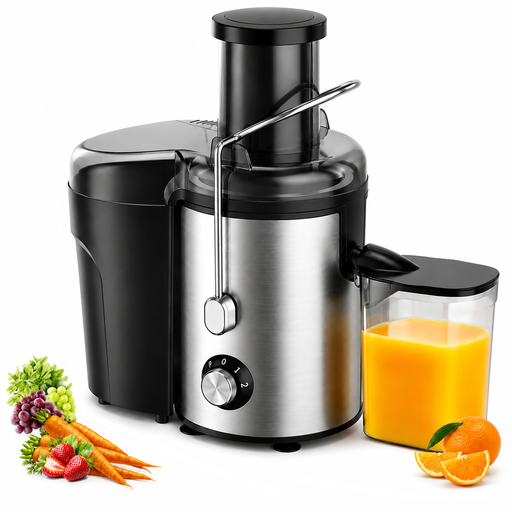
For households looking for a centrifugal juicer with a wide feed chute. Check the model-specific guidance on preparing pineapple before juicing.
600 W; 75 mm feed chute; two speed settings; stainless steel; listed as BPA-free in the product title.
 No image available
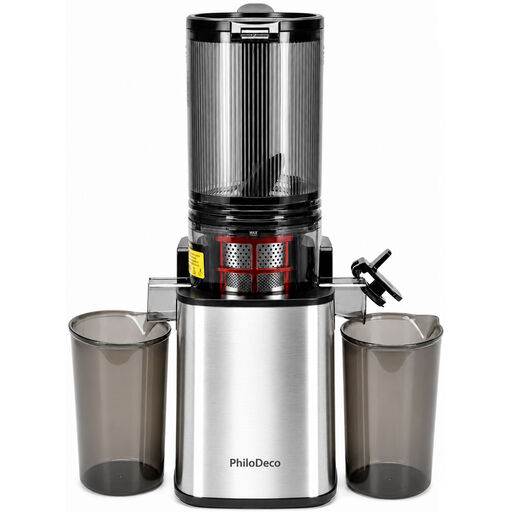
For buyers who prefer a slow juicer. Check the specific model’s instructions to see whether it can handle pineapple pieces and peel.
110 mm opening; 40 Nm; double filter; reverse function.
 No image available
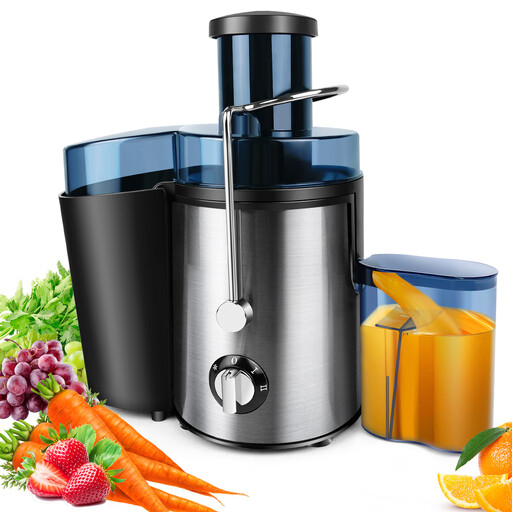
A centrifugal option for buyers who want to compare the juice jug and feed chute with their breakfast needs.
1000 W; 65 mm feed chute; two speed settings; juice jug with a 500 ml capacity.
 No image available
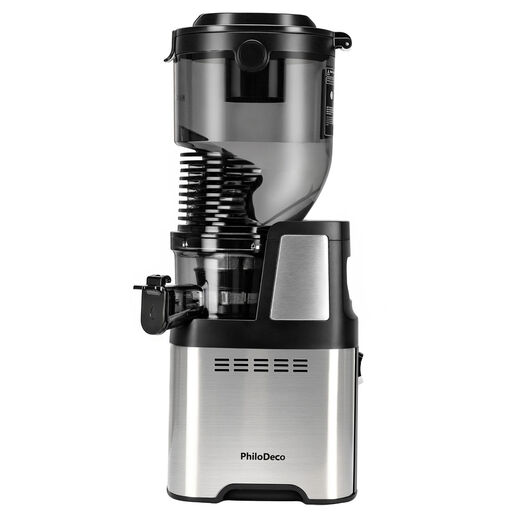
For buyers looking for a slow juicer with a wide feed chute. Check the model’s instructions to find the right size of pineapple pieces.
9.5 cm feed chute; separate juice and pulp outlets.
 No image available
For buyers looking for a slow juicer with variable speed. Check the specific model’s instructions for preparing pineapple and cleaning the appliance.
Slow juicer; variable speed settings.
No. Don’t rely on a wide feed chute alone. Kuvings recommends cutting pineapple into 5–7 cm pieces for its slow juicers. Also check your model’s instructions to see what size pieces it can handle and whether the peel is suitable.
No, the figure may refer to the pulp container rather than the juice jug. According to the manufacturer, it refers to the juice container on the Bosch MES4010; on the nutribullet NBJ100G, the pulp container holds 1.5 l and the juice jug holds 800 ml.
Clean the parts that come into contact with fruit or juice in line with the instructions for your specific model. Whether a part is dishwasher-safe depends on the component, so check the manufacturer’s guidance.
The Verbraucherzentrale recommends water as a thirst-quencher and advises offering children juice only occasionally because of its sugar content. This is dietary advice, not a recommendation about which juicer to choose.
Depending on the product, relevant CE rules apply to electrical appliances in the EU. The CE marking is the manufacturer’s declaration of conformity, not an independent quality mark. According to the Federal Office of Consumer Protection and Food Safety, the manufacturer is primarily responsible for ensuring that materials intended to come into contact with food are safe. If you buy a faulty product, the Verbraucherzentrale distinguishes between your statutory rights against the seller and a voluntary guarantee.