Which type of blender is right for you?

For making a batch in advance

If you want to blend several portions of pineapple smoothie in one go, usable capacity and decanting are key considerations. Tefal Germany lists a usable capacity of 1.75 l for the BL91HD; Braun Household Germany gives a working capacity of 2 l for the PowerBlend 9 JB 9040.

For focusing on ingredients and texture

If you want to blend firm or frozen ingredients, check the functions provided and the instructions for the specific model. CHIP notes that a high wattage alone doesn’t guarantee a good blending result; IMTEST describes results for the ingredients and conditions in its own tests.

For small kitchens and portions

If worktop space matters more to you than blending a large batch in one go, a smaller appliance could be a good fit, as long as you don’t mind making extra batches. Philips Germany lists dimensions of 21,6 × 16,7 × 44,2 cm for the HR3760/10; Tefal Germany also lists a 600-ml cup for the BL91HD.

What should you look for when buying?

Jug blender

A good fit if: you’re preparing several portions and the stated usable capacity suits your recipe. Tefal Germany lists a usable capacity of 1.75 l for the BL91HD, while Braun Household Germany gives a working capacity of 2 l for the PowerBlend 9 JB 9040.

The trade-off: A large jug takes up worktop space and needs cleaning after you’ve decanted the smoothie. The jug’s total capacity and its usable filling capacity aren’t always the same.

Compact smoothie maker with a personal cup

A good fit if: you make small quantities and prefer a space-saving appliance or a cup you can drink from directly.

The trade-off: You may need to blend and decant several batches to make a larger supply for the freezer. Also check that the cup and instructions are suitable for the quantity and ingredients you have in mind.

What to look for What to check Who should consider it?
Usable capacity Compare your recipe quantity with the usable or working capacity and fill markings of the specific jug. Tefal Germany lists a usable capacity of 1.75 l for the BL91HD; Braun Household Germany gives a working capacity of 2 l for the PowerBlend 9 JB 9040. If you want to prepare several portions in as few batches as possible, check the usable capacity first. Around 36% of consumers prioritise batch size.
Ingredients and texture For frozen ingredients, check the model’s instructions, programmes and permitted quantities. CHIP stresses that wattage alone doesn’t prove a blender will produce good results. If you want to blend firmer or frozen ingredients as well as fresh pineapple, check that the appliance is designed for that use. Around 29% of consumers focus on ingredients and their preferred texture.
Cleaning Check separately whether the jug, blades, lid and seals are removable or dishwasher-safe. For the BL91HD, Tefal Germany lists the jug without the blades and certain lid components. If you’re preparing several batches one after another, you’ll want to know which parts need cleaning afterwards. Around 21% of consumers pay particular attention to cleaning requirements.
Worktop space and cups Compare the appliance’s dimensions with the space available, and don’t assume a personal cup has the same capacity as the main jug. Philips Germany lists dimensions of 21,6 × 16,7 × 44,2 cm for the HR3760/10; Tefal Germany gives a capacity of 600 ml for the BL91HD cup. If your kitchen is short on space, you may be happy to make extra batches for your supply, as long as the appliance is easy to store. Around 14% of consumers prioritise the space an appliance takes up.

Common assumptions about batch blending

  • Assuming total capacity is the same as usable blending capacity

    A jug’s total capacity may be greater than its stated usable capacity. Tefal Germany lists a usable capacity of 1.75 l for the BL91HD; when planning your batch, follow the guidance and fill markings for the specific appliance.

    Plan your freezer portions around the usable capacity before deciding how much to blend in one go.

  • Assuming wattage guarantees a smooth pineapple texture

    CHIP describes differences in results with the fibrous and frozen ingredients tested, and notes that high power alone doesn’t guarantee a good result.

    Only compare tests if their ingredients and conditions are relevant to your plans, and check the specific model’s instructions for frozen ingredients.

  • Assuming every part of the jug is dishwasher-safe

    Guidance can vary depending on the component. For the BL91HD, Tefal Germany lists the jug without the blades and certain lid components; this doesn’t mean the blades are dishwasher-safe too.

    Check the model’s instructions for the blades, seals, lid and jug individually.

  • Assuming a large frozen block will be easy to portion

    A large frozen block of smoothie can be difficult to divide into individual portions later.

    The Federal Centre for Nutrition recommends dividing the amount you need into portions before freezing them in suitable containers. For liquid foods, the Verbraucherzentrale advises filling containers to no more than three-quarters full.

    Portioning the smoothie after freezing can take extra effort.

Notable brands and product ranges

Braun

According to Braun Household Germany, the PowerBlend 9 JB 9040 is a jug blender with a working capacity of 2 l and programmes for smoothies and frozen desserts.

  • In its own comparison, IMTEST reported that this specific model made an especially creamy smoothie from fibrous ingredients.
  • The Frozen Bowl tested by IMTEST was still slightly lumpy; these results don’t guarantee the same texture with pineapple recipes.

Tefal

For the InfinyMix BL91HD, Tefal Germany lists a usable capacity of 1.75 l for the main jug, an additional 600-ml cup, an ice programme and a tamper.

  • The stated usable capacity gives you a helpful figure to compare with your recipe quantity.
  • The dishwasher-safe guidance for the jug excludes the blades; check how to clean each component individually.

Bosch

Bosch Home Appliances lists a capacity of 2,0 l, programmes and a removable blade for the VitaPower Serie 6 MMB6762M.

  • The product information also lists a tamper and describes the jug as suitable for ice.
  • The 1.800 W rating is a specification, but on its own it doesn’t prove the blender will produce better results. Follow the instructions for your recipe.

Philips

Philips Germany describes the 7000 Series HR3760/10 as having smoothie and ice functions, as well as a removable blade.

  • Philips Germany lists dishwasher-safe parts.
  • Check the product information and instructions for the exact batch size before planning your recipe.

KitchenAid

According to KitchenAid Germany, the Pure Power 5KSB2073EER is a jug blender with a 2-l plastic jug and a smoothie programme.

  • KitchenAid promotes this model for blending frozen berries.
  • The manufacturer’s claim about berries isn’t an independent test of a frozen pineapple mixture. Don’t assume the jug’s capacity is the usable filling capacity for every recipe without checking.

Joybuy products for make-ahead smoothies

The Joybuy products below are jug blenders that may suit smoothies and multiple portions. Compare the stated jug capacity with your recipe quantity, and check the instructions for the specific model if you’re using frozen ingredients.
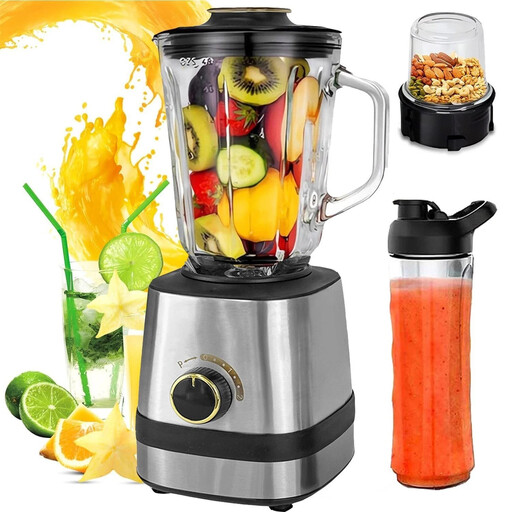
3-in-1 smoothie maker with 1.5-l jug and 600-ml bottle

3-in-1 smoothie maker, 800 W, 1.5 l + 600 ml

The 1.5-l jug and additional 600-ml bottle could be useful when planning several portions; compare the recipe quantity with the jug capacity.

Features listed in the product name: 800 W, 1.5-l jug, 600-ml bottle and 6 blades.

View at Joybuy
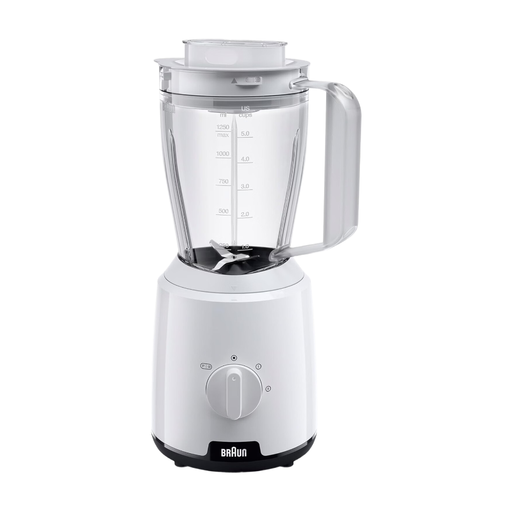
Braun PowerBlend 1 JB1000WH blender with 1.5-l blending jug

Braun PowerBlend 1 JB1000WH

The 1.5-l blending jug gives you a specific capacity to compare with your recipe; check the instructions if you plan to use frozen ingredients.

Features listed in the product name: ice-crush function, 2 speeds and 600 W.

View at Joybuy

ochama multifunction blender with 1.5-l jug

ochama Multifunction Blender, 600 W, 1.5 l

The 1.5-l jug gives you a useful point of comparison for the batch you’re planning. Check the instructions before blending frozen ingredients.

Features listed in the product name: 600 W, 3 speed settings and ice-crushing function.

View at Joybuy
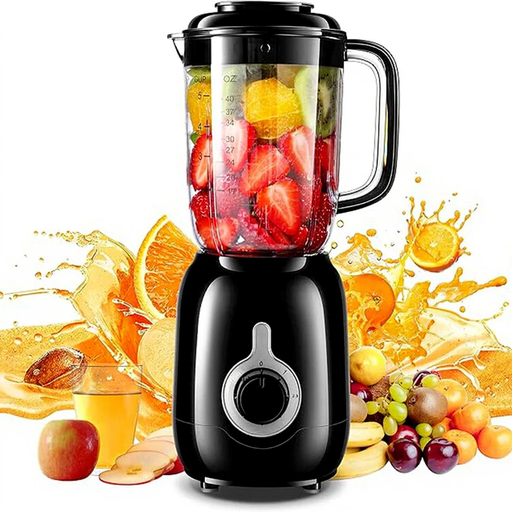
Bear Table Blender LLJ-B12K1 with 1.2-l jug

Bear Table Blender LLJ-B12K1, 1.2 l

The 1.2-l jug can be compared with your recipe quantity when preparing several portions. According to the product information, you should add at least 300 ml of liquid and avoid overloading the jug.

Features listed in the product name: 500 W, 2 speeds plus pulse and 4 stainless steel blades.

View at Joybuy
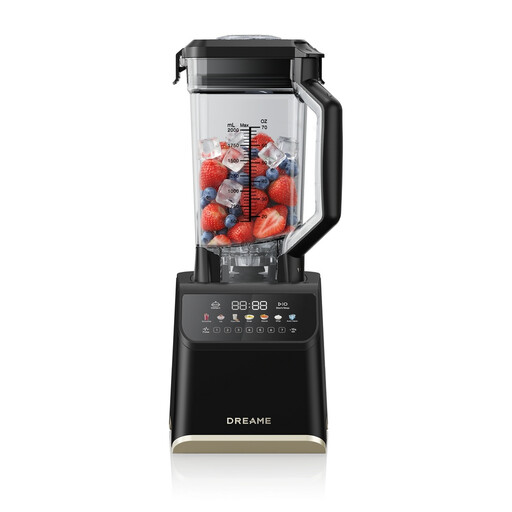
Dreame BlendLogic high-performance blender with 2.0-l and 700-ml jugs

Dreame BlendLogic high-performance blender, 2.0 l + 700 ml

The 2.0-l jug listed in the product name could be useful for larger batches. Check the instructions and the permitted filling capacity for your recipe.

Features listed in the product name: 2.000 W, 27.000 RPM, 8 stainless steel 3D blades, 9 programmes and 7 speed settings.

View at Joybuy

Frequently asked questions

Can I freeze a large quantity of finished pineapple smoothie?

To make it easier to portion later, the Federal Centre for Nutrition recommends dividing the amount you need into portions before freezing them in suitable, labelled freezer containers. For liquid foods, the Verbraucherzentrale advises filling containers to no more than three-quarters full.

How should I prepare fresh pineapple before blending?

Remove the crown, base and skin, quarter the fruit, cut out the tough core and chop the flesh. This preparation method is described by the Federal Centre for Nutrition.

Does blending make frozen berries safe to use in a raw smoothie?

No. The German Federal Institute for Risk Assessment recommends heating frozen berries evenly and thoroughly before eating them to reduce the risk of possible norovirus contamination. This advice applies to frozen berries used as an additional ingredient; it doesn’t mean fresh pineapple needs to be heated.

What are the CE marking requirements for buying an electric blender in Germany?

CE marking is required for electrical appliances covered by the relevant harmonised EU regulations. It is the manufacturer’s declaration of conformity, not individual approval from a central EU body. Check the marking on the specific product.

Does a manufacturer’s guarantee replace your statutory rights if a product is faulty?

No. Under EU consumer law, purchases from a commercial seller come with a statutory minimum period of two years for claims against the seller for defects. Any additional manufacturer’s guarantee must not limit these rights. Check the relevant manufacturer’s terms for any cover beyond this.