What should you look for when buying?
Blender with a larger jug
A good fit if: you want to make several servings at once after your shop.
The trade-off: a larger jug takes up more worktop space. Check the usable capacity of the specific model.
Compact smoothie maker with a drinking cup
A good fit if: you usually blend one serving and want to take it with you straight away.
The trade-off: you may need to blend several batches to make multiple glasses.
The figures refer to consumers choosing a blender for pineapple smoothies after their weekly shop.
| What matters |
What to check before buying |
Who it matters most to |
| Smooth texture |
Look at hands-on tests using comparable ingredients and check whether the blender is approved for frozen ingredients. IMTEST’s test of the JB9040 covered a fibre smoothie, not a pineapple smoothie. |
If I want as few fibres as possible in my glass, I look at relevant test results rather than just motor power. Around 36% of consumers would make texture their top priority. |
| Amount per batch |
Compare the amount of drink you want to make with the usable capacity of the specific model; don’t assume the stated volume and working capacity are the same. |
If I want to make several glasses at once, the amount I can actually blend is what matters. Around 29% of consumers would give the greatest weight to the number of servings per batch. |
| Cleaning |
Check separately whether the cup, lid and blade assembly are dishwasher-safe, and whether the blade can be removed. |
If I use my blender regularly, I want to be able to clean the individual parts easily, following the manufacturer’s instructions. Around 21% of consumers would put ease of cleaning first. |
| Taking it with you and storage space |
Check the cup size, drinking lid and footprint of the specific set. Don’t assume an optional extra cup is included. |
If I want to drink my smoothie on the go or store the appliance without taking up much space, the cup format is key. Around 14% of consumers would prioritise portability or space-saving design. |
Joybuy products for pineapple smoothies
This selection includes compact smoothie makers for single servings and blenders with larger containers for making several servings.
 No image available
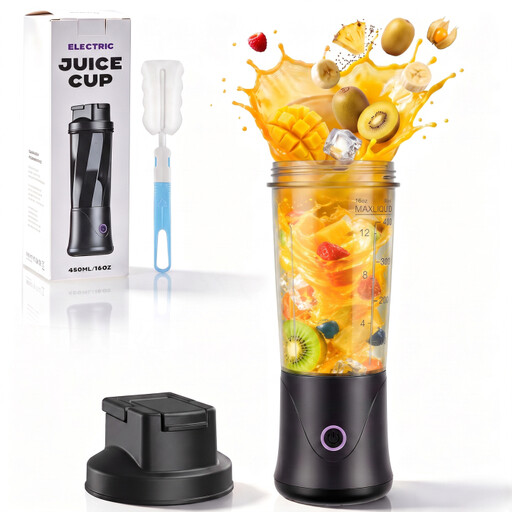
Portable blender, 400 ml, six blades
For a single serving to take with you; the cup limits the amount you can blend in one go.
The product title lists six blades.
View at Joybuy
 No image available
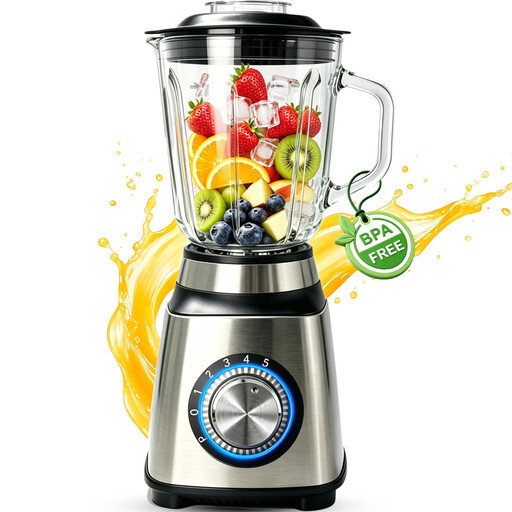
VitaBoost blender, 1.5 l, glass jug
The larger container is handy for making several servings of smoothie in one go.
The product title lists a 1.5 l glass jug.
View at Joybuy
 No image available
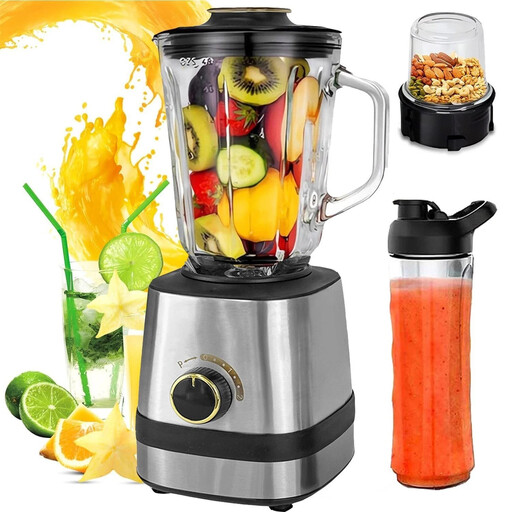
3-in-1 blender, 800 W, 1.5 l and 600 ml bottle
The container and bottle give you different options for making smoothies.
The product title lists 800 W, six blades, a 1.5 l container and a 600 ml bottle.
View at Joybuy
 No image available
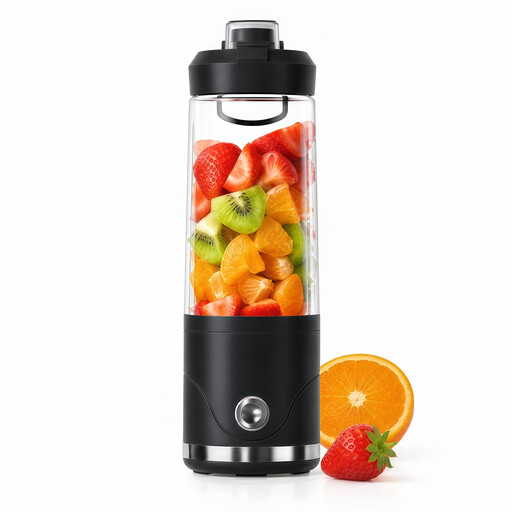
Mini smoothie maker, 650 ml
The cup is designed for a single serving to take with you and limits the amount you can blend in one go.
The product title lists a 650 ml cup and screw-top lid, which it describes as leakproof.
View at Joybuy
 No image available
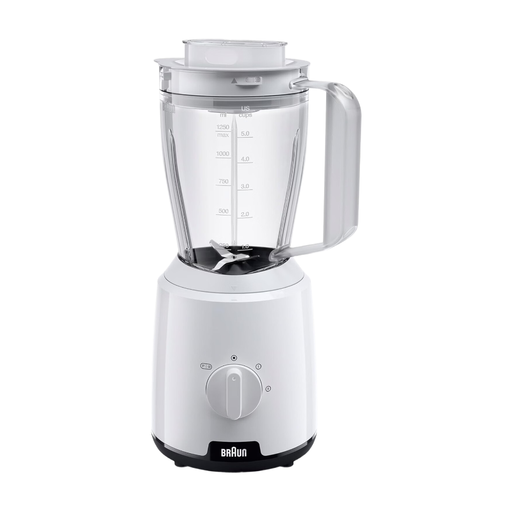
Braun PowerBlend 1 JB1000WH, 1.5 l
The 1.5 l blending jug is useful for making a larger quantity in one go.
The product title lists an ice-crush function, two speeds and 600 W.
View at Joybuy
Frequently asked questions about blenders for pineapple smoothies
Can I make pineapple smoothies for the whole week?
A to-go lid says nothing about how long a smoothie will keep. The German Federal Institute for Risk Assessment recommends drinking freshly made green smoothies as soon as possible and storing them at no more than 7 °C until then; they should be consumed on the day they’re made. This advice applies to green smoothies and isn’t a tested shelf-life recommendation for every pineapple recipe.
What should I bear in mind before blending fresh produce from the market?
The German Federal Institute for Risk Assessment recommends using fresh ingredients with no signs of spoilage and washing them thoroughly, particularly vegetables and salad leaves. If you add herbs or vegetables, use only plant parts that are usually eaten raw. Washing doesn’t remove all pathogens.
Are a cleaning programme and dishwasher-safe parts the same thing?
No. Check how to clean each part of each model separately. For the HR3030/00, Philips lists a cleaning setting, dishwasher-safe parts and a removable blade; always follow the information for the specific version.
Who should I contact if my blender is faulty, and what applies to online purchases?
In Germany, your statutory rights for faulty goods are against the seller; a manufacturer’s guarantee is separate. If there’s a fault, the first step may be to request that the seller puts it right. Online purchases also generally come with a 14-day right to cancel, although exceptions and the specific terms should be checked in each case. The Verbraucherzentrale explains the difference.
Is the CE marking an independent quality mark for smoothies?
No. The CE marking doesn’t certify that a smoothie will have been independently tested for texture. It relates to the manufacturer’s declaration that the product meets the relevant EU requirements; the rules that apply depend on the specific appliance. Your Europe explains the manufacturer’s responsibility for CE marking.


