Smoothie fans with limited worktop space
If you only make a smoothie now and again, you’ll want to store the motor, blending shaft and beaker separately after use.


For small portions made with prepared pineapple and a kitchen with limited worktop space, a hand blender with a suitable blending beaker is a practical option, as you can put the appliance away after use. Cut the pineapple into pieces, removing the tough core, and don’t judge the expected smoothness by wattage alone. If smoothies are your main regular use and you’d prefer a container with a drinking lid, compare compact smoothie makers too – despite their design, they still need somewhere to stand and be stored.
If you only make a smoothie now and again, you’ll want to store the motor, blending shaft and beaker separately after use.
You blend fresh, prepared pineapple pieces and want to know how well an appliance handles this fruit. Tests with other ingredients can only offer a guide.
You tend to blend small portions and want to be able to reach and thoroughly clean the parts that have come into contact with fresh fruit.
If worktop space is limited, it’s worth planning for storage and blending space together – and choosing an appliance based on what you’ll actually be making.
| What matters | What to check before buying | Who is this important to? |
|---|---|---|
| Storage and blending space | Appliance dimensions, beaker and included accessories; also consider how much room the beaker needs while blending. | If I want to put the blender away after each use, the beaker also needs to sit securely in the intended blending spot. Around 31% of consumers put storage and blending space first. |
| Blending pineapple | Blending shaft, blades and ease of use with the beaker; check which ingredients were actually used in any test results. | If the texture of fresh pineapple matters to me, I don’t want to assume test results apply to this fruit without checking. Around 31% of consumers prioritise the blending results with prepared pineapple. |
| Cleaning | Check the instructions to see how the blending shaft, beaker and accessories can be cleaned. | If I want to clean all food-contact surfaces quickly after blending fresh fruit, I check which parts are removable and easy to reach. Around 19% of consumers prioritise easy cleaning. |
| Set contents and accessories | Check which attachments are actually included and which ones you’d use regularly. | If I mainly make pineapple smoothies, I don’t want to store or clean extra parts that I rarely use. Around 19% of consumers pay particular attention to getting the right set contents. |
Power rating alone doesn’t tell you how smooth a pineapple smoothie will be. The hand blender tests referenced here don’t include a separate test with pineapple.
Compare the blending scores and check which ingredients were tested. Prepare fresh pineapple in pieces, removing the tough core.
A comprehensive set needs space not just for the blender, but for the additional parts too.
Check everything included and choose attachments based on whether you’ll actually use their extra functions.
Unused attachments take up storage space and mean more parts to clean.
A slim smoothie maker still needs space for its base and container. You hold a hand blender while blending.
Compare the footprint and container dimensions during use with the space available, and plan where you’ll store it afterwards too.
The MultiQuick range includes different control options and set variations. For the MQ 5235 BK model, Braun specifies 21 adjustable speeds.
The ErgoMixx MSM66110 comes with a removable metal blending shaft and a blending/measuring beaker.
The Lineo 4-in-1 is designed for anyone who wants to use the same appliance for other kitchen tasks as well as making smoothies.
The Zauberstab range is available with individual attachments.
These hand blenders are suited to smoothies and small portions. For each model, check which parts are included and how much space they need while blending and in storage.
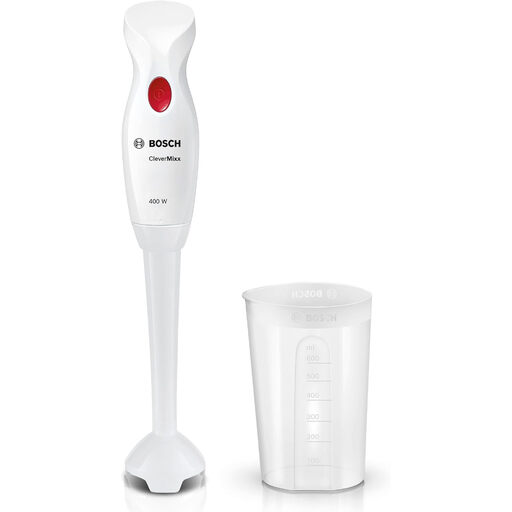 No image available
The blending and measuring beaker and removable blending shaft are handy for small portions if you want to put the appliance away after use.
400 W; four blades; 600 g. The product description states that some parts are dishwasher-safe.
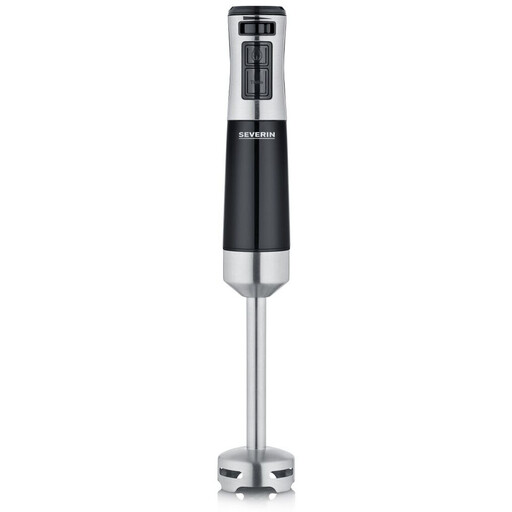 No image available
The product description lists smoothies and fruit among its uses; the removable blending shaft is easier to handle separately after blending.
600 W; variable speed control; removable stainless steel blending shaft. The product description states that some parts are dishwasher-safe.
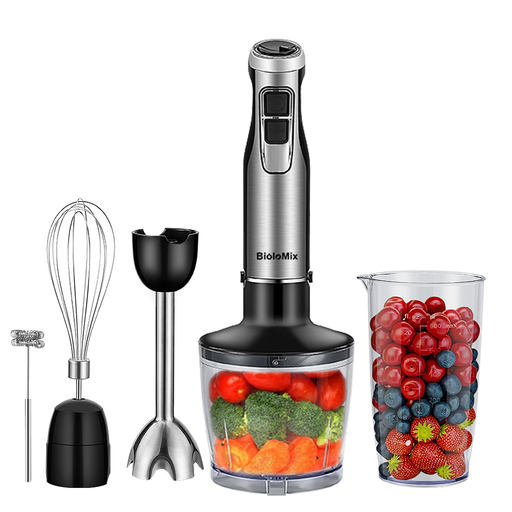 No image available
Smoothies are listed as one of its uses. Its removable design may be useful for cleaning and storage.
1,200 W; six speed settings; stainless steel blades.
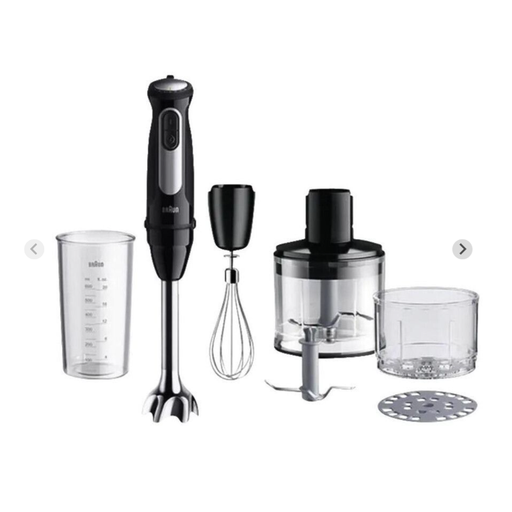 No image available
The product description lists smoothies as one of its uses. Adjustable speeds give you options for blending different ingredients.
1,000 W; 25 adjustable speeds; Turbo Boost; metal blending shaft.
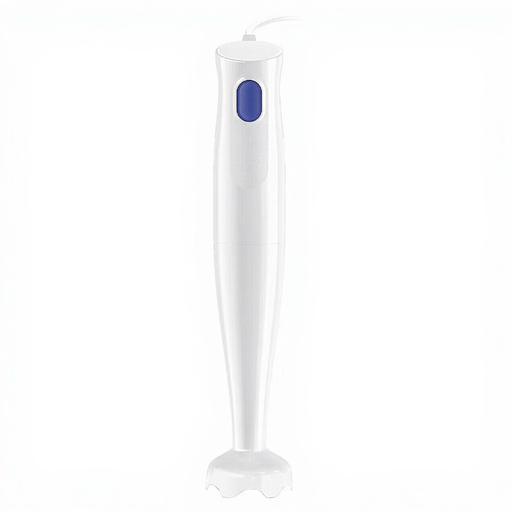 No image available
The product description lists smoothies as one of its uses. It also states that the blending shaft is dishwasher-safe.
450 W; 550 g; one-button control.
Yes. The Federal Centre for Nutrition recommends removing the skin and eyes, cutting out the tough core, and cutting the flesh into pieces or slices. Wash fresh fruit thoroughly before preparing it.
No. “Removable” doesn’t automatically mean “dishwasher-safe”. Check the cleaning instructions for the specific blending shaft, beaker and accessories, and thoroughly clean all food-contact surfaces after use.
No. Wattage alone doesn’t guarantee a particular result with pineapple. Check which ingredients were actually used in any blending tests, and prepare the fruit in pieces after removing the tough core.
Electrical appliances in the product category concerned must meet the relevant EU product safety and CE marking requirements. Parts intended to come into contact with food must also comply with EU rules on food-contact materials. The European Union explains CE marking, while the European Commission outlines the framework for food-contact materials. The marking doesn’t guarantee a particular blending result.
If a product is faulty, the retailer is generally your point of contact for your statutory rights. The Verbraucherzentrale explains that the retailer is liable for the product being free from defects at the point of delivery for two years; this is separate from any voluntary manufacturer’s guarantee.