What to look for when buying
First decide whether you mainly want to take one serving with you without transferring it, or prepare several servings. Then check that the blender can handle your ingredients and consider how much effort regular cleaning will take.
| Consideration |
What to check before buying |
Who is it important to? |
| Taking one serving with you |
Check the cup size, fill marking and included drinking lid for the specific model. Plan how you’ll keep it cool until lunchtime, too: according to the German Federal Institute for Risk Assessment, inadequate refrigeration can allow harmful germs to grow. |
If I only want to blend one serving in the morning and pack it without transferring it, the cup and lid are top of my list. Around 36% of consumers prioritise taking a single serving with them. |
| Frozen or fibrous pineapple |
Check the exact model’s instructions to see whether it can handle frozen fruit and under what conditions. Bosch markets the MMB2111S for frozen fruit, but that doesn’t prove it will achieve a comparable texture with pineapple. |
If I want to use frozen chunks or fibrous ingredients, knowing what the specific appliance can handle matters more to me than wattage alone. Around 29% of consumers prioritise more demanding ingredients. |
| Cleaning on weekdays |
Check the instructions for each part—the cup, lid and blade unit—to see what can be removed and what is dishwasher-safe. Care instructions apply only to the specific model listed. |
If I use the blender regularly in the morning, I want to know how to clean the cup and blade after blending. Around 21% of consumers prioritise easy cleaning. |
| Several servings |
Compare the usable capacity and the number of included take-away bottles. Tefal lists a 2-l glass jug and a usable capacity of 1.5 l for the PerfectMix+ BL871D; the same product page also gives a different figure of 1.75 l. Check which usable capacity applies to the quantity you need before buying. |
If I want to prepare several lunches or other foods as well, I compare the jug and drinking containers rather than focusing on a single blending cup. Around 14% of consumers prioritise making several servings or using their blender for other tasks. |
Blenders for lunch box smoothies at Joybuy
The appliances below include compact blending cups for single servings and blenders with an additional jug for preparing several batches. Check that the container size, ingredient guidance and cleaning requirements suit your lunch box routine.
 No image available
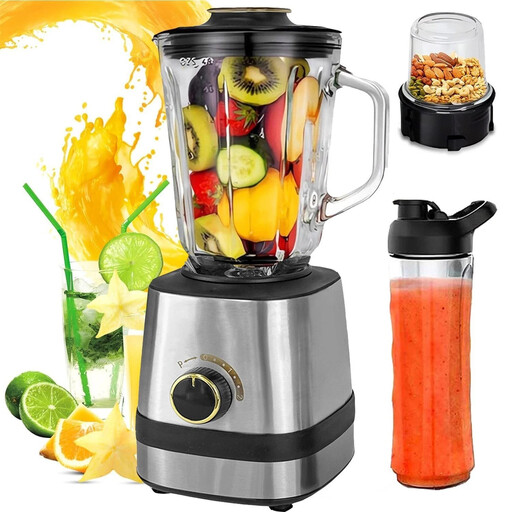
3-in-1 multifunction blender, 800 W
The travel bottle and additional blending jug give you the option of making a serving to take with you or preparing other blends.
Includes a 600-ml travel bottle, a 1500-ml blending jug and a 300-ml chopper cup. The title lists six stainless steel blades and 800 W. According to the product description, removable parts are dishwasher-safe, except for the motor base.
View at Joybuy
 No image available
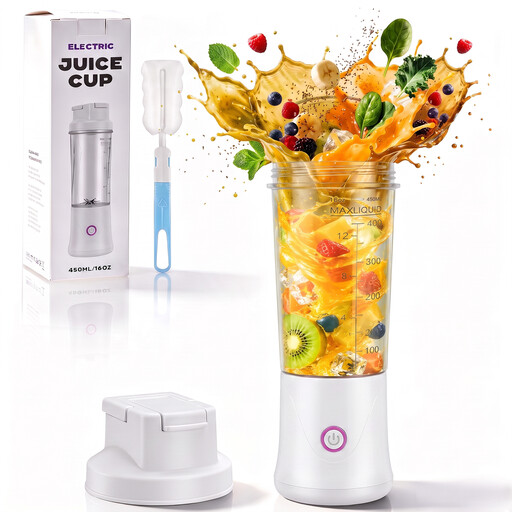
Portable blender for smoothies and shakes
The product description says you can blend smoothies straight in the personal cup and drink from it, making it a handy choice if you want to take a single serving with you without transferring it.
The instructions specify suitable piece sizes and recommended blending times. Follow them when preparing your smoothie.
View at Joybuy
 No image available
3-in-1 smoothie blender, 800 W
The travel bottle is designed for a serving to take with you, while the additional container gives you another option for blending.
The title lists a 600-ml bottle, a 1.5-l container capacity, six blades and BPA-free materials. The product description lists two speeds and a pulse function.
View at Joybuy
 No image available
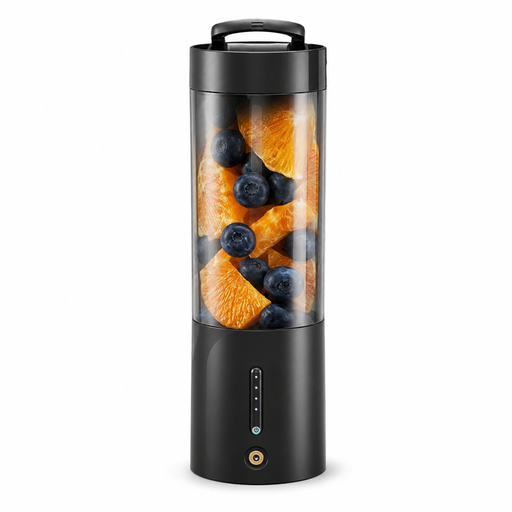
Portable smoothie maker, 450 ml
The portable design is made for a single smoothie serving to take with you.
The title lists a 450-ml PCTG container, six stainless steel blades, 20.000 RPM and magnetic charging. For hard ingredients, the product description recommends cutting them into small pieces and adding liquid.
View at Joybuy
 No image available
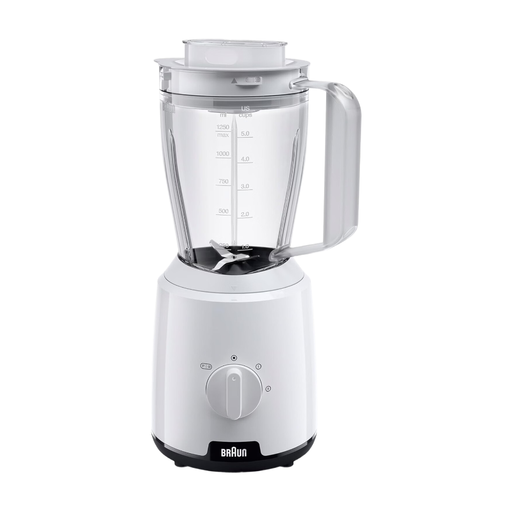
BRAUN PowerBlend 1 JB1000WH
This blender is described as making smoothies in its blending jug, so it’s better suited to preparing drinks at home than blending them directly in a drinking bottle.
The title lists a 1.5-l blending attachment, an ice-crush function, two speeds, 600 W and a white finish. The instructions limit continuous operation to two minutes and recommend letting the blender cool between cycles.
View at Joybuy
Frequently asked questions
Can I leave my smoothie in my bag until lunchtime?
A tightly sealed cup won’t keep your smoothie cool. The German Federal Institute for Risk Assessment explains that inadequate refrigeration during transport and storage can allow harmful germs to multiply. Plan how you’ll keep it cool until you’re ready to drink it, especially if it contains perishable ingredients.
Do I need to prepare the pineapple before blending?
Use fresh ingredients with no signs of spoilage and follow good kitchen hygiene. The German Federal Institute for Risk Assessment recommends washing fruit and vegetables thoroughly. Also cut the ingredients to the size specified in the instructions for your particular blender.
Can the blade unit go in the dishwasher?
It depends on the model. For the nutribullet Pro 900 NB904MACL, nutribullet says to unscrew the blade and clean it with soap and water; the manufacturer describes other accessories as dishwasher-safe. Always follow the instructions for the model you’ve bought.
Are the manufacturer’s guarantee and your statutory rights the same thing?
No. Your statutory rights cover claims against the seller if goods are faulty. A guarantee is an additional voluntary promise; what it covers depends on the relevant guarantee terms.
Which EU requirements are relevant when buying a blender in Germany?
Electrical appliances must comply with the applicable EU product rules and carry the CE marking where required. Your Europe, the European Union’s information portal, explains that CE marking is not government approval but a declaration made by the manufacturer. Containers and other parts that come into contact with food must also comply with the relevant EU rules, including Regulation (EC) No 1935/2004, as outlined by the European Commission.


