Lunch prepper with limited freezer space
You want to prepare individual portions of pizza dough and work out whether your existing freezer compartment is big enough or you need more space.


If your dough portions fit in a suitable four-star freezer compartment, you don’t need a separate appliance just for pizza dough. If space is tight, a small freezer box may be enough. For portions you prepare regularly, consider the compartments and freezing capacity, while a large chest freezer is better suited to bigger stocks of food. Also check the space available and annual energy consumption: the Verbraucherzentrale advises against choosing an appliance that is significantly larger than you need.
You want to prepare individual portions of pizza dough and work out whether your existing freezer compartment is big enough or you need more space.
You regularly freeze dough and other ingredients for lunches. Well-organised compartments and suitable freezing capacity may be important to you.
You plan to freeze other food as well as pizza dough, so you need to weigh up capacity, floor space and running costs.
First, check whether your existing compartment is suitable for freezing fresh food: you’ll need a four-star compartment for this. For longer-term frozen storage, the German Federal Centre for Nutrition specifies −18 °C as the relevant temperature.
| Consideration | What to check before buying | Who should pay particular attention |
|---|---|---|
| Existing compartment or separate appliance | Consider whether it’s suitable for four-star freezing, the space available and how much dough you need to freeze at once. | If my existing compartment has enough room, I don’t want a second appliance just for a few portions. Around 33% of consumers say whether they need a separate appliance is their main concern. |
| Easy access to individual portions | Check the compartments and internal dimensions against the containers you use and how you want to take things out. | If I want to take out individual portions of dough and lunch ingredients regularly, a suitable layout matters. Around 27% of consumers prioritise easy, organised access. |
| Preparing larger quantities | Compare the freezing capacity in kg/24 h with your largest batch of fresh food; check storage space and container dimensions separately. | If I freeze a larger amount of dough on a prep day, the freezing capacity needs to suit the batch. Around 20% of consumers prioritise this. |
| Space and energy consumption | Consider the external dimensions, door or lid clearance, installation requirements and kWh/year together. | If space is limited and the appliance will be running all the time, I want to avoid using more room and energy than necessary. Around 20% of consumers focus on this. |
An existing compartment that’s suitable for freezing may be enough for small amounts of dough. An extra or oversized appliance takes up space and may use more electricity than necessary, as the Verbraucherzentrale points out.
First check that your compartment is suitable for four-star freezing, how much space is available and the size of the batch you plan to freeze.
Litres describe the available storage space, while kg/24 h indicates the stated freezing capacity. Even if the storage capacity is sufficient, your containers still need to fit in the compartments.
Check your largest daily batch, the internal layout and container dimensions separately.
Severin lists annual energy consumption of 148 kWh for the 32-l GB 8886 freezer box. A compact design alone doesn’t tell you how its annual energy consumption compares with a suitable alternative.
Compare kWh/year alongside the storage capacity you need and the appliance’s intended use.
Beko describes MinFrost on the FSE1074N as a system that reduces ice build-up. Liebherr lists NoFrost for the FNe 1404; the model specifications refer to different functions.
Check the exact defrosting system listed for each model rather than relying on the name of the feature alone.
Compact freezer boxes can provide extra room for a few portions. The GB 8886 is one specific model example.
The GTV15NWEB under-counter freezer is an example of a model for storing food separately on a regular basis.
The freestanding FSE1074N freezer is an example of a compact under-counter appliance with MinFrost.
The FNe 1404 is a specific example of a compact under-counter freezer with NoFrost.
Chest freezers are one option for storing larger quantities; the GTE 220 is an example of a large model.
The following Joybuy appliances are presented as freezer options for fresh pizza dough. Depending on how much you prepare and how you want to organise it, you could choose a drawer freezer, an upright freezer or a chest freezer.
 No image available
A possible choice if you want to store dough portions separately and take them out regularly.
Specifications include a capacity of 85 l, three drawers, a four-star freezer compartment and freezing capacity of 4.0 kg/24 h. Dimensions are 84.5 × 56 × 57.5 cm. The appliance needs to be defrosted manually.
 No image available
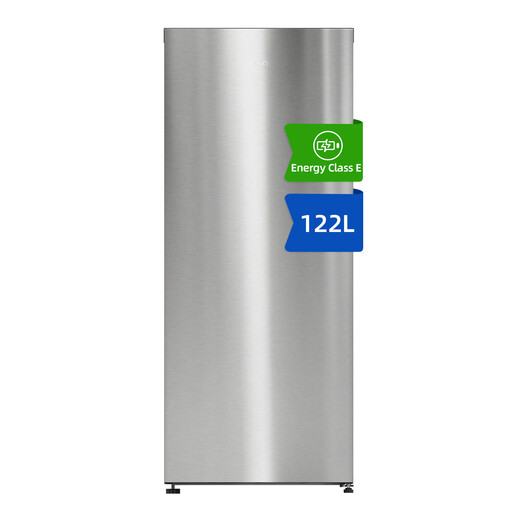
This appliance may suit you if you’re looking for a freezer with NoFrost and an additional fridge mode.
The product name lists a capacity of 122 l, a four-star freezer, NoFrost, energy class E and a noise level of 39 dB. The stated width is 47.5 cm; the description also says it can freeze down to −24 °C.
 No image available
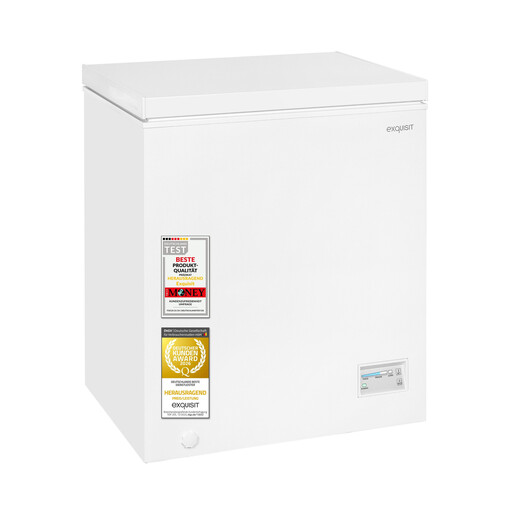
This chest freezer may be a good fit if you want to freeze larger fresh batches or other food alongside your dough portions.
Specifications include a capacity of 142 l, freezing capacity of up to 7 kg/24 h and a removable basket. Dimensions are 70.5 × 84.5 × 55 cm. The appliance needs to be defrosted manually.
 No image available
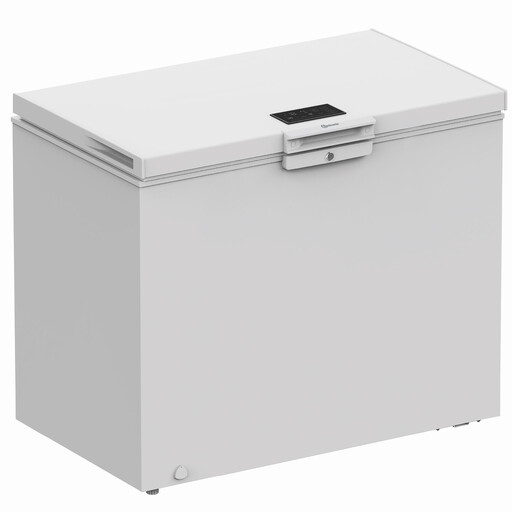
This chest freezer is better suited to larger batches and extra frozen food than to a few lunch portions.
Specifications include a capacity of 198 l, freezing capacity of 13 kg/24 h and two baskets. The chest freezer is 103 cm wide. It needs to be defrosted if too much ice builds up.
 No image available
An option if you want to store dough portions in several compartments while also having extra freezer space.
The model is listed with a capacity of 204 l, NoFrost, energy class E and six drawers or compartments. Dimensions are 60 × 54 × 170.5 cm.
No. The German Federal Centre for Nutrition recommends using a four-star compartment to freeze fresh food. For longer-term frozen storage, the relevant temperature is −18 °C; no particular appliance type or minimum size is specified.
Divide the dough into the portions you need before freezing, and use only freezer-safe film, bags or containers. The German Federal Centre for Nutrition recommends freezing food in portions when the quantities you’ll need are already known.
No. Litres indicate the storage space, while kg/24 h indicates the stated freezing capacity. So compare the freezing capacity with the largest fresh batch you plan to freeze, and check separately that the compartments and containers suit the storage capacity.
Check the permitted ambient temperature for the specific model against the location you have in mind, and follow the instructions for use. The EU energy label includes information such as annual consumption in kWh, volume and noise level. Actual consumption also depends on how and where the appliance is used.
It isn’t possible to give a single storage time for all raw pizza dough. This can depend on the recipe and how the dough is handled, so follow a suitable recipe and the instructions for your freezer rather than assuming one set period applies to every dough.