Occasional solo pizza makers
If you only freeze a few portions for later, first check whether your existing freezer compartment is big enough. The Verbraucherzentrale recommends choosing an appliance size to suit your actual needs.


You don’t automatically need a separate appliance for a few portions of pizza dough. First, check whether your existing freezer compartment can freeze fresh food and has enough room. Food should be stored at −18 °C, and the Verbraucherzentrale also recommends choosing an appliance size and energy consumption to suit your actual needs. If you regularly add to your stash or are short on space, compare compact appliances by usable capacity, dimensions and annual energy consumption.
If you only freeze a few portions for later, first check whether your existing freezer compartment is big enough. The Verbraucherzentrale recommends choosing an appliance size to suit your actual needs.
If you often freeze several individual portions as well as other food, extra space with clear separation can be useful. Drawers are one way to keep your supplies organised.
If floor space is limited, compare both the dimensions and annual energy consumption before adding another appliance that will run all the time. The Verbraucherzentrale advises choosing a freezer to suit your needs.
Best for: Freezing a few portions now and then, when they fit in your existing compartment.
Things to consider: You won’t need a second appliance, but you’ll be limited by the space available and its freezing function.
Best for: When you don’t have a suitable freezer compartment or it isn’t big enough for your regular supplies.
Things to consider: You’ll need extra floor space and will have ongoing energy costs, so make sure they’re justified by your additional storage needs.
| What matters to you | What to check | Who is it important to? |
|---|---|---|
| Enough freezer space | Check the space you have and the dimensions of your wrapped portions; for a new appliance, look at its usable capacity and interior space. | If I’m only freezing a few portions of dough, I don’t want an appliance with lots of unused space. Around 31% of consumers prioritise a freezer that fits their needs over extra capacity. |
| Energy consumption | For a new appliance, compare annual energy consumption in kWh alongside the usable capacity you need. | If I’m running an extra appliance all the time, I want to weigh its energy consumption against the supplies I actually store. Around 25% of consumers prioritise low running costs. |
| Keeping several portions organised | Check the number and usable dimensions of the compartments against the supplies you plan to store. | If I regularly freeze several portions, I want to keep dough and other supplies clearly organised and separate. Around 19% of consumers prioritise organised compartments for storing several portions. |
| Defrosting effort | Check the defrosting method for the full model in its product specifications. | If I want to keep future maintenance as simple as possible, I check the defrosting method before buying. Around 13% of consumers prioritise less defrosting effort. |
| Positioning and noise | Measure the space, clearance from the wall and door swing; compare the noise level of the specific model. | If the appliance will be in a tight space or near a living area, I need the right dimensions and want to consider its noise level. Around 12% of consumers prioritise positioning and noise. |
An appliance that’s too large for your needs could use more energy than necessary. The Verbraucherzentrale recommends checking your existing freezer space and how much you plan to store first.
Measure the space you need, then compare the interior capacity and annual energy consumption of appliances that are actually suitable.
A mini freezer doesn’t necessarily use less energy than a larger, well-insulated appliance.
Compare the annual energy consumption in kWh and usable interior space of specific models, not just their external dimensions.
For the Exquisit GS81-040C weiss, the manufacturer gives a cabinet depth of 58 cm and a depth of 107 cm with the door open. So you may need considerably more space to open it.
Before ordering, measure the door swing, clearance from the wall and access to the place where you plan to position it.
NoFrost is specified for the particular Liebherr FNe 1404 Pure NoFrost model; that doesn’t mean every model from the brand has this feature.
Check the defrosting method against the full model name in the relevant product specifications.
The GS81-040C weiss is a specific model to compare if you’re looking for a compact under-counter freezer with drawers.
The GS 7253 weiß is another under-counter model to compare if you want to keep dough and other food supplies separate.
The FNe 1404 Pure NoFrost is a specific option to compare if you want to avoid manual defrosting as much as possible.
These are compact, separate freezer options for smaller supplies. Before freezing fresh dough, check that the specific model is suitable and can reach the recommended storage temperature of −18 °C.
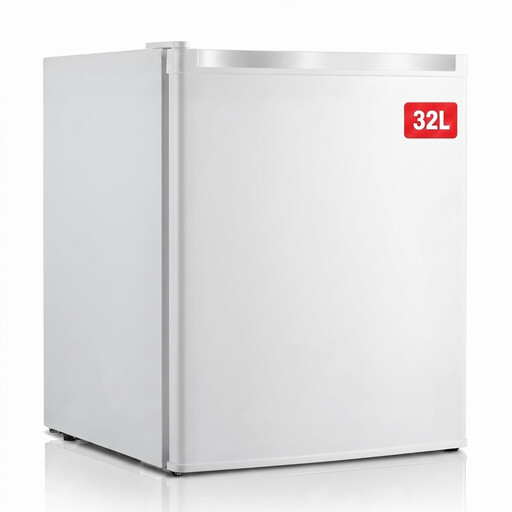 No image available
This compact model could suit a small amount of extra storage; before freezing fresh dough, check its freezing function and the storage temperature it can reach.
32 l; seven temperature settings; adjustable range from −10 °C to −22 °C; 43 dB; reversible door.
 No image available
The stated freezing performance may be useful if you’re looking to freeze fresh dough; check that the storage temperature it can reach suits your needs.
35 l; 4-star freezing performance; adjustable down to −21 °C; removable internal compartment; reversible door.
 No image available
This could suit a small amount of separate storage; before buying, check that its dimensions and stated annual energy consumption meet your needs.
31 l; 4-star freezing performance; freezing capacity of up to 2 kg per 24 hours; 147 kWh/year; energy class E; reversible door; adjustable feet.
 No image available
The larger capacity could be a good fit if you regularly want to store other small supplies alongside portions of dough.
60 l; three storage compartments; adjustable down to −24 °C; freezing capacity of up to 6 kg per 24 hours; reversible door.
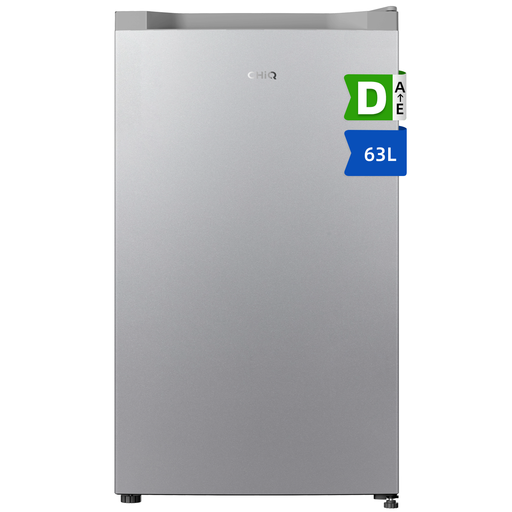 No image available
The drawers make it easy to store individual portions separately; take manual defrosting into account when choosing.
63 l; 4-star fast-freeze function down to −18 °C; two adjustable drawers; manual defrosting; 38 dB; energy class D; reversible door; 47 cm wide and 44.7 cm deep.
No, not necessarily. First, check whether your existing freezer compartment can freeze fresh food and has enough room for your wrapped portions. The Verbraucherzentrale recommends matching the appliance size to your freezing needs.
Use freezer-safe containers and label them with their contents and the date you put them in the freezer. The Verbraucherzentrale says the snowflake symbol indicates that a container is suitable for freezer use.
Compare the stated annual energy consumption in kWh alongside the usable capacity you need. The label figure is based on standardised conditions; how and where you use the appliance can affect its actual energy consumption.
No. Your statutory rights and a voluntary guarantee are different. The Verbraucherzentrale recommends checking the guarantee terms and the details of the seller for the specific offer separately.
For a new freezer that requires an energy label, the legally required EU label information must also be visible in the online listing. Your local recycling centre is one option for disposing of an old electrical appliance responsibly.