Which option is right for you?

Limited space for a few portions of dough

If you only freeze a few portions, make sure there’s room for the appliance, adequate ventilation and the door when it’s open. The Verbraucherzentrale recommends considering the energy consumption of a small freezer when you buy one.

Preparing several portions regularly

If you often prepare several portions at once, consider the usable capacity, how the interior is organised and whether your containers will fit. If you’re using a fridge-freezer compartment, check for a four-star rating if you want it to freeze fresh dough.

An extra appliance, with energy use in mind

If you’re considering extra freezer space, weigh the annual energy consumption of the specific model against the storage space you need. The European Commission lists energy consumption and usable volume as details shown on the energy label.

What should you look for when buying?

Buying criterion What to look for Who is it important to?
Space and door clearance Check the external dimensions, required ventilation gaps, door hinge and depth when the door is open. If I only need to store a few portions, I want to know whether the appliance, required clearance and open door will fit in my kitchen. Around 36% of consumers prioritise space and door clearance.
Amount of dough and freezing function Check that your containers fit in the usable interior. If you’re freezing fresh dough in a fridge-freezer compartment, look for a four-star rating. I want to freeze fresh dough and fit several wrapped portions inside, so I check the freezing function and interior space. Around 29% of consumers put the amount of dough and freezing capability first.
Annual energy consumption Compare the kWh/year figures on the energy labels for the specific models; a smaller appliance isn’t necessarily more energy-efficient. If an extra appliance will be running all the time, I want to weigh its stated energy consumption against the storage space I need. Around 21% of consumers prioritise energy consumption.
Defrosting and noise Check the defrosting system and noise emissions in dB(A) for the specific model. If the appliance will be in the kitchen or near a living area, noise and the effort involved in defrosting matter to me day to day. Around 14% of consumers prioritise maintenance and noise.

Common misconceptions

  • A smaller freezer is always more energy-efficient

    A small appliance may use more energy per litre of usable capacity over the year. The Verbraucherzentrale advises paying particular attention to energy consumption when choosing a mini freezer.

    Compare the kWh/year figures for the specific models rather than relying on capacity or energy efficiency class alone.

  • The appliance’s width is all you need to know when planning where to put it

    For the Exquisit GS81-040C weiss, the manufacturer says to allow for the greater depth when the door is open, as well as the appliance’s external dimensions.

    For the specific model, measure the floor space, height, required ventilation clearance, route into your home and the space needed to open the door.

  • MinFrost means NoFrost

    On the Beko FSE1175N, MinFrost reduces ice build-up, but the model still needs to be defrosted manually.

    Check the exact defrosting technology and care instructions rather than assuming similar-sounding feature names mean the same thing.

Brands to consider

Severin

The GB 8886 is an example of a small freestanding freezer for a few portions of dough.

  • Severin states that it has a usable capacity of 32 l, external dimensions of 50 × 48 × 44,5 cm and a freezing capacity of 2 kg in 24 hours.
  • According to the manufacturer, this model does not have Total NoFrost. Its stated annual energy consumption is 148 kWh.

Exquisit

The GS81-040C weiss is a drawer-style option for storing more dough and other supplies in a limited floor space.

  • The manufacturer states that this model has a usable capacity of 87 l, three drawers and a four-star freezing function.
  • Its external dimensions are 54,5 × 85 × 58 cm. According to the manufacturer, you’ll need to allow for a depth of 107 cm with the door open. Its stated energy consumption is 105,04 kWh/year.

Beko

The FSE1175N is a tabletop option if a small freezer doesn’t offer enough organised storage.

  • Beko lists a 95 l freezer capacity, dimensions of 84 × 54 × 59 cm and energy class D for this model.
  • Beko says MinFrost reduces ice build-up, but this model still needs to be defrosted manually.

Freezers at Joybuy

This selection includes small freestanding freezers and tabletop models with a stated four-star freezing function, which is relevant if you want to freeze fresh dough.
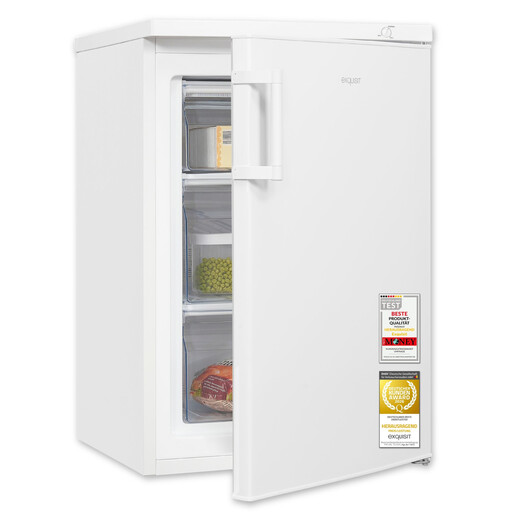
Exquisit GS581-H-010E freezer, 85 l, three drawers

Exquisit GS581-H-010E freezer, 85 l

The four-star freezing function and three drawers are well suited to storing several portions of dough separately.

The stated specifications include a usable capacity of 85 l, a freezing capacity of 4,0 kg in 24 hours and external dimensions of 56 × 57,5 × 84,5 cm.

According to the product description, manual defrosting is needed once more than 5 mm of frost has built up.

Joybuy
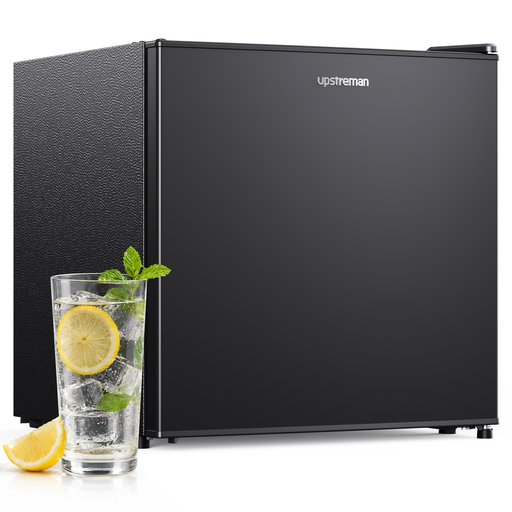
Upstreman UF35 mini freezer, 35 l

Upstreman UF35 mini freezer, 35 l

This compact freezer is an option if you only need to freeze a few portions and have limited space.

The stated features include a usable capacity of 35 l, a four-star freezing function, a removable interior shelf and a reversible door.

Joybuy
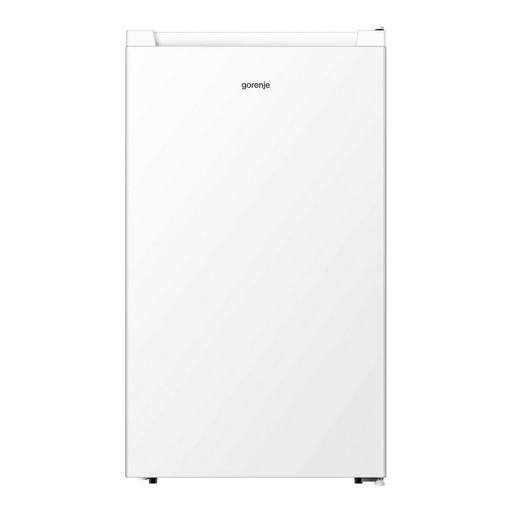
Gorenje F39EPW4 tabletop freezer, energy class E

Gorenje F39EPW4 tabletop freezer

This freestanding tabletop freezer can provide extra space for portions of dough, if its dimensions fit in your kitchen.

The stated specifications include a usable capacity of 61 l, a four-star freezing function and a freezing capacity of 3 kg in 24 hours. Its dimensions are 842 × 475 × 448 mm.

The appliance needs to be defrosted manually.

Joybuy

COMFEE' RCU40WH2(E) mini freezer, 31 l

COMFEE' RCU40WH2(E) mini freezer, 31 l

This small freestanding freezer is designed for a few portions when space is limited.

The stated specifications include a usable capacity of 31 l, a four-star freezing function, a freezing capacity of 2 kg in 24 hours and annual energy consumption of 147 kWh.

The door is reversible.

Joybuy
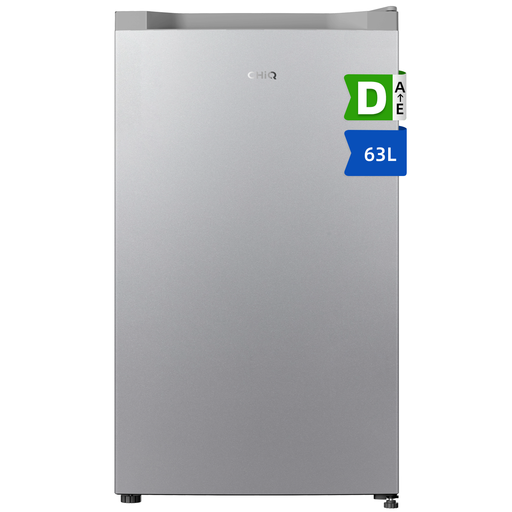
CHiQ JR63DSD freezer, 63 l, two drawers

CHiQ JR63DSD freezer, 63 l

The drawers let you store several portions of dough separately, provided you have enough floor space.

The stated features include a usable capacity of 63 l, a four-star fast-freeze function, two adjustable drawers and a width of 47 cm.

This model needs to be defrosted manually.

Joybuy

Frequently asked questions

Can I put fresh pizza dough in any freezer compartment?

No, not if you want the compartment to freeze fresh dough. If you’re using a freezer compartment in a fridge-freezer, check for a four-star rating. A compartment designed only to store food that’s already frozen for a short time won’t do the same job.

How can I keep portions of dough organised?

Divide the dough into portions that suit how you’ll use it later, then store them in suitable, labelled freezer bags or containers. The Bundeszentrum für Ernährung recommends suitable packaging and labelling it with the contents, quantity and date. It does not specify a single storage period that applies to every pizza dough.

Can I place a freezer right next to a wall or kitchen cupboard?

That depends on the instructions for the specific model. For example, the manufacturer specifies ventilation clearances for the Severin GB 8882; you shouldn’t assume the same measurements apply to the GB 8886 or other appliances. Remember to measure the space in front of the open door, too.

How do I compare the appliances’ energy consumption?

Compare the stated annual energy consumption in kWh for the specific models. Bear in mind that actual consumption also depends on how and where the appliance is used. Check the defrosting system as well: an appliance that reduces ice build-up doesn’t necessarily mean you won’t need to defrost it.

Which energy label should I check when buying online?

The EU energy label, with classes from A to G, applies to new household refrigerators and freezers covered by the scheme. According to information from the European Union, the label must also be visible when products are sold online. Check that the model and label shown match the specific listing.