
Lieferung heute & morgen

Qualitätsgarantie

Willkommens-Angebote freischalten: KOSTENLOSE Lieferung | Bis zu 80 % RABATT | Kostenlose 30-Tage-JoyPlus-Testphase
App herunterladen
Choosing the right filament is critical to the success of any 3D print. However, with the vast array of options on the market, finding the right PLA Filament 1.75mm for your specific needs can be challenging. Inconsistent diameters, nozzle clogs, or messy windings are common problems that lead to failed prints and wasted material.
This guide serves as your roadmap. It presents objective criteria for selecting 3D Printer Filament and showcases a selection of products that stand out for their specific properties. The goal is to provide you with an informed basis for your decision, so you can find the perfect material for your projects.
To assess the quality and suitability of a filament, several technical parameters are important.
The standard diameter for most FDM printers is 1.75mm. However, the manufacturing tolerance is the crucial factor. A low tolerance, such as ±0.02 mm, ensures a consistent material flow through the nozzle. This minimises the risk of under- or over-extrusion and effectively prevents clogging. A filament with a precise diameter is the basis for repeatable and detailed printing results.
Standard PLA is versatile, but for specific applications, there are optimised variants:
An often-underestimated characteristic is the quality of the spool winding. A messy winding can cause the filament to tangle and interrupt the printing process. Automatic, clean winding systems ("Neat Winding") prevent this problem. Packaging is equally important. PLA is hygroscopic, meaning it absorbs moisture from the air. Vacuum-sealed packaging with a desiccant (silica gel) protects the 1kg PLA Filament from moisture absorption, ensuring material quality until it's used.
Here is a selection of PLA filaments suitable for different applications and requirements.
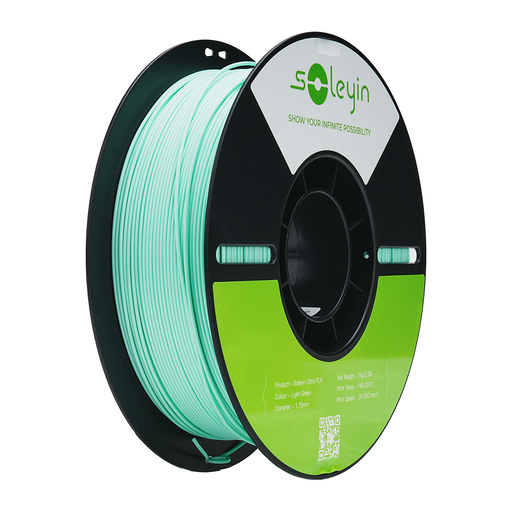
Why It Stands Out: This Creality Filament is specially developed for high printing speeds from 30 to 300 mm/s. The EPC technology for automatic neat winding reduces the risk of tangles, which is particularly advantageous for long print jobs.
Advantages:
Who Is It For? Users who own a high-speed 3D printer and want to significantly reduce their print times without compromising on reliability. It's a great choice for prototyping and the rapid production of parts.
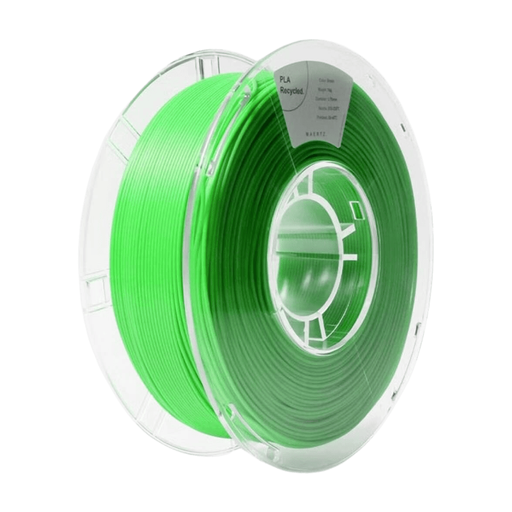
Why It Stands Out: This green PLA filament from Maertz is made from recycled PLA material. It is aimed at users who value sustainability while still expecting high print quality.
Advantages:
Who Is It For? Eco-conscious makers and hobbyists looking for a reliable everyday filament for a variety of projects, while also contributing to environmental protection.
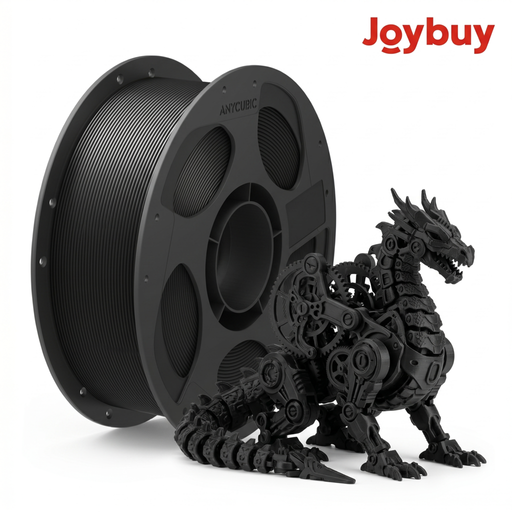
Why It Stands Out: The ANYCUBIC Filament is designed as a reliable base material distinguished by its high consistency. The tight diameter tolerance of ±0.02 mm and the matte black finish make it a solid choice for professional-looking prints.
Advantages:
Who Is It For? Both beginners looking for a straightforward and dependable material for their first projects, and advanced users who need a consistent filament for functional parts and models with high visual quality.
If you are looking for filaments with special visual properties, such as for printing transparent objects like vases or lampshades, another material category might be of interest to you.
Explore our range of transparent filament to find more specialised options for your creative projects.
PLA+ (or PLA Plus) is typically a modified version of PLA with added additives to improve certain properties. These modifications often aim to increase toughness, reduce brittleness, and enhance layer adhesion. Since "PLA+" is not a standardised term, the specific properties can vary greatly between manufacturers.
PLA should be stored in a cool, dry place, protected from direct UV radiation. Since the material absorbs moisture from the ambient air, it is advisable to keep opened spools in a resealable bag with the included desiccant or in a special dry box. Damp filament leads to brittle prints, bubbling (steam), and poor surface quality.
Yes, High-Speed PLA can be used on any FDM printer that processes standard PLA. However, to achieve the advertised high printing speeds, a printer designed for this purpose is required. Such printers typically feature a more stable frame, a high-performance hotend with a high melt flow rate, and firmware features like "Input Shaping". On a standard printer, High-Speed PLA will print at normal speeds and behave similarly to regular PLA.