
Lieferung heute & morgen

Qualitätsgarantie

Willkommens-Angebote freischalten: KOSTENLOSE Lieferung | Bis zu 80 % RABATT | Kostenlose 30-Tage-JoyPlus-Testphase
App herunterladen
The selection of PLA filament on the market can be overwhelming. Different types, colours, and technical specifications often make choosing the right material complicated. Whether you're printing detailed models, functional prototypes, or quick drafts, the choice of filament is crucial for the final result.
This guide is designed to help you understand the key features of PLA filaments and make an informed decision. As your Joybuy Product Recommendation Officer, I have compiled objective criteria and product data to provide you with clear guidance.
Before you buy PLA filament, you should consider several technical aspects that significantly influence the print quality and the properties of the finished object.
The material is the foundation of every FDM 3D print. PLA (Polylactide) is particularly popular with beginners due to its ease of use and low tendency to warp. However, there are specialised variants:
The consistency of the filament diameter is critical for a smooth and error-free print. The most common standard is PLA filament 1.75mm. Pay attention to the tolerance specified by the manufacturer. A dimensional accuracy of +/- 0.02 mm is considered very precise and minimises the risk of nozzle clogging and uneven extrusion. A 1kg filament spool is the most common size for most projects.
The filament's finish has a major impact on the aesthetics of the final print.
Here is a selection of filaments that stand out for their specific properties, tailored to different applications.
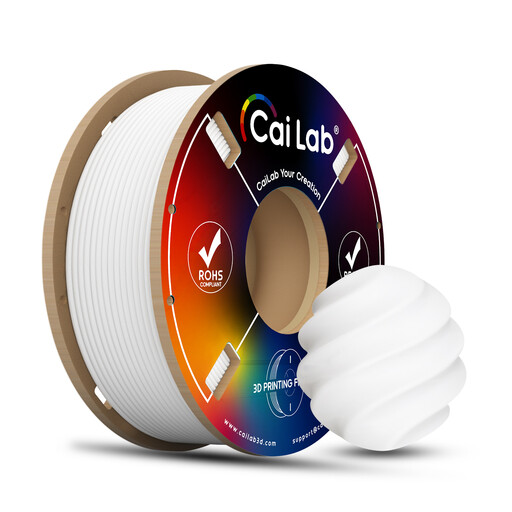
Why It Stands Out This PLA+ filament from CaiLab positions itself as an eco-conscious choice. According to the manufacturer, it is made from corn extract and is biodegradable. It combines the easy printability of standard PLA with the enhanced mechanical properties of PLA+.
Advantages
Who It's For Users looking for a reliable all-rounder for everyday printing projects who also value materials from renewable resources. It is suitable for prototypes, hobby projects, and functional parts with moderate stress requirements.
View Product: CaiLab PLA+ Bio - White
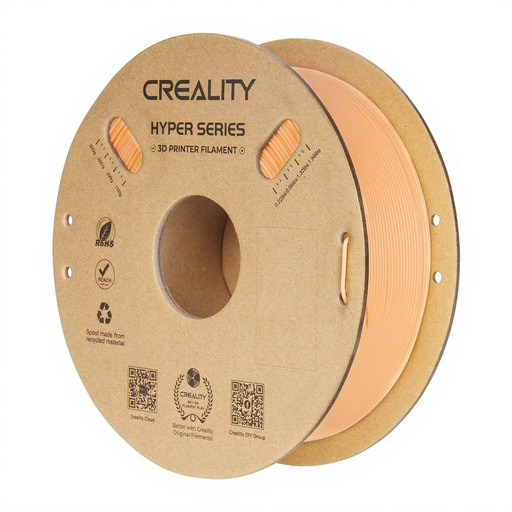
Why It Stands Out Creality Hyper PLA is specifically designed for high-speed printing. According to the manufacturer, it enables printing speeds of up to 600 mm/s, which can drastically reduce production time for large or complex models. The high dimensional accuracy of +/- 0.02 mm supports consistent print quality even at a high pace.
Advantages
Who It's For Professional users, engineers, and makers who own a modern high-speed 3D printer and want to maximise their productivity. Ideal for rapid prototyping, manufacturing large objects, and anyone who doesn't want to wait long for their prints.
View Product: Creality Hyper PLA Peach Powder
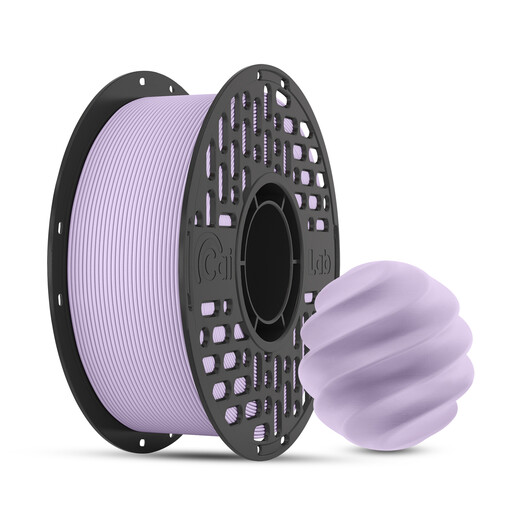
Why It Stands Out This filament from CaiLab is distinguished by its unique surface finish. The matte PLA creates a soft, non-reflective texture that gives printed objects an artistic and high-end look. According to the manufacturer, the surface helps to hide layer lines and provides a smooth, tactile result.
Advantages
Who It's For Designers, artists, architects, and hobbyists for whom the visual quality and feel of the final product are paramount. Perfect for exhibition pieces, decorative objects, and products that require a premium finish.
View Product: CAILAB PLA Matte - Misty Lilac
The products featured here cover specific use cases. If you are looking for a different filament colour or other specialised materials, you may find the right product for your next project in our broader selection.
Discover our entire range of 3D printer filaments here
PLA+ is an evolution of standard PLA. It is modified by adding additives to improve certain mechanical properties. Typically, PLA+ filament is tougher and more impact-resistant than conventional PLA, while retaining its ease of printing. The exact properties can vary by manufacturer.
PLA is hygroscopic, meaning it absorbs moisture from the air. Moist filament leads to poor print quality (e.g., bubbling, brittle prints). Therefore, always store your 3D printer PLA filament in a cool, dry place. It's best to keep it in a resealable bag with the included desiccant (silica gel). For long-term storage, special filament dry boxes are suitable.