
Lieferung heute & morgen

Qualitätsgarantie

Willkommens-Angebote freischalten: KOSTENLOSE Lieferung | Bis zu 80 % RABATT | Kostenlose 30-Tage-JoyPlus-Testphase
App herunterladen
PLA+ filament is an advanced formulation of the widely used polylactic acid (PLA) plastic employed in Fused Deposition Modeling (FDM) 3D printing. By incorporating specific additives, PLA+ aims to enhance the mechanical properties of standard PLA. These targeted modifications typically include increased impact resistance, improved layer adhesion, and reduced brittleness. This material variant is positioned as a 3D printer filament for users who require greater resilience from their printed objects without sacrificing the ease of printing associated with PLA.
Selecting the right filament is based on an analysis of technical parameters that directly influence the print quality and functionality of the final product.
The primary difference between PLA and PLA+ lies in their mechanical properties. PLA+ filament is formulated to exhibit higher toughness. This means it can absorb more energy before fracturing, making it more resistant to impacts and bending. Another key aspect is the improved layer adhesion, which can lead to stronger and more isotropic parts. Many PLA variants, including PLA+, are marketed as bio-filament 3D printer materials because their base, polylactic acid, is derived from renewable resources like corn starch or sugarcane.
Although PLA+ is based on PLA, its optimal print settings can differ.
PLA and its derivatives are hygroscopic, meaning they absorb moisture from the ambient air. Moist filament leads to poor print quality, manifesting as popping or crackling sounds during extrusion, a rough surface finish, and reduced part strength. Proper storage in a sealed bag with a desiccant (silica gel) is therefore essential to preserve the material's properties.
The following products represent a selection from the premium PLA+ segment, chosen for their specific material properties and colourways.
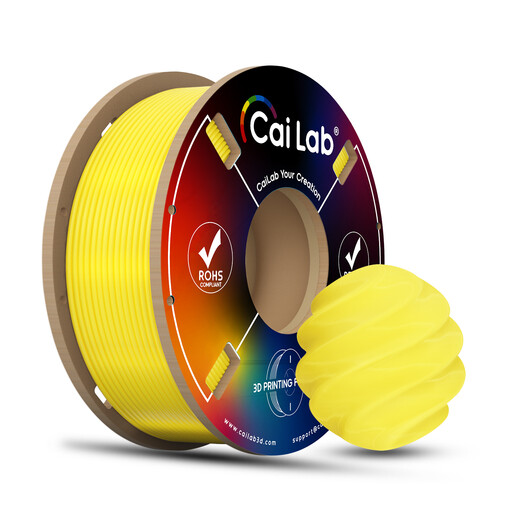
View Product: CAILAB PLA+ Bio - Yellow
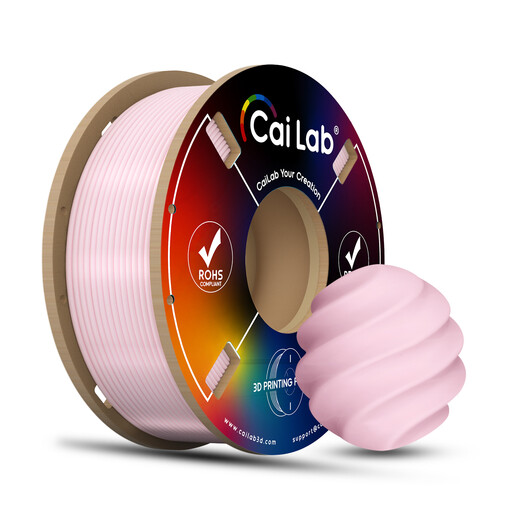
View Product: CAILAB PLA+ Bio - Sakura Pink
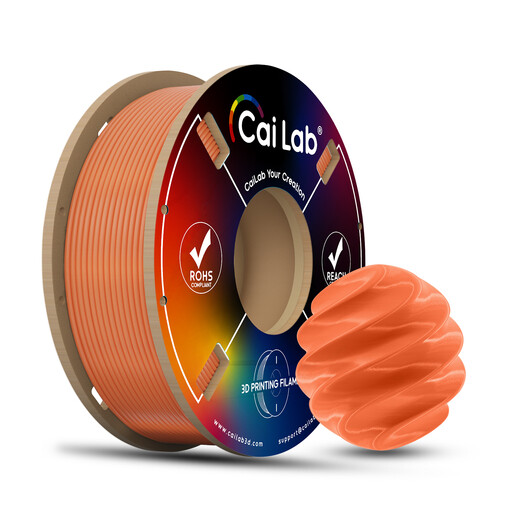
View Product: CAILAB PLA+ Bio - Orange
The quality of a 3D print is not determined by the filament alone. The printer's performance and calibration are equally critical factors for the final result. Modern and well-maintained hardware provides the foundation for successfully processing specialty filaments like PLA+. If you are considering upgrading or purchasing new equipment, you can find a selection of devices in our New Printers category.
1. What is the primary difference between PLA and PLA+? The main difference lies in the material composition. PLA+ contains additives that modify its mechanical properties. This typically results in higher impact resistance and better layer adhesion compared to standard PLA, making printed objects less brittle and more resilient overall.
2. Does PLA+ filament require special print settings? Yes, the settings can differ. PLA+ is often printed at a slightly higher nozzle temperature (approx. 5-15°C more than standard PLA) to ensure optimal melting and adhesion. It is recommended to follow the filament manufacturer's specifications and, if necessary, use a temperature tower to determine the ideal parameters for your specific printer.
3. How should PLA+ filament be stored? Due to its hygroscopic properties, PLA+ filament must be stored in a dry environment. Storing it in an airtight bag or box along with a desiccant (e.g., silica gel) prevents moisture absorption. This is crucial for maintaining high print quality and the material's mechanical integrity.