
Lieferung heute & morgen

Qualitätsgarantie

Willkommens-Angebote freischalten: KOSTENLOSE Lieferung | Bis zu 80 % RABATT | Kostenlose 30-Tage-JoyPlus-Testphase
App herunterladen
If you want to give your 3D printing projects an exceptional aesthetic, PLA Silk filament is a natural choice. Its characteristic silky sheen can transform models, from simple figurines to complex prototypes, into visual highlights. However, the path to a flawlessly glossy print result is often fraught with unexpected hurdles. Many users invest in filament that looks promising on the spool, only to be disappointed by dull surfaces, brittle material, or messy color transitions.
This guide serves to help you navigate these challenges. We will highlight the most common problems that arise when purchasing and using PLA Silk filament and show you which technical features truly matter to avoid bad investments and achieve consistently high-quality results.
Before you buy 3D printer filament, it's important to understand the typical flaws that often only become apparent during the printing process or on the finished object.
To avoid the problems mentioned above, you should base your purchasing decision on objective technical parameters. These three features are critical for the quality and reliability of your filament.
The consistency of the filament diameter is fundamental to any 3D print, but it is especially critical for Silk PLA. A uniform material flow is the prerequisite for a homogeneous, glossy surface. Look for filaments with a standard diameter of 1.75mm PLA filament and a specified diameter tolerance of ±0.02 mm. A tighter tolerance minimizes the risk of nozzle clogging and uneven extrusion, which directly translates into flawless surface quality.
PLA Silk is a modification of standard PLA, mixed with special elastomers to increase light reflection. The quality of these additives determines the balance between shine and mechanical stability. A high-quality glossy filament maintains good layer adhesion and flexibility. Equally important is how the filament is wound on the spool. Neat, tangle-free winding prevents the filament from tangling during printing and interrupting the process—a crucial factor for long print jobs.
If you plan to work with multicolor PLA, the manufacturing technology is key. High-quality Dual Color filament, Tri Color filament, or even Quad-Color filament is produced using co-extrusion. In this process, multiple color strands are precisely fused into a single filament strand. This ensures sharp and defined color separations in the finished print, with an appearance that changes depending on the viewing angle.
Based on the criteria above, we have curated a selection of PLA Silk filaments suitable for different applications and user profiles.
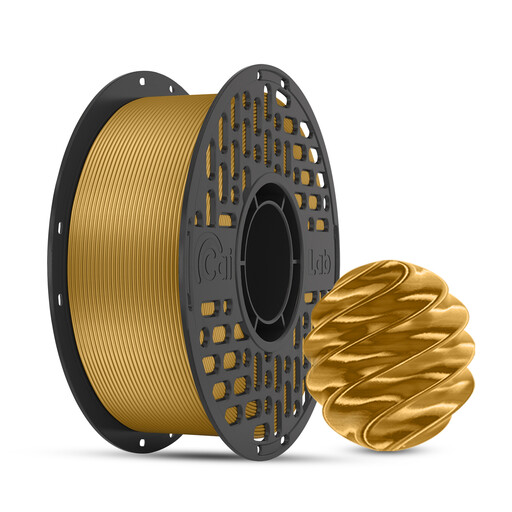
Why This Fits Their Persona: Ideal for users getting their first experience with silk filaments. The classic gold tone immediately creates a high-quality impression and is forgiving to use. Perfect for decorative objects or gifts.
The balanced material blend ensures a consistently rich shine without matte spots and provides good layer adhesion, making the material less brittle.
Reliable print results with standard PLA settings. A uniform sheen that can hide minor printing imperfections.
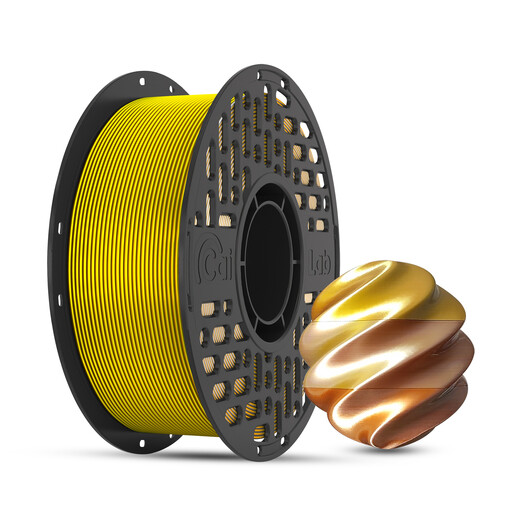
Why This Fits Their Persona: For makers who want to create unique art objects, vases, or figures with dynamic color gradients. The combination of three metallic colors produces fascinating effects that change depending on the model's geometry and viewing angle.
The co-extrusion technology ensures clearly defined color sections within the filament. This prevents the "muddy" mixing of colors and creates clean, glossy transitions.
Produces complex tri-color effects with a standard single extruder. The neat winding ensures jam-free prints.
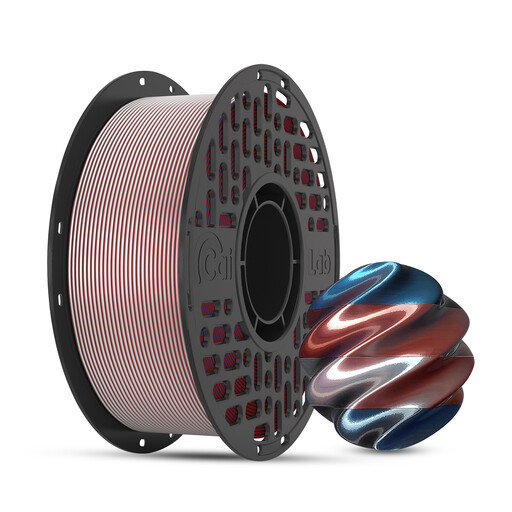
Why This Fits Their Persona: For experienced users who want to fully exploit the visual capabilities of their printer. The four color quadrants create highly complex, unique surfaces ideal for themed models or competition pieces.
The precise division of the four colors in the filament strand prevents color bleeding. The strict diameter tolerance is crucial for such complex filaments to guarantee a constant material flow.
Maximum visual complexity from a single filament. Creates four sharply separated colors for one-of-a-kind prints.
We have compiled a complete, up-to-date list of products that fully meet these strict selection criteria and all relevant safety regulations.
Generally, PLA Silk can be printed with settings similar to standard PLA. However, to achieve optimal shine, it can be beneficial to slightly increase the printing temperature (e.g., to 210–220 °C) and slightly reduce the printing speed (e.g., to 40–50 mm/s). It is always good practice to print a small temperature tower before the main print to find the ideal parameters for your specific setup.
Like any PLA-based material, Silk filament is hygroscopic, meaning it absorbs moisture from the air. To maintain print quality and prevent the material from becoming brittle, you should always store opened spools in a resealable bag or an airtight box along with a desiccant packet (silica gel).
Yes, filaments like Dual Color or Tri Color are designed for use in conventional FDM printers with a single extruder. The different colors are already combined within the 1.75mm filament strand. The final appearance of the color play on the printed object depends heavily on its geometry and orientation on the print bed.