
Lieferung heute & morgen

Qualitätsgarantie

Willkommens-Angebote freischalten: KOSTENLOSE Lieferung | Bis zu 80 % RABATT | Kostenlose 30-Tage-JoyPlus-Testphase
App herunterladen
For 3D printing enthusiasts who prioritise exceptional aesthetics, PLA Silk filament is a popular choice. Its characteristic sheen lends a high-end, metallic-like finish to decorative objects, figurines, and prototypes. However, the path to a perfect print is often fraught with challenges. Many users invest in a spool only to be disappointed by inconsistent gloss, brittle material, or clogged nozzles.
This guide will help you identify and avoid the most common pitfalls. We'll explain the crucial quality characteristics to look for before you buy, ensuring your next project with shiny PLA succeeds on the first try.
The market offers a vast selection, but not every filament advertised as "Silk" delivers on its promise. Watch out for these three typical flaws to avoid costly mistakes and frustration.
To avoid these problems, don't be swayed by marketing promises; instead, focus on verifiable technical specifications. The following three parameters are crucial for print quality and reliability.
PLA Silk is not a standalone material but a modification of Polylactic Acid (PLA). Special elastomers or other polymers are added to it to create a light-reflective, glossy surface. The quality and type of these additives determine not only the intensity of the sheen but also the melting behaviour.
Look for manufacturers that specify a clear temperature range. The optimal printing temperature for silk filaments is often 5–15 °C higher than for standard PLA. Printing within this recommended window prevents the additives from degrading and minimises the risk of nozzle clogs.
A consistent filament diameter is essential for uniform extrusion. For a 1.75mm PLA filament, the deviation (tolerance) should not exceed ±0.03 mm; more precise filaments offer a tolerance of ±0.02 mm. Larger fluctuations can lead to visible irregularities (over- or under-extrusion) in the print.
Winding quality is equally important. A neat, parallel-wound spool ensures the filament unwinds without snagging. This is an often-overlooked feature, but it is central to the reliability of long print jobs.
Aesthetics are the primary reason for choosing Silk PLA. Modern filaments offer an impressive variety that goes far beyond single-colour options:
Based on the criteria above, we have identified a few options from the CaiLab PLA Filament range that are suitable for specific user profiles and projects.
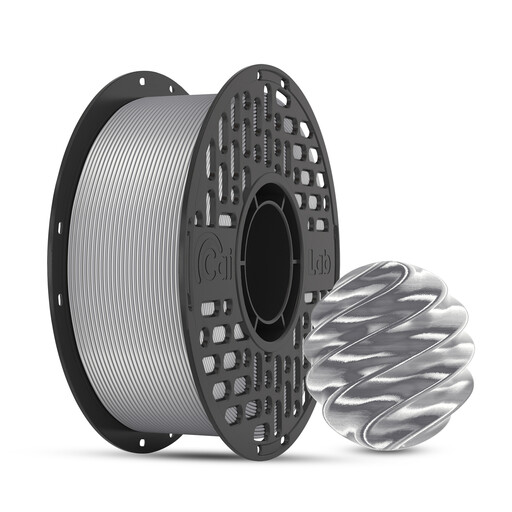
Why This Fits Their Persona: A neutral silver tone is ideal for getting familiar with the properties of Silk PLA. It is excellently suited for technical prototypes or decorative test prints where the glossy effect can shine without distracting from the object's form.
The neat winding and specified diameter tolerance reduce the risk of tangles and uneven extrusion, two common sources of frustration for beginners.
High compatibility with most FDM printers and reliable print results when adhering to the recommended temperature settings.
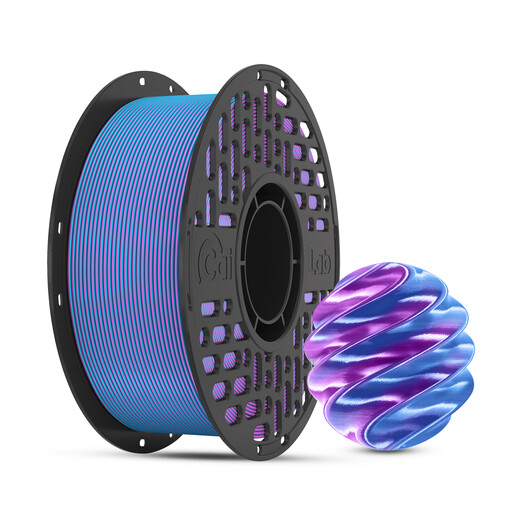
Why This Fits Their Persona: Artists and designers look for materials that give their creations unique visual depth. This Dual Colour Filament produces a dynamic colour-shifting effect that makes sculptures, vases, or jewellery look different depending on the light and perspective.
The precise co-extrusion process ensures a clean and consistent separation of the two colours. This prevents the "muddy" look that can occur with poorly mixed multi-colour filaments.
Creates a striking, angle-dependent colour-shifting effect that requires no post-processing or painting.
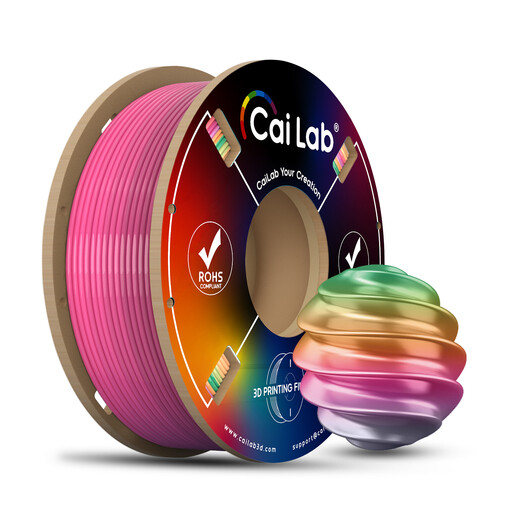
Why This Fits Their Persona: This Rainbow Filament is intended for users who want to print large, visually stunning objects. The long, gentle colour gradient unfolds its full effect on tall models, making every piece unique.
Unlike filaments with short, abrupt colour changes, this variant offers a long, gradual transition. This ensures a harmonious overall appearance instead of creating a blotchy or striped look.
Allows for printing objects with a smooth colour gradient in a single print job, with no filament changes required.
We have compiled a complete, up-to-date list of products that meet these strict selection criteria and comply with current safety regulations.
PLA is hygroscopic, meaning it absorbs moisture from the air. This also applies to Silk variants. Moisture absorption can make the filament brittle and lead to poor print quality (e.g., bubbling, heavy stringing). Therefore, always store your spool in a resealable bag or an airtight box, ideally with a desiccant packet (silica gel). Also, protect the material from direct sunlight.
In most cases, yes. The additives responsible for the gloss often require a slightly higher melting temperature. It is recommended to use the manufacturer's specifications as a starting point, which are typically 5–15 °C above those for standard PLA. For optimal results, it is advisable to print a small "temperature tower" to determine the ideal setting for the combination of your printer and the specific filament.
The visible colour gradient in a gradient filament depends heavily on the size and geometry of the printed object. The colour change occurs over a specific length of filament (e.g., every 5 to 10 metres). For very small objects, you might only see one or two colours from the spectrum being printed. To achieve the full gradient effect, you should print larger or taller models that consume enough material to make multiple colour transitions visible.