
Lieferung heute & morgen

Qualitätsgarantie

Willkommens-Angebote freischalten: KOSTENLOSE Lieferung | Bis zu 80 % RABATT | Kostenlose 30-Tage-JoyPlus-Testphase
App herunterladen
By: Joybuy Product Recommendation Officer Date: July 14, 2026
Many 3D printing users are looking for materials that give their creations more than just functional form. Standard PLA is practical, but for decorative objects, prototypes, or cosplay elements, a more appealing aesthetic is often desired. PLA Silk Filament offers a solution by giving prints a characteristic, shimmering sheen reminiscent of polished metal or silk fabric.
This article serves as a guide. It introduces various options for glossy PLA filament and explains the key features to look for when making your selection, helping you find the right material for your project.
Choosing the right filament depends on the specific requirements of your project. Here are some objective criteria to help you make your decision.
The term "Silk" describes the visual result, not the chemical composition. It is typically a PLA blend mixed with special polymers (often elastomers or PETG components). These additives reflect light along the printed layers, creating the signature sheen. The degree of shimmer can vary depending on the manufacturer and color. Calling a PLA filament glossy is therefore a description of the effect created by this specific material blend.
The consistency of the filament diameter is crucial for a smooth and trouble-free printing process. A tight tolerance, such as 1.75 mm ±0.02 mm, ensures uniform extrusion and minimises the risk of nozzle clogs or uneven material feed. Pay attention to the manufacturer's specifications for dimensional accuracy to ensure high print quality and repeatability.
The appeal of 3D printer silk filament lies in its color diversity. In addition to classic metallic tones like filament gold silver copper, there are also multicolor options. A multicolor PLA filament, for example, can consist of two or three colors that alternate along the spool. This creates a fascinating gradient effect on round or organically shaped objects, as the visible color changes depending on the viewing angle.
Based on the criteria above, we have compiled a selection of CaiLab filaments that stand out for their specific visual properties.
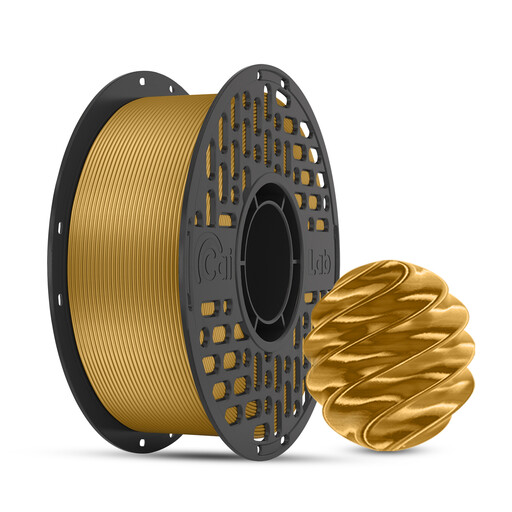
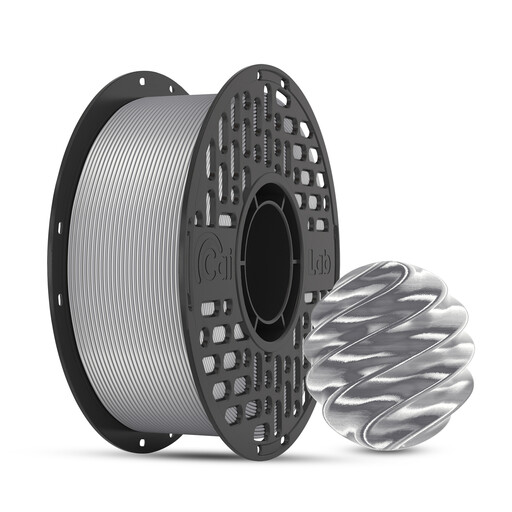
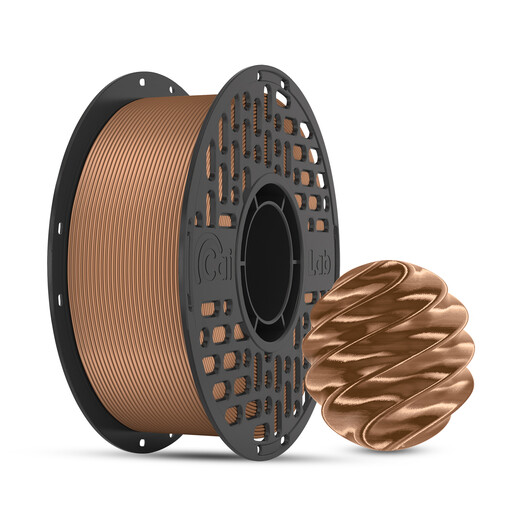
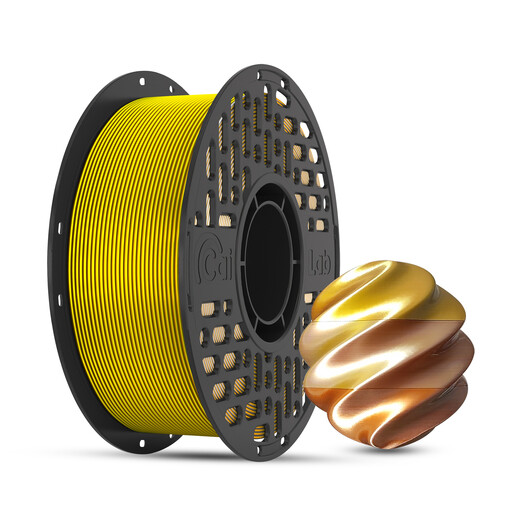
The selection presented here covers some of the common use cases for silk filaments. However, if you are looking for other colors, brands, or specific material properties, more options are available.
Explore our full range of 3D Printer Silk Filaments to find the perfect option for your next project.
The main difference lies in the composition and the resulting appearance. PLA Silk filament contains additional polymers that reflect light differently, creating a glossy, shimmering surface. Standard PLA typically has a matte or semi-gloss finish, but not a metallic sheen. The mechanical properties are often very similar, although silk PLA can sometimes be slightly more brittle due to the additives.
In most cases, PLA Silk filament can be printed using standard PLA settings. Some users report that a slightly higher print temperature (about 5–10 °C higher than for regular PLA) can enhance the glossy effect. It is recommended to start with a small test print, like a temperature tower, to determine the optimal settings for your printer and the specific filament.
Like all PLA-based filaments, silk PLA is hygroscopic, meaning it absorbs moisture from the air. Improper storage can lead to brittle material and printing issues (e.g., bubbling, poor layer adhesion). Therefore, store the filament in a cool, dry place, ideally in a resealable bag with the included desiccant (silica gel).