
Lieferung heute & morgen

Qualitätsgarantie

Willkommens-Angebote freischalten: KOSTENLOSE Lieferung | Bis zu 80 % RABATT | Kostenlose 30-Tage-JoyPlus-Testphase
App herunterladen
Choosing the right filament is crucial for the success of your 3D printing projects. Especially with a search as specific as red PLA filament 1.75mm, the variety of brands and types can be overwhelming. Whether you want to print a prototype, a decorative object, or a functional part, the material's properties significantly determine the quality of the final result.
This guide is designed to give you clear direction. We will introduce a selection of red PLA filaments and explain the most important criteria you should consider when choosing your next 3D printer filament.
Before you decide on a product, there are a few technical aspects to consider. These will help you find the right filament for your FDM filament printer and your specific project.
Not all PLA is created equal. The three most common variants offer different advantages:
The specification for dimensional accuracy, for example, a diameter tolerance of +/- 0.02mm, is a key quality indicator. A filament with low tolerance ensures a consistent flow of material through the nozzle. This minimises the risk of clogging and leads to more precise print results with consistent line width. High dimensional accuracy is particularly important for detailed prints.
A clean and uniform winding on the spool prevents the filament from tangling during printing and interrupting the process. Some manufacturers, like Elegoo, also use cardboard spools, which are a more eco-friendly alternative to traditional plastic spools. A 1kg PLA spool is the common standard for most projects.
Here you will find a curated selection of red PLA filaments that are suited for different applications due to their specific properties.
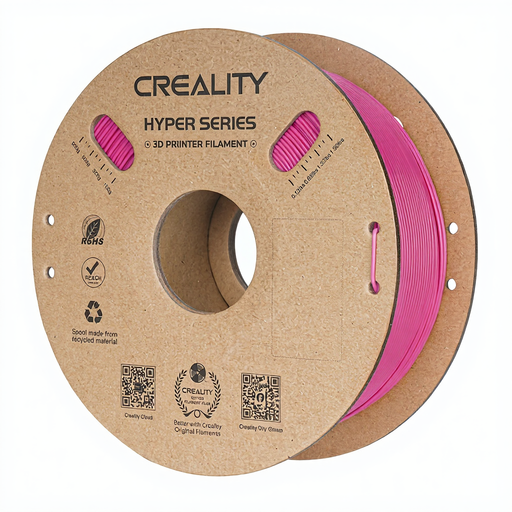
Why it stands out: This Creality filament is specifically designed for high-speed printing. According to the manufacturer, it supports printing speeds of up to 600 mm/s, which can significantly reduce production time for large or urgent projects. Its high fluidity and rapid cooling ensure precise shaping even at high speeds.
Benefits:
Who is it for? Users of high-speed 3D printers (e.g., Creality K1 series, Bambu Lab) who want to produce functional prototypes or large models in a short amount of time without compromising on stability.
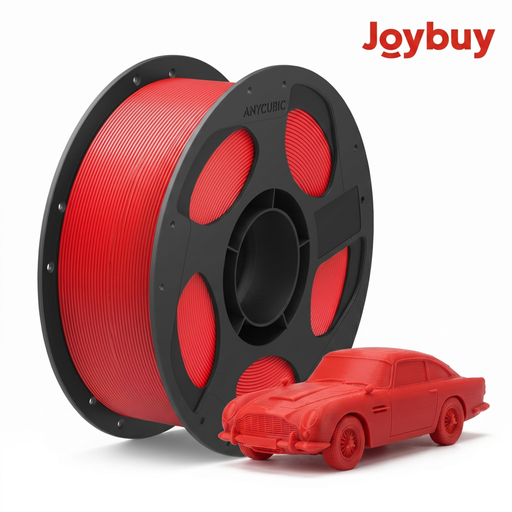
Why it stands out: This Anycubic filament is a reliable standard PLA known for its consistent quality and ease of use. With a very tight tolerance of ±0.02mm, it offers high printing reliability and is an excellent everyday filament for a variety of projects.
Benefits:
Who is it for? Both for beginners looking for a straightforward and reliable material, and for experienced users who need a consistent filament for 3D printers for daily printing tasks.
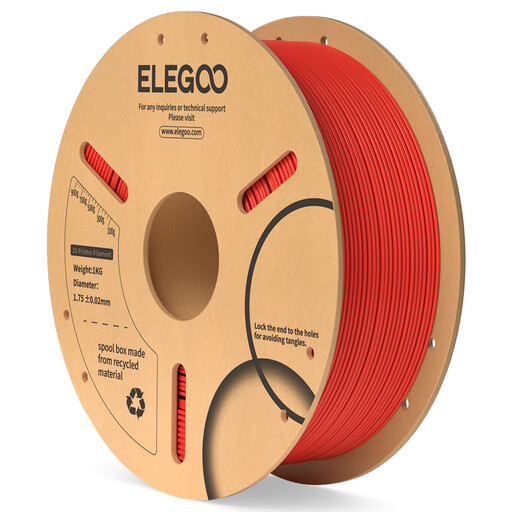
Why it stands out: The Elegoo filament combines high print quality with an eco-conscious approach. The spool is made of cardboard, which reduces plastic waste. The filament itself is machine-wound neatly to prevent tangles and offers high precision with a tolerance of +/- 0.02 mm.
Benefits:
Who is it for? For eco-conscious makers who value sustainability but do not want to compromise on high and reliable print quality. Ideal for general DIY projects and prototypes.
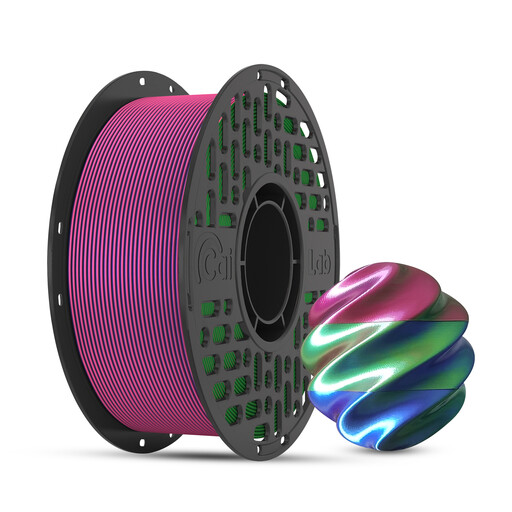
Why it stands out: This multi-colour filament is the right choice for extraordinary visual effects. It combines three colours (Red, Green, Blue) in a single strand, creating a smooth colour gradient during the print. The silky surface further enhances this effect, giving printed objects a unique, shimmering appearance.
Benefits:
Who is it for? Creative users and artists who want to print decorative objects, figures, or gifts with a special visual appeal. The colour gradient is particularly effective on larger models.
The selection presented here already covers a wide range of requirements. However, if you are looking for a different shade, a special material blend, or simply more alternatives, it's worth taking a look at our entire range.
Discover more products in our category for Red PLA Filament.
PLA is hygroscopic, meaning it absorbs moisture from the air. Damp filament leads to poor print quality (e.g., bubbling, brittle prints). Therefore, always store your PLA filament in an airtight bag or box, ideally with a desiccant (silica gel). Avoid direct sunlight and high temperatures.
Poor first-layer adhesion can have several causes. Check the following points:
A diameter of 1.75mm is the most widespread standard for consumer and hobbyist FDM 3D printers. Most common printer models from brands like Creality, Anycubic, Elegoo, Prusa, and many others are designed for this diameter. However, there are also printers that use 2.85mm filament. Therefore, always check the technical specifications of your printer before buying filament.