
Lieferung heute & morgen

Qualitätsgarantie

Willkommens-Angebote freischalten: KOSTENLOSE Lieferung | Bis zu 80 % RABATT | Kostenlose 30-Tage-JoyPlus-Testphase
App herunterladen
A personal, handmade card is a special way to show you care. For many, the crafting process, from the initial design to the finished product, is a creative escape. However, choosing the right tools, especially cutting dies for card making, can quickly become a challenge. The market is vast, and not every product lives up to its promise.
To avoid disappointment and unnecessary expenses, it helps to know the most common pitfalls. Often, it's the small details that determine a project's success or failure.
A careful look at a few key features will help you buy the right dies and thoughtfully expand your collection of scrapbooking supplies.
To ensure your next DIY card making projects go smoothly, you should check three key aspects. These criteria will help you objectively assess the quality and suitability of a die.
The most important technical requirement is compatibility. Most thin metal dies, often called "wafer-thin dies," are designed for use in common manual die-cutting machines. Nevertheless, always check the product description to see if your machine (e.g., Sizzix Big Shot, Cuttlebug, Vaessen Creative Cut'Em Easy) is supported. Especially when searching for dies for the Big Shot, it's wise to consult the manufacturer's specifications to ensure the die can be used with standard cutting plates.
The quality of metal embossing dies depends heavily on the material used. High-quality dies are typically made of carbon steel. This material offers two crucial advantages:
Don't rely solely on product photos. Always look for the exact dimensions of the die in centimetres or millimetres in the product description. Compare these measurements with the layout of your planned card (e.g., A6 size). This is especially important for sets containing multiple small elements. This ensures the die-cut shape has the right proportions for your design and doesn't get lost or overwhelm the layout.
The choice of the right cutting die depends heavily on personal style and the specific project. Here are some recommendations tailored to different user profiles.
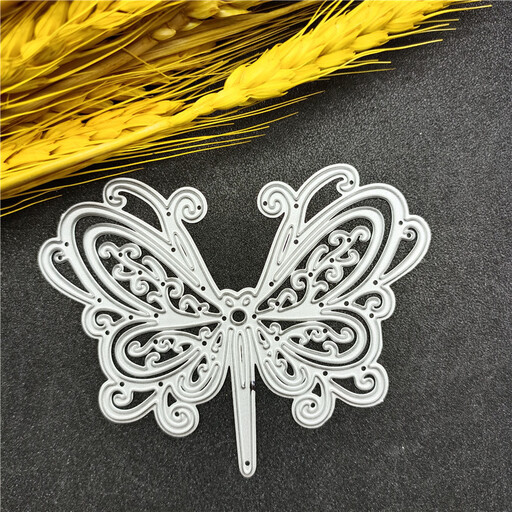
Why This Fits Their Persona: Ideal for beginners looking for a timeless and versatile design. A butterfly die works for almost any occasion—from birthdays and get-well-soon wishes to spring greetings.
The clear, not overly intricate contours of this die reduce the risk of messy cuts (Pitfall 2). Its size is well-suited for standard card formats, preventing unpleasant surprises with proportions (Pitfall 3).
A foundational design that is easy to combine with other elements, providing a solid base for numerous creative ideas.
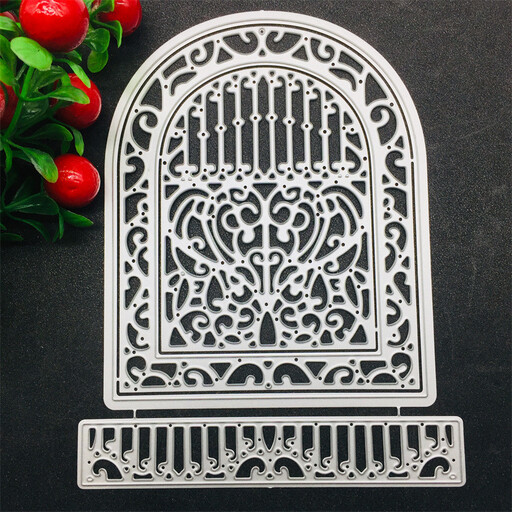
Why This Fits Their Persona: Perfect for crafters who design elaborate invitation cards for weddings, christenings, or milestone birthdays. A frame like this gives any card an elegant, professional touch and serves as a focal point.
Frame sets have defined outer and inner dimensions, which increases planning reliability and prevents bad buys due to incorrect sizing (Pitfall 3). The intricate structure requires precise manufacturing, which often correlates with better cut quality (Pitfall 2).
Enables the creation of sophisticated window or shaker cards and adds architectural depth to projects.
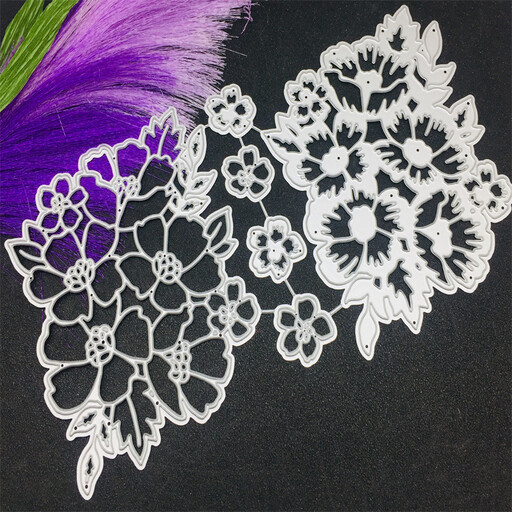
Why This Fits Their Persona: For experienced crafters who love creating multi-dimensional effects. These layering dies can be used to create impressive, three-dimensional flowers for exceptionally high-quality and detailed card projects.
Layering dies must be precisely manufactured to fit together perfectly. This indicates high production quality and clean cuts (Pitfall 2). The complexity is clearly stated in the product name, which manages expectations.
Creates layered, three-dimensional effects for flowers with realistic depth and allows for sophisticated colour schemes.
Explore our full range of craft supplies online. We have curated a wide selection of cutting and embossing dies suitable for a variety of creative projects.
Most thin metal dies are compatible with a wide range of manual die-cutting and embossing machines. The key is to use the correct "sandwich" of cutting plates for your specific machine. Your machine's manual will provide this information. When in doubt, check the die's product description.
After cutting, small paper scraps may remain in the die. These are best removed with a small brush or a pick tool. To store the dies safely and keep them organised, magnetic sheets that fit into binders or storage boxes are ideal. This keeps them protected and easily accessible.
An unclean cut can have several causes. First, check if your cutting plates are heavily worn and may need to be replaced. An incorrect sandwich setup can also result in insufficient pressure. For very thick or fibrous paper, it can help to lightly moisten the paper or add an extra, thin sheet of paper (a "shim") to increase the pressure. If the problem persists, it could be due to the poor quality of the die itself.