
Lieferung heute & morgen

Qualitätsgarantie

Willkommens-Angebote freischalten: KOSTENLOSE Lieferung | Bis zu 80 % RABATT | Kostenlose 30-Tage-JoyPlus-Testphase
App herunterladen
A plant-based barista milk alternative should do more than just be lactose-free or vegan. For cappuccinos, flat whites and latte art, what really matters is frothing performance, flavour, ingredients, pack size and practical storage. If you only look for terms like “creamy” or “barista-friendly”, you could easily end up buying a product that doesn’t suit your coffee machine in everyday use.
The label usually indicates a recipe designed for frothing. However, it doesn’t guarantee that every frothable plant milk will work equally well with every milk frother. Fat, protein, stabilisers and temperature all affect the structure of the foam.
An oat drink, for example, can produce a creamy texture, while a barista almond milk tends to be lighter and nuttier. With manual steam wands, your technique can matter more than with an automatic milk system.
Flavours such as caramel, vanilla or chai can significantly influence your coffee. That’s desirable for flavoured drinks, but it doesn’t necessarily suit an espresso with delicate roast notes. Also, “no added sugar” doesn’t automatically mean sugar-free: oats naturally contain carbohydrates that can appear as sugar on the nutrition label.
A multi-pack of 6 or 8 litres can make sense for offices, catering businesses and households that use it daily. If you only make cappuccino occasionally, however, you run the risk of not using up opened cartons in time. Once opened, many products need to be refrigerated and consumed within a few days.
For a fine-pored foam, the combination of several components is crucial. Fat supports the mouthfeel, while protein can contribute to foam formation. Oils, pea protein, sunflower oil or rapeseed oil are therefore common in many barista recipes. Stabilisers and acidity regulators help prevent the plant milk from separating in hot coffee.
When choosing a vegan milk alternative, it’s worth checking the nutritional values per 100 ml:
These details describe the composition but do not represent a health claim.
Some manufacturers give specific frothing instructions. For Alpro Barista Oat Drink, for example, processing below 65 °C is recommended. Too high a temperature can affect both flavour and foam structure. As a rule, shake the carton before use so that water, oil and other ingredients are evenly distributed.
For latte art, you need a fine-pored, pourable microfoam. Not every variety that works for cappuccino is equally easy to use for patterns. A powerful milk frother can’t make up for the wrong recipe.
“Lactose-free milk alternative” and “vegan” are not automatically the same as allergen-free. Oat drinks may contain gluten, while almond and coconut varieties are potential nut allergens. For instance, Alpro Barista Almond contains 2.5 % almonds according to product information and may contain traces of other nuts. Vly No Milk Today Barista, on the other hand, is stated to be free from soya, lactose, gluten and nuts.
Before buying, always check the ingredients list, allergen information and current packaging labels. If you have intolerances, individual medical advice is essential.
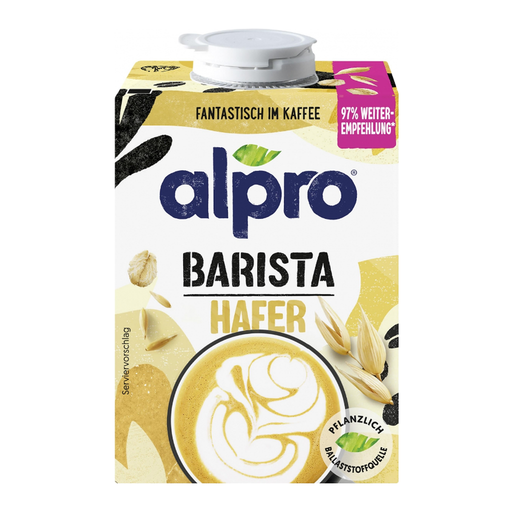
Why this product fits the profile: The smaller pack size is ideal for trying it out or for households with moderate consumption. This oat drink is designed for hot and cold uses as well as frothing.
The 500 ml format limits storage risks. The nutritional information states 59 kcal and 3.3 g sugar per 100 ml; check the ingredients list before buying.
500 ml content, 1.0 g fibre and frothing guidance. Contains oats and therefore gluten.
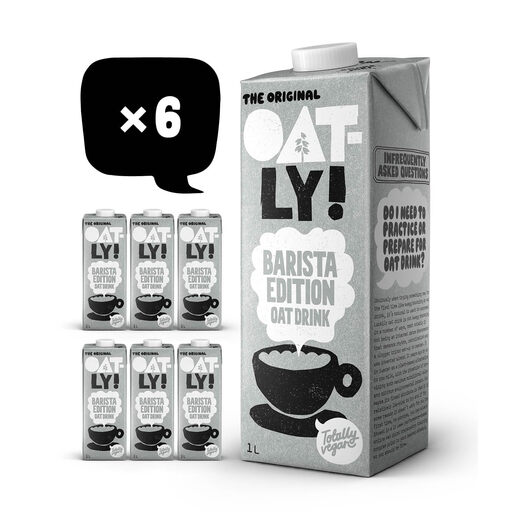
Why this product fits the profile: The 1-litre cartons are designed for regular coffee preparation. According to product information, this drink is vegan, lactose-free and intended for frothing in coffee drinks.
The packaging states 10 % oats and 120 mg calcium per 100 ml. This allows you to check the recipe and nutritional values before buying.
Six 1-litre cartons, 3.0 g fat and 0.8 g fibre per 100 ml. Contains gluten-containing cereals.
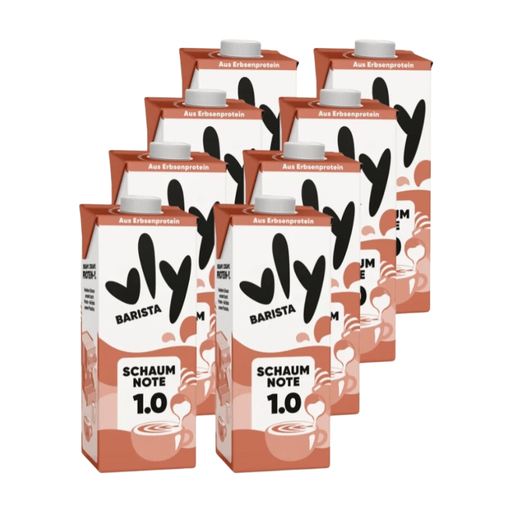
Why this product fits the profile: According to product information, the recipe is free from soya, lactose, gluten and nuts. The 8-pack is aimed at offices, heavy users and households with regular demand.
The allergen information covers several common exclusion criteria. Additionally, 2.0 g protein and 120 mg calcium per 100 ml are stated.
45 kcal and 1.4 g sugar per 100 ml according to product information; eight 1-litre cartons for planned stocking.
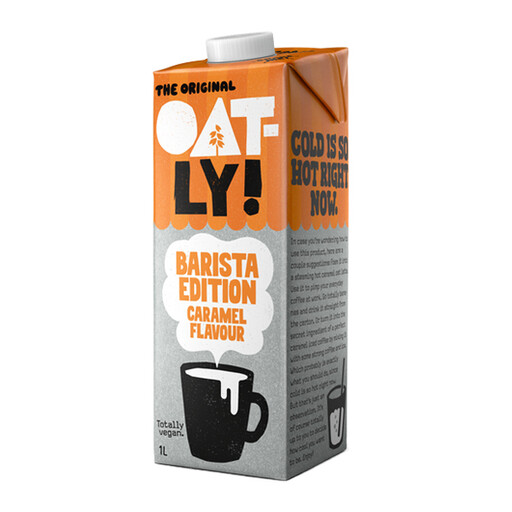
Why this product fits the profile: The caramel or popcorn note is aimed at those who prefer flavoured coffee drinks. According to the description, this variety is designed for frothing and latte art.
The distinctive flavour is transparently described as an aroma. With 5.1 g sugar and 70 kcal per 100 ml, it should be factored into your daily drink choices.
1-litre carton, 10 % oats and fortified with calcium as well as vitamins D2, B2 and B12 according to product information.
We’ve put together a complete, regularly updated list of products that fully meet these strict selection criteria and the safety regulations in force in the EU.
A barista oat drink is a practical choice for many coffee recipes because it often offers a creamy texture and a balanced mouthfeel. However, almond, coconut and pea protein varieties differ significantly in aroma and nutritional values. For your specific choice, the ingredients list, temperature guidance and your own coffee machine are decisive.
That depends on the individual product. Several of the varieties mentioned should be refrigerated after opening and consumed within about five days. The specific manufacturer’s instruction on the carton takes priority. Unopened UHT products can usually be stored at room temperature, unless the label states otherwise.
No. Many oat, almond and coconut drinks are offered as vegan and lactose-free, but the labelling must be checked for each product individually. Additionally, allergens such as oats, gluten, almonds, other nuts or soya may be present. The current ingredients list and allergen information are what matter.