
Lieferung heute & morgen

Qualitätsgarantie

Willkommens-Angebote freischalten: KOSTENLOSE Lieferung | Bis zu 80 % RABATT | Kostenlose 30-Tage-JoyPlus-Testphase
App herunterladen
A plant-based milk alternative can replace cow’s milk at breakfast, in your coffee or when baking. The choice ranges from oat drink and soya drink to protein milk alternatives and special barista recipes. However, when buying a milk alternative in a value pack, it’s worth taking a close look at the ingredients, nutritional values and pack size.
A product can be free from added sugar and still contain naturally occurring sugars. That’s why the nutritional table per 100 millilitres is what really matters. With flavoured varieties such as a chocolate milk drink, the sugar content is often higher than with a neutral recipe. The taste may be more pleasant as a result, but that doesn’t automatically make it suitable for everyday use.
Not every vegan milk alternative froths up equally well. For cappuccino, latte macchiato or flat white, recipes with the right fat and protein content, plus a stated barista suitability, are more practical. A standard oat drink can work in coffee, but it won’t necessarily produce the same foam structure as a barista milk alternative.
Eight litres may look convenient at first glance. However, once opened, the cartons need to be kept chilled and used within the time stated on the label. For a single-person household, an 8×1-litre pack can therefore be too much. Households with several coffee drinkers or regular breakfast consumption, on the other hand, can benefit from a milk alternative in a value pack.
The ingredients list shows whether the base is oat, soya, pea, field bean or a combination of different proteins. For people with intolerances, the allergen information is also relevant:
Always compare the same reference quantity. A product with 0.0 grams of sugar per 100 millilitres is clearly different from a flavoured drink with 7.0 grams. The calorie count and the proportion of saturated fats can also play a role in daily use.
For people who are physically active or households that consciously monitor their protein intake, the figures per 100 millilitres are especially important. A standard oat or almond alternative often contains significantly less protein than a protein milk alternative based on pea and field bean protein.
Additional information about calcium, vitamin D, vitamin B12 or riboflavin should be understood as nutritional information, not as medical claims. With fortified products, it’s also worth comparing the stated reference intakes.
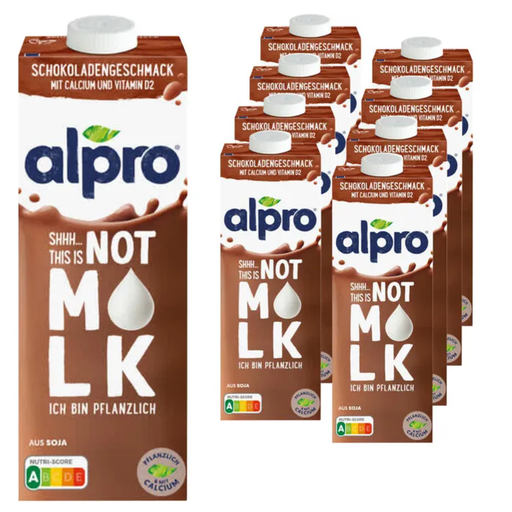
Why this product fits the profile: This chocolate drink offers a flavoured option for breakfast, cereal, hot drinks or baking recipes, and is available in a bulk pack totalling 8 litres.
The sugar content is clearly stated: 7.0 g per 100 ml. This allows you to realistically assess the sweeter flavour profile before buying.
3.1 g protein, 120 mg calcium per 100 ml and a pack size of 8 × 1 litre.
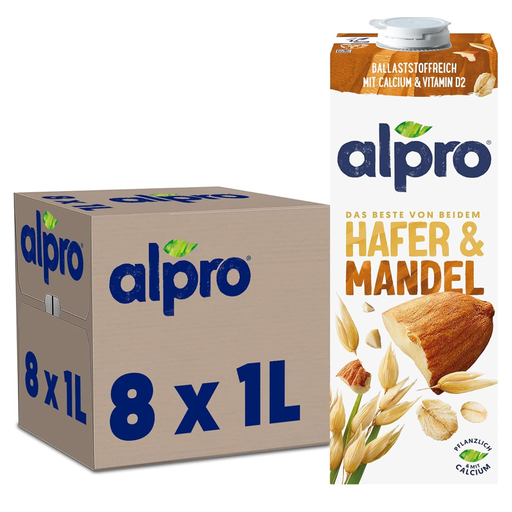
Why this product fits the profile: The combination of European oats and almonds is aimed at people looking for a creamy, slightly nutty flavour for coffee, breakfast or smoothies.
The nutritional information states 1.8 g sugar and 0.3 g protein per 100 ml. Oats and almonds are also listed as allergens.
120 mg calcium and 15% of the reference value for vitamin D per 100 ml according to product information.
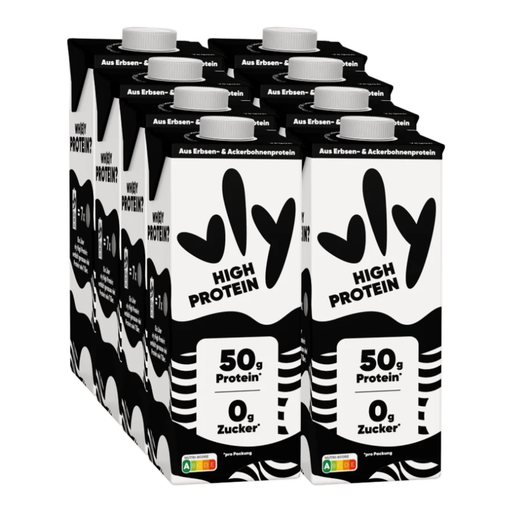
Why this product fits the profile: The recipe with field bean and pea protein is suitable for shakes, smoothies, porridge or drinking straight.
With 5.0 g protein and 0.0 g sugar per 100 ml, the key comparison values are stated directly.
50 g plant-based protein per litre, 2.2 g fibre per 100 ml and a bulk pack of 8 litres.
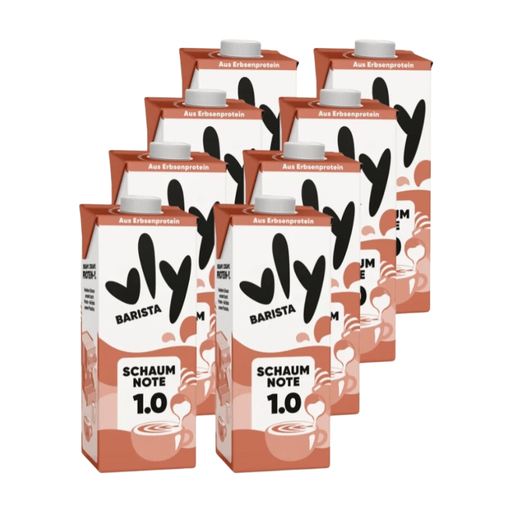
Why this product fits the profile: The recipe is designed for coffee drinks such as cappuccino, latte and flat white, and is described as free from soya, lactose, gluten and nuts.
The specific barista design clearly distinguishes this product from a neutral milk alternative for cereal or smoothies.
2.0 g protein, 1.4 g sugar and 120 mg calcium per 100 ml according to product information.
We’ve put together a complete, regularly updated list of products that fully meet these strict selection criteria and the safety regulations in force in the EU.
Unopened cartons should be stored in a cool, dry place, depending on the product. Once opened, the carton belongs in the fridge. Always follow the manufacturer’s specific instructions on the use-by date. Shaking the carton before pouring is a good idea, as ingredients can settle.
For hot drinks, heat the milk alternative gently and avoid boiling it vigorously. When baking, a plant-based recipe can often be used in a 1:1 ratio. With flavoured products, remember to account for the extra sweetness in your recipe.
For milk froth and coffee drinks, a variety explicitly labelled as a barista product is an obvious choice. Oat drink and soya drink can also be used, but their frothing properties depend on the specific recipe.
The protein content should be compared per 100 millilitres. The Vly High Protein Milk Alternative states 5.0 g protein per 100 ml according to product information. Standard oat or almond varieties are often lower.
This depends on the product and the information on the packaging. Once opened, the carton should generally be chilled immediately and consumed within a few days. So before buying a bulk pack, check how quickly your household will use it up.