
Lieferung heute & morgen

Qualitätsgarantie

Willkommens-Angebote freischalten: KOSTENLOSE Lieferung | Bis zu 80 % RABATT | Kostenlose 30-Tage-JoyPlus-Testphase
App herunterladen
The decision to make your own plant-based milk is often the first step towards a more conscious diet. Whether for health reasons, to reduce packaging waste, or simply for the pure, unadulterated taste—the benefits are clear. However, the market for plant-based milk makers is crowded, and many devices don't live up to their marketing claims. Before you make a purchase, it's crucial to understand the common pitfalls that can lead to disappointment and unnecessary expense.
This guide will help you separate the wheat from the chaff. We focus on the technical features that truly matter and show you how to find an appliance that will meet your needs in the long run.
Many appliances entice with lofty promises, but the reality of daily kitchen use often looks different. Here are the three most common problems users experience after their purchase:
To avoid the problems mentioned above, you should carefully examine three core parameters before buying. These largely determine the quality of the result and the day-to-day user experience.
The creaminess of your plant-based milk depends directly on the appliance's ability to pulverise nuts, seeds, or grains extremely finely.
A good vegan milk maker should do more than just blend. Control over temperature is essential for versatility and quality.
Easy maintenance determines whether the plant-based milk maker gets used regularly or gathers dust in a cupboard.
Based on the criteria above, we have identified a few models that represent a considered choice for different user groups.
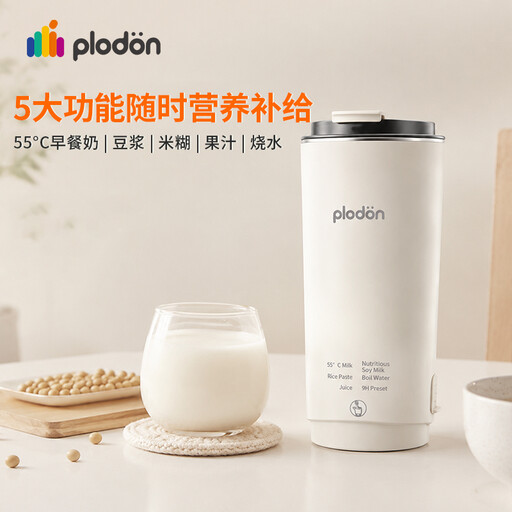
Why It's a Good Fit: With a 300 ml capacity, this device is ideal for a single serving. Its compact, portable design makes it perfect for small kitchens, the office, or even for travel. It's a cost-effective solution for trying out making your own plant-based milk without a large initial investment.
The device is optimised for small batches, allowing the motor to process ingredients efficiently. The one-touch auto-clean function is sufficient for this size and a significant improvement over purely manual cleaning.
Its portability and the 9-hour timer function. Prepare the ingredients in the evening and enjoy a fresh, warm drink in the morning.

Why It's a Good Fit: With a 1000 ml capacity, this appliance is ideal for the daily needs of a family of 3-4. The 8 programmes, including options for nut, soy, and oat milk, offer the versatility needed for different preferences.
The powerful 36,000 RPM motor and special stirring column design directly address the problem of gritty texture, making manual straining unnecessary. The automatic cleaning function reliably handles larger quantities.
The combination of high motor power for an exceptionally smooth result and the large capacity make it an efficient daily helper for the whole family.
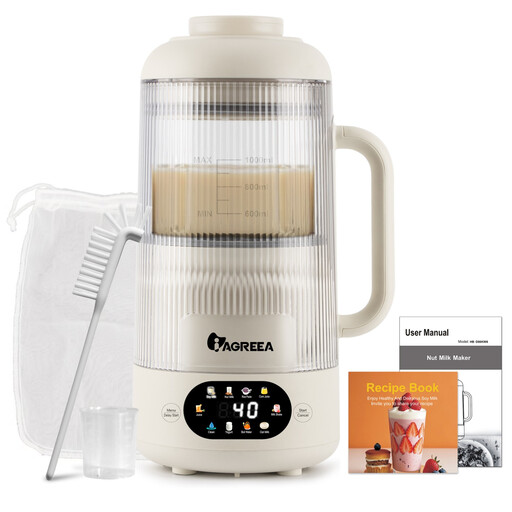
Why It's a Good Fit: This model is aimed at users who want maximum convenience and minimal disruption. The soundproof cover significantly reduces operating noise, making it pleasant to use early in the morning or late at night. The glass pitcher is ideal for purists.
It solves all three core problems: a powerful motor ensures creaminess, 10 programmes allow for precise temperature control, and the fully automatic cleaning function with subsequent drying and sterilisation sets a high standard for hygiene.
The quiet operation thanks to the soundproof cover and the advanced, fully automatic cleaning system, including drying and sterilisation, for minimal effort.
We have compiled a complete, up-to-date list of products that fully meet these strict selection criteria and German safety regulations.
1. How long does preparation take in a plant-based milk maker? The duration depends on the selected programme. Cold preparations like juices or shakes are often ready in 2-3 minutes. Programmes that include a heating and cooking process (e.g., for soy or rice milk) typically take between 20 and 30 minutes.
2. Do I need to soak nuts or beans before use? Many modern appliances with high-performance motors can process dry ingredients directly. However, soaking nuts (especially almonds) for a few hours can lead to an even creamier consistency and improve digestibility. It is advisable to check the manufacturer's recommendations, but experimenting can be worthwhile.
3. What are the running costs compared to store-bought plant-based milk? The purchase of the appliance is the main investment. After that, the cost per litre is significantly lower than for ready-made products. For example, for one litre of oat milk, you only need about 80–100 grams of rolled oats, which corresponds to material costs of just a few cents. Over time, this results in significant savings, especially with regular consumption, while also avoiding a large amount of packaging waste.