
Lieferung heute & morgen

Qualitätsgarantie

Willkommens-Angebote freischalten: KOSTENLOSE Lieferung | Bis zu 80 % RABATT | Kostenlose 30-Tage-JoyPlus-Testphase
App herunterladen
A well-chosen plant shelf transforms a collection of pots into a structured, green work of art. But the search for the right model can quickly become overwhelming. Many products overpromise and underdeliver, leading to disappointment. As your Joybuy Product Recommendation Officer, I'll help you identify the key features and avoid common purchasing traps, ensuring you find a durable and functional solution for your plants.
Before you make a decision, you should be aware of the typical weaknesses that often only become apparent after the purchase.
To avoid these traps, focus on three objective parameters. These will help you objectively evaluate a model's quality.
The material determines stability and weather resistance. For metal models, the type of coating is critical.
The stability of a shelf depends on its construction and the specified load capacity.
Measure not only the available space but also consider the needs of your plants.
Here are some models that, based on objective features, are well-suited for specific user profiles.
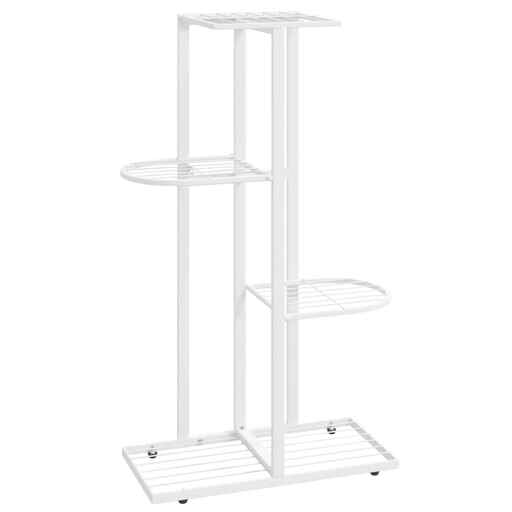
Why This Fits Their Persona: With its small footprint (approx. 43 x 22 cm), this shelf is ideal for small apartments, living room corners, or narrow balconies. The minimalist design blends unobtrusively into modern interior styles.
The powder-coated steel construction is more resistant to scratches and moisture than simply painted models. The clear dimension specs allow for accurate planning and prevent surprises regarding pot size.
Space-saving vertical design for optimal use of height. Suitable for indoor and sheltered outdoor areas.
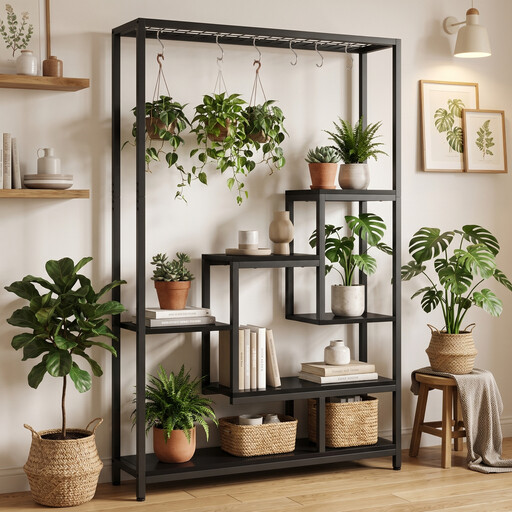
Why This Fits Their Persona: At 180 cm tall, this shelf maximises vertical space. With 7 wide shelves and 10 S-hooks for hanging, it offers room for a large and diverse plant collection, from small bonsais to larger potted plants.
The combination of a sturdy metal frame and E1 particle boards ensures a high total load capacity of approx. 40 kg (88 lbs), countering the trap of unstable constructions. The warning to place the shelf against a wall promotes safe use.
Very high capacity thanks to 5 tiers and additional hooks. Multifunctional design that can also serve as a general storage or bookshelf.
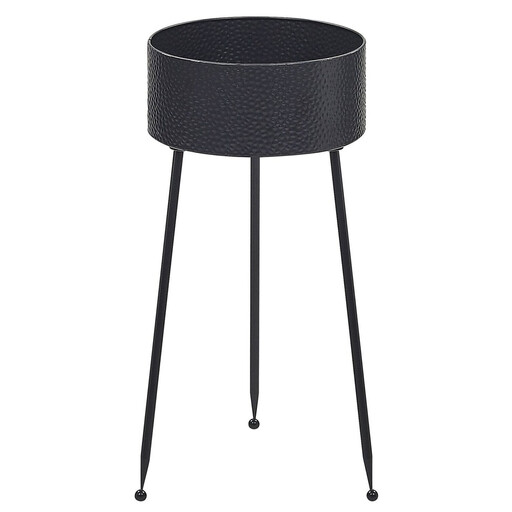
Why This Fits Their Persona: This **black plant stand** isn't for mass storage; it's a design object. It spotlights a single, special plant and adds a distinct industrial accent to a room or terrace with its three-legged iron construction.
The robust iron construction provides high stability, avoiding the problem of wobbly stands. Since it's designed for a single pot, there are no misleading capacity promises. The powder coating makes it weather-resistant.
Clean, industrial design as a decorative element. Temperature resistant from -20°C to 40°C (-4°F to 104°F), making it suitable for year-round use in sheltered outdoor areas.
We have compiled a complete, up-to-date list of products that fully meet these strict selection criteria and all applicable safety regulations.
Always place the shelf on a level, solid surface. Adhere to the manufacturer's specified maximum load capacity per tier and do not exceed it. Distribute the weight evenly, ideally with the heaviest pots on the lowest levels. For tall, narrow shelves, the included anti-tip hardware should be used to secure it to the wall, if provided by the manufacturer.
No. Suitability for outdoor use depends on the surface finish. Look for labels like "powder-coated" or "rust-proof." A simple paint job does not provide adequate protection from the elements and can rust quickly. A plant shelf for a balcony or terrace should be explicitly designated for outdoor use.
A classic plant shelf typically has vertically stacked tiers of the same depth. A plant ladder or tiered plant stand has a stepped structure. The tiers either become less deep towards the top or are offset. This design ensures that plants on the lower levels also receive adequate sunlight, which is not always the case with a standard shelf.