
Lieferung heute & morgen

Qualitätsgarantie

Willkommens-Angebote freischalten: KOSTENLOSE Lieferung | Bis zu 80 % RABATT | Kostenlose 30-Tage-JoyPlus-Testphase
App herunterladen
As a Joybuy Product Recommendation Officer, I'm here to help you find clarity in the sea of options.
Is your plant collection growing faster than the available space on your windowsills and side tables? Are you looking for a way to not only organise your green companions but also display them in style? A well-chosen plant stand can transform a chaotic cluster of pots into a harmonious and space-saving arrangement.
This article serves as your guide. It highlights the key criteria to consider when choosing a stand for your plants and introduces several models that are well-suited for different needs due to their specific features.
Choosing the right model depends on your individual needs. You should consider three key aspects in your decision.
The material is crucial for the longevity and intended location of your stand.
The structure of the stand determines how many plants you can accommodate and how they are showcased.
Modern plant stands often offer thoughtful extra features. Integrated hooks allow you to hang trailing plants or string lights. Varying distances between tiers ensure that both tall orchids and low-profile succulent bowls find their place. Check the maximum load capacity per tier to ensure the stand can safely support heavy clay or ceramic pots.
Based on the criteria above, we have compiled a selection of models that stand out for their specific design and functionality.
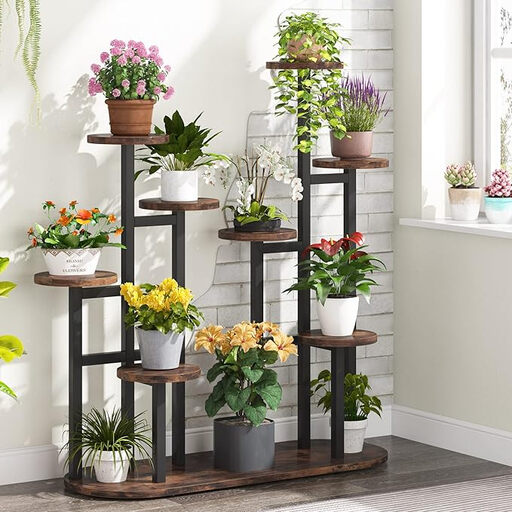
What makes it stand out: This model combines a plant ladder design with multiple tiers at different heights. The asymmetrical layout allows you to place plants of various sizes so that each one gets enough light. The combination of a wood-grain finish and a black metal frame fits well into modern living concepts.
Benefits at a glance:
Who is it for? For plant lovers who have a larger collection of small to medium-sized plants and are looking for a structured, space-saving display for indoors or a protected outdoor area.
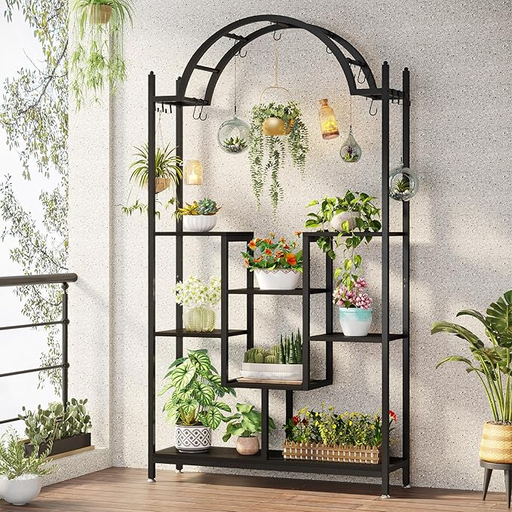
What makes it stand out: The distinctive arch design makes this plant stand a decorative element in its own right. It's not just a shelf, but a stage for your display. Included hooks (6 square hooks and 8 S-hooks) offer additional options for integrating hanging plants or decorations like string lights.
Benefits at a glance:
Who is it for? For users who want a functional piece of furniture with a strong design character and wish to creatively use vertical space with hanging plants and other elements.
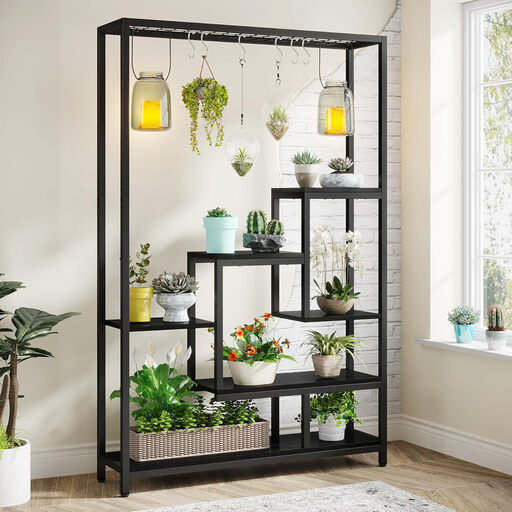
What makes it stand out: This tall, ladder-style flower stand maximises display area while minimising its footprint. With seven wide shelves across five tiers, it offers exceptional space. The top grid shelf is specially designed for small bonsai or hanging plants, while the 10 included S-hooks provide further flexibility.
Benefits at a glance:
Who is it for? For people with many plants and limited floor space who are looking for a tall and stable solution for vertical organisation. It is particularly practical for living rooms or larger balconies.
The models featured here cover common use cases, but you may have different ideas regarding size, colour, or design. If you want to explore a wider range of styles and configurations, you can find more alternatives in our main category.
Discover Our Full Range of Flower Stands
The load capacity varies greatly depending on the model, material, and construction. It can range from a few kilograms per shelf to over 100 kg in total. It is essential to check the maximum load capacity specified by the manufacturer and not to exceed it, especially with heavy terracotta or ceramic pots.
For use on an unsheltered balcony, weather-resistant materials are required. Powder-coated metal offers good protection against rust. Stainless steel is also a very durable but often more expensive option. Treated hardwoods are possible but require regular maintenance to protect them from moisture and UV radiation. For covered balconies, the featured models made of metal and engineered wood are often a good choice.
Choose a stand with an open design or a stepped structure like a plant ladder or étagère. This design prevents plants from shading each other. Place light-loving plants on the upper or front tiers and more shade-tolerant species lower down or at the back. Regularly rotating the pots will also ensure even growth.