
Lieferung heute & morgen

Qualitätsgarantie

Willkommens-Angebote freischalten: KOSTENLOSE Lieferung | Bis zu 80 % RABATT | Kostenlose 30-Tage-JoyPlus-Testphase
App herunterladen
A plant stand can help keep your balcony, patio, living room or conservatory looking tidy. You can display several flower pots on different levels without taking up extra floor space. However, product photos and general marketing claims don’t always help you choose the right one. The key factors are dimensions, weight capacity, material and where you plan to use it.
A plant stand can look bigger or smaller in product photos than it really is. Before buying, check the width, depth and height, as well as the diameter of your flower pots. On a narrow balcony, even a few extra centimetres of floor space can restrict access.
The position of the shelves matters too. Staggered pots give your plants more room to spread out. With a straight tiered plant stand, make sure there’s enough space between the levels.
For a plant stand designed for indoor and outdoor use, the specific material and finish are important. Powder-coated steel can provide a durable surface for everyday use. Even so, a metal plant stand shouldn’t be left standing in water for long periods. Rain, high humidity and frost can gradually affect fixings or untreated areas.
Check the care instructions too. Cleaning with a soft or damp cloth is usually gentler on the material than using abrasive cleaners.
Several large ceramic pots filled with damp compost can become very heavy. So a claim such as ‘suitable for several pots’ is no substitute for a specific weight limit. With a 4-tier plant stand, distribute the weight evenly and, wherever possible, place heavier pots on the lower levels.
If no weight limit is given, take extra care when assessing what it can hold and avoid using the stand for heavy planters.
Measure the space you have in mind before you buy. For small homes and narrow balconies, a space-saving plant stand with a small footprint makes good use of vertical space. For example, a rectangular model can fit against a wall or in a corner of your balcony.
Allow for some space between the stand and the wall too. Leaves and branches need room, and you’ll need to be able to reach the pots when caring for your plants.
A metal plant stand should be sturdy and suitable for the location where you plan to use it. The models featured here are listed as being made from powder-coated steel. The coating can protect the surface, but you’ll still need a dry, level spot and should check regularly for damage.
Colour and shape are also worth considering indoors. A black or white plant stand can work with a wide range of interior styles. Dust and soil may show up more clearly on light-coloured surfaces, while black models can show scratches and water marks differently.
Place the plant stand on a firm, level surface. If you’re using it outdoors, make sure the ground is stable enough. Don’t use the stand as a step, and make sure children don’t climb on it. For taller designs, securing the stand to the wall may be a good idea, if the assembly instructions allow for it.
Once assembled, check that all the fixings are tight. Unevenly distributed weight can affect stability.

Why this product suits this shopper: The white rectangular frame has four tiers and a stated footprint of 8,7 × 16,9 inches. It’s suitable for balconies, living spaces or the garden.
The product details specify the material, dimensions, four tiers and intended indoor and outdoor use. No weight limit is given, so bear this in mind before loading it with pots.
Powder-coated steel, four shelves and a white finish for a light, understated look.
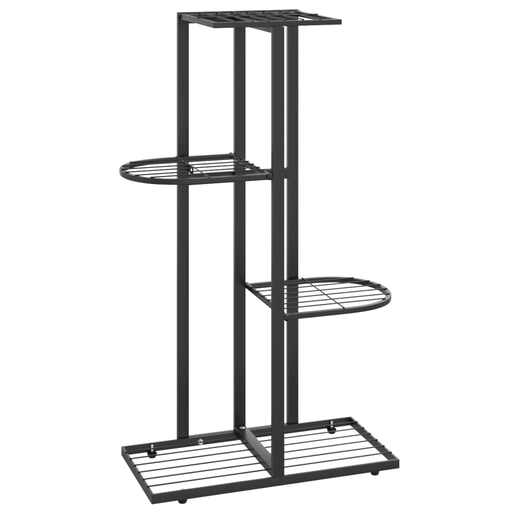
Why this product suits this shopper: The black powder-coated steel frame combines a compact footprint with a specified weight limit. It can be used indoors or outdoors.
Each shelf has a stated maximum load of 11 lb, or around 5 kg. Weight should be distributed evenly, and the stand must not be used as a step.
Four tiers, a stated weight limit of around 5 kg per shelf, and dimensions of 8,7 × 16,9 × 29,9 inches.
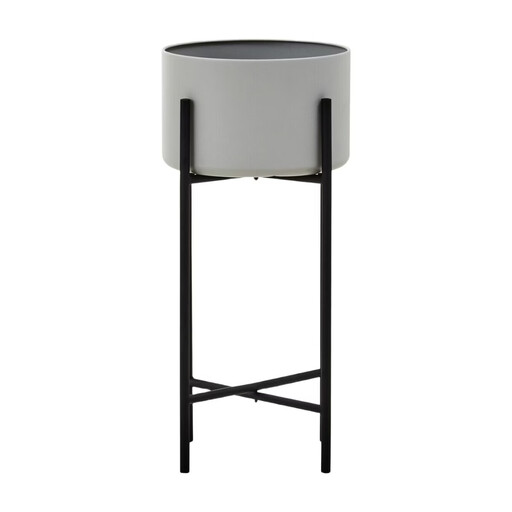
Why this product suits this shopper: This large planter, with a grey pot and black iron frame, is for buyers looking for a striking freestanding option for artificial flowers or a larger decorative display.
The product description clearly identifies this as a single large planter that requires assembly. It shouldn’t be mistaken for a multi-tier plant stand designed to hold several smaller pots.
Iron frame with four cross-braced legs, a grey planter and stated dimensions of H55 × D28 × W28.
We’ve put together a complete, regularly updated list of products that meet these strict selection criteria and the safety regulations in force in the EU.
Assemble the frame exactly as instructed, and carefully tighten the screws again after the first few days of use if necessary. Check regularly for loose joints or damage to the coating. If you’re using the stand outdoors, choose a spot where water can drain away.
As drainage isn’t specified for several models, use flower pots with saucers to reduce the amount of water that reaches the shelves. In winter, it may be a good idea to store a metal plant stand somewhere dry and sheltered, unless the manufacturer recommends otherwise.
It depends on the number of tiers, the width of the shelves and the diameter of your pots. A four-tier model can hold several small pots, while a large freestanding planter is designed for a single container. Before buying, compare the shelf dimensions with the size of your pots.
Yes, provided the manufacturer states that it’s suitable for outdoor use. The stand should be placed on a firm, level surface and shouldn’t be left in water or snow for long periods. You should also consider the weight limit, stability and even distribution of weight.
Wipe away soil and dust with a soft cloth. For more stubborn dirt, use a slightly damp cloth. Scouring products and harsh cleaners can damage the surface. Check outdoor models regularly for rust spots or scratches.