
Lieferung heute & morgen

Qualitätsgarantie

Willkommens-Angebote freischalten: KOSTENLOSE Lieferung | Bis zu 80 % RABATT | Kostenlose 30-Tage-JoyPlus-Testphase
App herunterladen
A new planter can instantly breathe new life into a room or balcony. But the selection is vast, and not every pot that looks good at first glance is a smart choice. Often, small but critical flaws prevent plants from thriving or cause the pot itself to become unsightly after a short time. Before you make a decision, it's helpful to know the typical pitfalls to avoid a bad investment.
As your Joybuy Product Recommendation Officer, I have analysed the most common problems buyers encounter. This guide focuses on the objective criteria that truly matter, helping you make an informed choice.
Many buyers focus solely on design, but functional defects often only reveal themselves after a few weeks. Pay special attention to these three points:
To avoid the problems mentioned above, you should base your selection on a few technical and material properties. These determine the longevity of the pot and the health of your plants.
The choice of material is the most important decision and depends directly on the intended location.
A functioning drainage system is non-negotiable. Look for the following features:
Shape is more than just a matter of taste.
Here are some recommendations tailored to specific use cases and the quality criteria mentioned above.
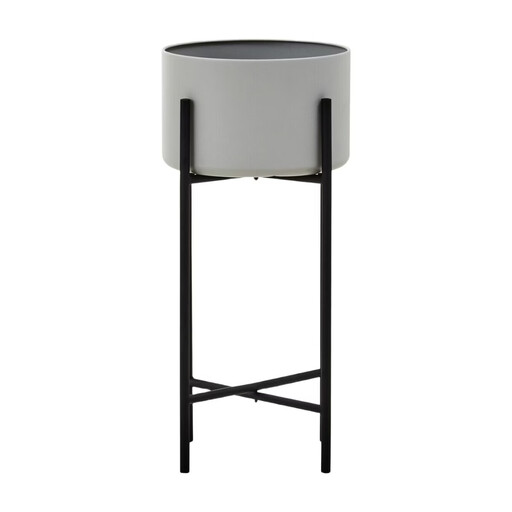
Why This Fits Their Persona: This model is ideal for design-conscious individuals looking for a statement piece. The planter with a stand acts as a modern piece of furniture, elevating the plant to a prominent eye-level, perfect for living rooms or entrance halls.
Its design as a floor vase with an integrated stand ensures high stability, avoiding the risk of wobbly or ill-fitting support structures. It is clearly designed for indoor use, thus bypassing the material trap for outdoor applications.
The crossed iron frame provides a delicate appearance while offering a robust construction. The minimalist design complements many modern interior styles.

Why This Fits Their Persona: Perfect for beginners or for cultivating herbs and succulents on a windowsill. The rectangular shape makes optimal use of space, and the simple design blends unobtrusively into any environment.
This model expertly solves the drainage problem: it features two drainage holes and a perfectly fitting, detachable ceramic saucer. This prevents root rot while protecting furniture from water stains.
The integrated drainage system is the decisive advantage. The matte ceramic surface is also easy to clean and resistant to fingerprints.

Why This Fits Their Persona: A solution for anyone who wants the greenery of plants but has no time for care, or wants to liven up areas without sufficient daylight. It's more a piece of wall art than a classic flower pot.
This product bypasses all the typical pitfalls of plant care—material, drainage, light requirements—because it is an artificial arrangement. There is no risk of root rot or cracks from weathering.
Absolutely no maintenance required. The arrangement remains permanently fresh and vibrant. The hexagonal shape also allows for creative combinations of multiple elements to form a green wall.
We have compiled a complete, up-to-date list of products that fully meet these strict selection criteria and UK safety regulations.
1. Does every planter need a drainage hole? For direct planting, a drainage hole is essential to prevent waterlogging and root rot. If you want to use a pot without a hole, it should serve as a cachepot. The plant remains in a smaller plastic pot with holes, which is then placed inside the cachepot. Excess water collects in the cachepot and can be poured out.
2. How do I winterise a planter for the balcony? First, make sure the planter is labelled as "frost-proof." Before the first frost, empty the saucer and place the planter on small feet (e.g., made of clay or wood) so the drainage hole doesn't freeze and water can still escape. Wrapping the pot in jute or bubble wrap can provide additional protection for the root ball against severe frost.
3. What is the difference between a planter and a cachepot? A planter (or flower pot) is intended for direct planting and therefore usually has a drainage hole. A cachepot is a purely decorative vessel without a hole, into which a planter is placed. It catches excess water and protects furniture surfaces.