
Lieferung heute & morgen

Qualitätsgarantie

Willkommens-Angebote freischalten: KOSTENLOSE Lieferung | Bis zu 80 % RABATT | Kostenlose 30-Tage-JoyPlus-Testphase
App herunterladen
Choosing the right planter can be the deciding factor in whether your plants thrive or wither. Yet, the market is flooded with products whose marketing promises often don't hold up in practice. Many buyers invest in a seemingly perfect planter, only to discover cracks, root rot, or instability after a short time. This guide will help you recognise the common pitfalls and make an informed decision.
Before you decide on a new flower pot or planter, you should be aware of the three most common problems that lead to disappointment and unnecessary expense.
To avoid a bad purchase, focus on the following objective criteria. These will help you correctly assess a product's functionality and longevity.
The most important decision concerns the material, which depends directly on the intended location.
The size of the pot is not purely an aesthetic feature but a functional necessity.
Not everyone has the time or desire to care for real plants intensively. Artificial flowers are a maintenance-free alternative for bringing lasting colour to living spaces or balconies. Look for UV-resistant materials to ensure the colours do not fade quickly. For ambitious home gardeners who want to overwinter sensitive plants or grow seedlings, a small greenhouse for the balcony or garden can be a sensible addition.
Here are some product recommendations tailored to specific user profiles, taking into account the criteria mentioned above.
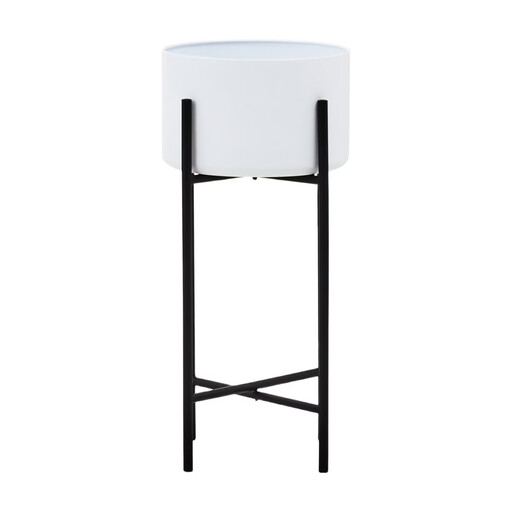
Why it's a great fit: Ideal for those who see a planter not just as a container, but as a standalone design piece. The modern, minimalist design with its black iron frame fits seamlessly into contemporary interiors and elevates the plant to a prominent height.
The stable, four-legged iron frame with cross-bracing prevents the tipping hazard common with many tall, slender designer pots.
A combination of a planter and a piece of furniture; the design makes a clear statement in the room.
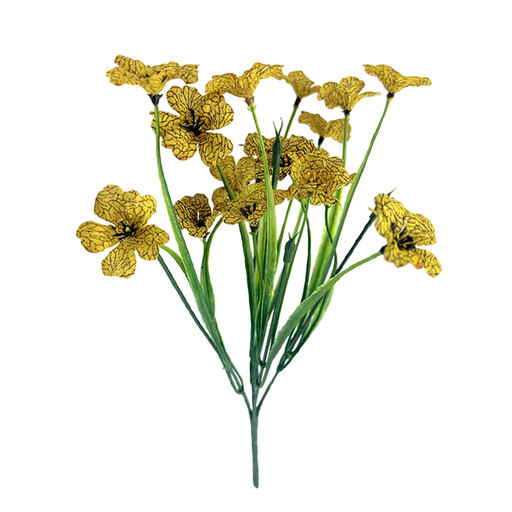
Why it's a great fit: For anyone who loves the look of flowers but doesn't have time for the upkeep. Ideal for dark corners, offices, or as a permanent splash of colour on the balcony, without worrying about watering or seasonal changes.
This product completely bypasses the problems of waterlogging and incorrect pot size. According to the manufacturer, the material is UV-resistant, which counteracts the typical fading of artificial flowers outdoors.
Completely maintenance-free and durable. Provides instant, year-round decoration with no further effort.

Why it's a great fit: Perfect for balcony and patio gardeners who want to do more than just decorate. This mini greenhouse allows for the cultivation of vegetables, herbs, or the overwintering of frost-sensitive potted plants in a small space.
Instead of relying on the vague promise of a "frost-proof" pot, this greenhouse provides a controlled environment that actively protects plants from cold, wind, and pests.
Extends the gardening season and creates optimal growing conditions. According to the manufacturer, it can be assembled without tools.
We have compiled a comprehensive, up-to-date list of products that meet these strict selection criteria.
Truly frost-proof materials have low porosity, meaning they absorb very little water that could freeze and crack the material. Reliable options include fibreglass, high-quality polyethylene (PE) plastic, and certain types of ceramic that have been fired at very high temperatures (e.g., Impruneta terracotta). Look for explicit manufacturer claims of frost resistance.
It depends on its use. If you are planting directly into the vessel, a drainage hole is absolutely essential to prevent waterlogging and root rot. However, if you are using the vessel as a decorative cachepot into which a smaller plastic pot with holes is placed, the cachepot itself does not need a hole. It then serves as a water reservoir and protects your furniture.
A good rule of thumb is to choose a pot with a diameter that is about 2 to 4 centimetres (for small plants) or 5 to 10 centimetres (for large plants) larger than the current pot or the root ball. This gives the roots enough space to grow without the plant "drowning" in an excessive volume of soil that stays wet for too long.