
Lieferung heute & morgen

Qualitätsgarantie

Willkommens-Angebote freischalten: KOSTENLOSE Lieferung | Bis zu 80 % RABATT | Kostenlose 30-Tage-JoyPlus-Testphase
App herunterladen
A play kitchen is more than just a toy—it's a space for creativity, role-playing, and learning about everyday routines in a fun way. But the selection is vast, and not every model delivers on its promises. As your Joybuy Product Recommendation Officer, I'm here to help you identify the crucial features and avoid common purchasing pitfalls, so you can make an informed decision.
Before we dive into the key selection criteria, let's look at the problems that often only become apparent after the purchase.
To avoid a bad purchase, you should focus on objective, measurable qualities. These three parameters are crucial for the durability and play value of a play kitchen.
The material is a key factor in the kitchen's stability and longevity.
The worktop height is key to long-lasting fun. It should be appropriate for the child's height, allowing them to play comfortably while standing.
Before buying, measure your child's height and compare it with the manufacturer's specifications for the worktop height, not just the overall height of the kitchen.
Electronic effects and accessories can enhance play value, provided they are well-implemented.
Here are some models tailored to specific needs and play scenarios that cleverly avoid the pitfalls mentioned.

Why This Fits Their Persona: Ideal for families who want to move the play area outdoors. This kitchen is specially designed for playing with water, sand, and natural materials, promoting sensory development and creativity in the open air.
It avoids the "poorly designed features" trap because the water container with a tap and the removable tub are genuinely designed for making a mess. The function here isn't a gimmick; it's the core of the play concept.
Made from FSC-certified solid wood with a weather-resistant glaze. Includes extensive accessories like a pot and ladle for immediate play.
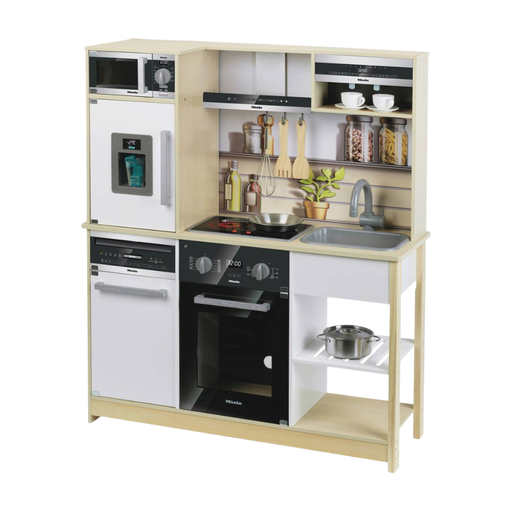
Why This Fits Their Persona: Perfect for parents who value a high-quality, durable, and aesthetically pleasing play kitchen that integrates well into their living space. The Miele design and wooden construction signify quality.
This model sidesteps the "low-quality materials" trap by using FSC-certified wood and a sturdy construction. The electronic features are well-thought-out and integrated into a robust overall package.
Comprehensive features including a hob with sound and light, a microwave, an espresso machine, and a refrigerator. High-quality metal and wood accessories are already included.
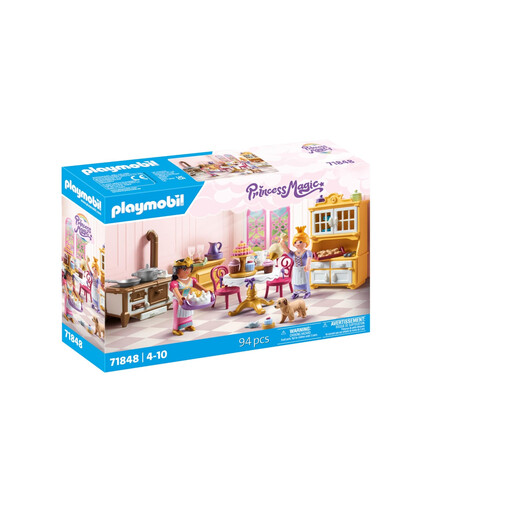
Why This Fits Their Persona: A great choice for families with limited space or for testing a child's interest in cooking role-play without investing in a large kitchen right away. It integrates perfectly into existing PLAYMOBIL worlds.
This set avoids the "incorrect proportions" trap as it is clearly positioned as a compact playset, not a large, freestanding kitchen. Size expectations are realistic from the outset.
A high level of detail and plenty of accessories (60 pieces) promote fine motor skills and imagination. The set even includes a real recipe book for baking together with parents.
We have compiled a complete, up-to-date list of products that fully meet these strict selection criteria and rigorous safety standards.
Play kitchens are generally suitable for children from around 1.5 to 8 years old. For the youngest (1.5-3 years), simple, sturdy models without small, swallowable parts are ideal. From age 3, interactive elements like lights, sound, and detailed accessories become more interesting.
The ideal worktop height depends on the child's height. As a rule of thumb, the worktop should be at about the child's hip or navel level. For a 3-year-old child who is approx. 95 cm tall, a worktop height of around 50 cm is a good fit.
A regular play kitchen is designed for indoor use and mimics a real kitchen unit, often made of wood or plastic. A mud kitchen is specifically intended for outdoor use. It is made from weather-resistant materials (usually wood) and features sturdy tubs and often a real water function to allow for play with sand, soil, and water.