
Lieferung heute & morgen

Qualitätsgarantie

Willkommens-Angebote freischalten: KOSTENLOSE Lieferung | Bis zu 80 % RABATT | Kostenlose 30-Tage-JoyPlus-Testphase
App herunterladen
Plastic storage boxes help you keep clothes, craft supplies, stationery and household items neatly organised. Plastic boxes with lids are also useful for food. However, models vary considerably in their material, dimensions, closures and permitted uses.
If you focus only on a large capacity or a low price, you could easily end up with a box that doesn’t fit your cupboard, fridge or shelving. The following criteria can help you avoid common purchasing mistakes and find the right option.
A large box can hold plenty of items, but it may not be easy to carry or stack. Models with a capacity of 50 or 70 litres are useful for clothes and seasonal decorations. Smaller organiser boxes are a better choice for desk accessories, spices or craft supplies.
That’s why length, width and height matter just as much as the capacity in litres. Check the internal dimensions of your shelving before buying, and leave a little room for handles or lids.
Transparent storage boxes make it easier to see what’s inside. Even so, larger containers can become cluttered. Compartments or several small organiser boxes are often more practical than one large container for screws, beads, tea bags or paper clips.
Coloured boxes can also be useful if household members want to sort items by category. However, the colour shouldn’t distract from the need for a secure-fitting lid and a box that’s suitable for its intended use.
Food storage containers and food boxes must be designated for food use in the product information. The guidance for microwaves, freezers, dishwashers and ovens also varies.
A box may be suitable for freezing but not for use in the oven. Some models shouldn’t be heated with their lids, seals or clips in place. Always follow the specific care and safety instructions for the product.
Polyethylene (PE) and polypropylene (PP) are commonly used for plastic boxes. PE boxes are often lightweight and flexible, for example. According to the product information, 5five Fresh & Freeze boxes are made from PE and are suitable for storing and freezing food.
PP is common in many stackable storage boxes. It’s used for household organisation, kitchen storage and small sorting solutions. When buying, check not only the type of plastic but also the stated uses.
PET may be used for transparent organiser boxes. Transparency makes it easier to see what’s inside, but doesn’t in itself mean a box is suitable for hot food or freezing.
Glass and stainless steel containers are alternatives for food storage. However, they aren’t plastic boxes and differ in weight, break resistance and handling.
A lid protects the contents from dust and makes stacking easier. For clothes, documents or craft supplies, a loose-fitting or snap-on lid is often enough. For food, clips and silicone seals can help keep a container closed during normal transport.
Check:
Don’t assume a box is “airtight” or “leakproof” unless this is stated in the product information.
Stackable storage boxes save vertical space. To do this well, they need flat lids and sturdy containers. A solid base and well-fitting edges help prevent boxes from slipping when stacked.
Sets of storage boxes are often more economical and make it easier to organise small items. Check the size of each box in a set: a set ranging from 0.3 to 2.8 litres is suited to different uses from a four-pack with a capacity of 50 litres per box.
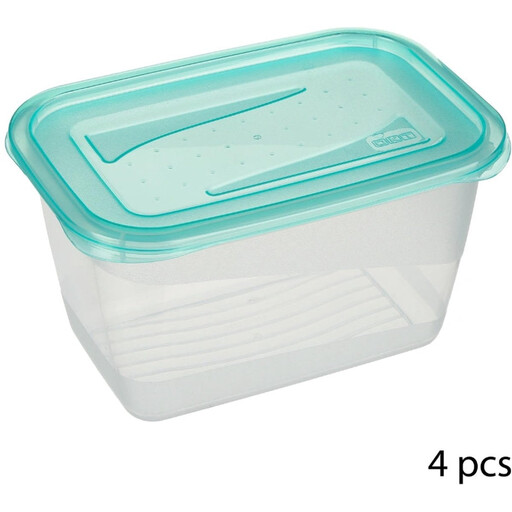
Why this product suits this profile: Four containers, each with a capacity of 0.75 litres, are ideal for portions, leftovers and keeping your fridge organised. According to the product information, they’re suitable for use in the microwave, freezer and dishwasher, but not in the oven.
The clear boxes make it easier to check what’s inside. The stated dimensions of 15 × 10 × 8,5 cm and capacity of 0,75 litres make it clear what they can be used for.
PE material, four containers in the set, a transparent design and stated suitability for freezing, microwave and dishwasher use.
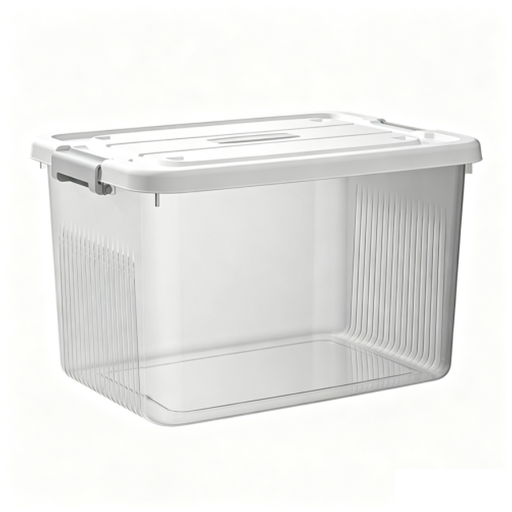
Why this product suits this profile: This four-pack is designed for organising your home, storing seasonal clothes and stationery, or keeping items in the cellar or on the balcony. The product information specifies a 2,5 mm thick PP body, reinforcing ribs and integrated handles.
The exact external dimensions and hinged lid help prevent buying the wrong size because of unclear measurements. The product description also notes load limits and protection from high temperatures.
PP material, a stated wall thickness of 2,5 mm, handles, an anti-slip base and a stackable lid.
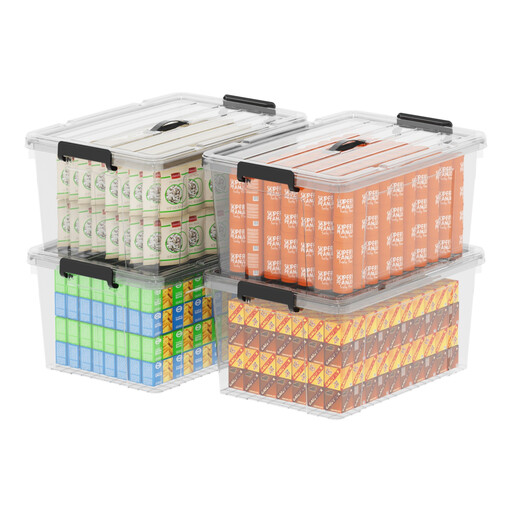
Why this product suits this profile: Four large containers with stated dimensions of 63,5 × 43,5 × 33 cm are designed for households needing plenty of storage space, for example for winter clothes, bedding or items stored in a wardrobe during a move.
The clear design shows you what’s inside, while the lids, clips and handles make access and carrying easier. Before buying, check the width of your shelving, the door opening and the weight of a full container.
70 litres of capacity per box, clear sides, lids with clips and carry handles according to the product name.
We’ve put together a complete, regularly updated list of products that meet these strict selection criteria and fully comply with the safety regulations in force in the EU.
Clean food storage boxes after every use, following the manufacturer’s instructions. Remove any detachable seals to prevent residue building up underneath. Don’t stack containers beyond the stated load limit, and avoid sharp objects that could scratch the plastic.
Store clothes and documents in a dry place. Don’t put damp fabrics in boxes kept in enclosed spaces. If storing items for a long time, follow the guidance on direct sunlight, heat and ventilation.
Only use models that are explicitly designated for food use. Also check the guidance on microwave, freezer and dishwasher use. A standard organiser box designed for clothes or stationery shouldn’t be used to store food.
It depends on your storage space. Stackable models make use of the height of a shelf, but need a suitable base and sturdy lids. For organising lots of small categories, several small containers or a set with different sizes may be easier to manage.
Their lifespan depends on the material, load, UV exposure, temperature and how they’re handled. Overfilling, high temperatures and prolonged exposure to sunlight can cause them to warp. Choosing the right size, distributing the load evenly and cleaning the box according to the manufacturer’s instructions can help it last longer.