
Lieferung heute & morgen

Qualitätsgarantie

Willkommens-Angebote freischalten: KOSTENLOSE Lieferung | Bis zu 80 % RABATT | Kostenlose 30-Tage-JoyPlus-Testphase
App herunterladen
Plastic storage boxes help keep clothes, toys, household items and seasonal belongings organised while making the most of your space. In practice, though, not every box will fit every cupboard, cellar shelf or car boot. Capacity and price aren’t the only things to consider: dimensions, fastening, stackability and where you plan to use the box all matter too.
A box with a large capacity isn’t automatically the right choice. For shelving, the external dimensions, lid height and usable internal space matter most. If the box doesn’t fit fully on the shelf, you’ll end up with unused space. Before buying, measure the shelf’s width and depth, as well as the available height.
Transparent storage boxes make it easier to see what’s inside, as long as the contents are neatly arranged. Clothes, cables and small items can still be hard to identify at a glance. A label on the front or a simple list of contents can help.
Plastic boxes with lids can often be stacked. For a stable stack, though, the lid shape, base and stated weight limits all need to work together. Put heavier items in the bottom boxes. Concentrated weight or an overfilled box can deform the plastic.
Polypropylene, or PP for short, is used to make many plastic storage boxes. It’s lightweight and suitable for a range of household uses. Specific construction features are more helpful than general claims such as ‘extra strong’:
For garages, hobby rooms and utility rooms, sturdy plastic boxes with lids are usually more practical than open containers. For dry clothes in a wardrobe, foldable fabric models may also be an option. They aren’t plastic boxes in the strict sense, though, and should be kept away from moisture.
Medium or large boxes with plenty of height are ideal for clothes. For documents, craft supplies and kitchen accessories, shallower boxes are often easier to reach into. Storage boxes with handles are easier to take off shelves, from under beds or out of the car boot.
Also consider:
Sets of storage boxes are useful when you want to organise several categories at once. Different sizes can help you separate winter clothes, toys and household accessories, for example. For screws, spices, craft supplies or stationery, small compartmentalised sets are more practical than large containers.
For food, only use products whose specifications explicitly confirm that they’re suitable for the intended contact and, where relevant, for use in the freezer or microwave. An ordinary plastic storage box isn’t automatically food-safe.
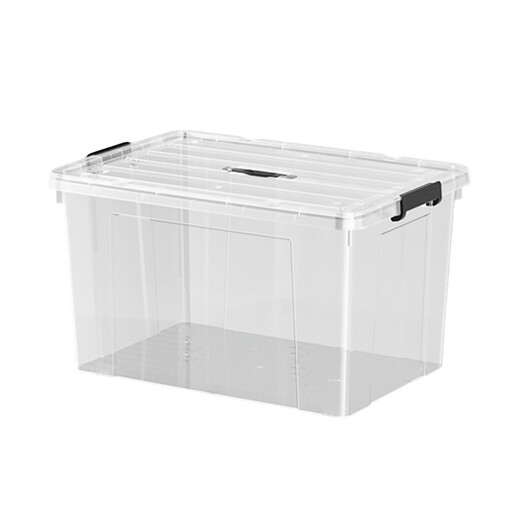
Why this product suits this need: This set of four matching boxes has a transparent body and measures 42 × 30 × 25 cm, making it suitable for clothes, toys or household items.
The transparent design makes it easier to see what’s inside. The product specifications also list a lid, handles and a non-slip base.
PP material, stated wall thickness of 2.5 mm, snap-on lid and side handles.
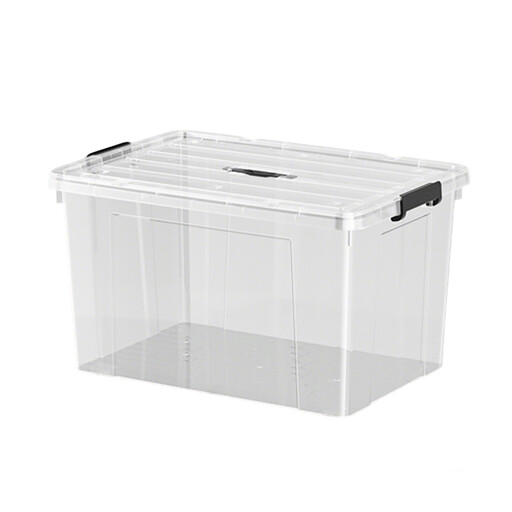
Why this product suits this need: The larger size is designed for households looking to organise bulky seasonal clothes, blankets or larger household items.
The stated dimensions let you check how much space you’ll need before buying. The lid is designed for stacking.
Generous dimensions, PP body, reinforcing ribs, snap-on lid and integrated handles.
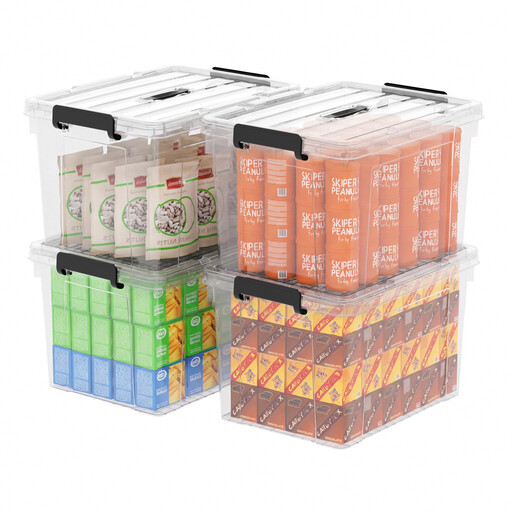
Why this product suits this need: These four transparent 50-litre boxes measure 51 × 39 × 33 cm and are designed for frequent rearranging, larger households, moving house or seasonal storage.
The handles and clips make the boxes easier to carry and close. Before stacking them, check the available space against the external dimensions.
Pack of four, transparent body, lids, carry handles and clips, as stated in the product name.
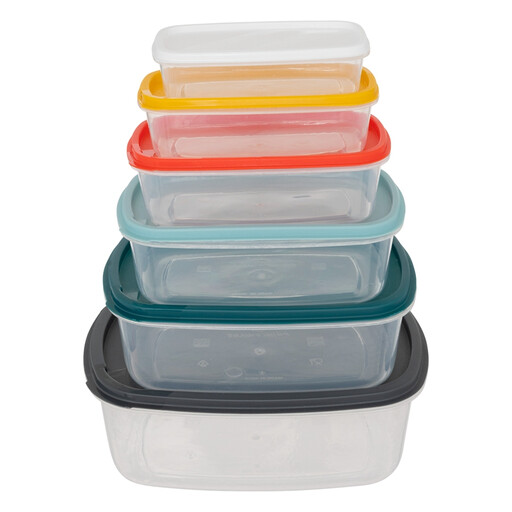
Why this product suits this need: The six boxes come in different sizes, from 0.3 to 2.8 litres, making them suitable for craft supplies, small household items or kitchen provisions.
The range of sizes stops small items getting lost in an oversized container. The product specifications state that the boxes are suitable for the freezer and microwave.
Six sizes, PP material and colour-coded options; the largest box measures 25.5 × 19 × 9 cm.
We’ve put together a complete, regularly updated list of products that meet these strict selection criteria and fully comply with the safety regulations in force in the EU.
Medium to large lidded boxes are handy for jumpers, bedding and seasonal clothes. Measure the space first, and make sure you’ll still be able to lift the box out safely when it’s full. Smaller sizes or modular sets are usually enough for underwear and accessories.
Lifespan depends on the material thickness, load, temperature, sunlight and how the box is handled. There’s no reliable way to give a single lifespan that applies to every box. Avoiding overloading, protecting the box from heat and replacing damaged parts promptly can help reduce common wear and tear.
A lid with clips or a snap fastening can protect the contents from dust. That doesn’t automatically make the box airtight or waterproof, though. If you’re storing items that are sensitive to moisture, check the specific product details and choose a dry place to keep them.