
Lieferung heute & morgen

Qualitätsgarantie

Willkommens-Angebote freischalten: KOSTENLOSE Lieferung | Bis zu 80 % RABATT | Kostenlose 30-Tage-JoyPlus-Testphase
App herunterladen
The selection of accessories for a play kitchen can be overwhelming. From colourful play food to realistic-looking kitchen appliances, the range is vast. But not every set delivers on its promise. As a Joybuy Product Recommendation Officer, I see every day which products bring joy and which ones quickly end up collecting dust. This guide will help you navigate the common pitfalls and make a choice that fosters creativity and long-term fun.
Many well-intentioned purchases turn out to be a disappointment. Pay attention to these three points to avoid wasting your money:
To separate the quality products from the rest, you should check three key aspects before buying. These will help you objectively assess a product's quality and play value.
The material is the foundation of safety and durability. Look for sturdy, BPA-free plastic. The CE marking provides important guidance. It's not a quality seal, but a declaration by the manufacturer that the product meets the applicable EU requirements. Even more telling is testing according to the EN 71 standard, the European standard for toy safety. Products with rounded edges and a stable construction minimise the risk of injury and can withstand even the wildest play sessions.
Good play kitchen accessories are more than just decoration. They should function as an educational toy for ages 3 and up by promoting fine motor skills, hand-eye coordination, and creativity. Play food that can be cut trains motor skills, while a set with different shapes and colours encourages sorting and naming. A well-designed role-playing toy allows children to imitate everyday situations, develop social skills, and unleash their imagination.
Consider which play scenarios interest the child most. Is a simple set of fruits and vegetables enough, or should an entire toy shop be equipped with matching toy shop accessories? Check the size of the accessory parts. Do the pots fit on the hobs? Is the play money for the cash register easy enough to handle? A set that fits well with the existing play environment will integrate seamlessly into play and expand the possibilities, rather than limiting them.
Based on the criteria above, we've selected a few products suited for different needs and play preferences.
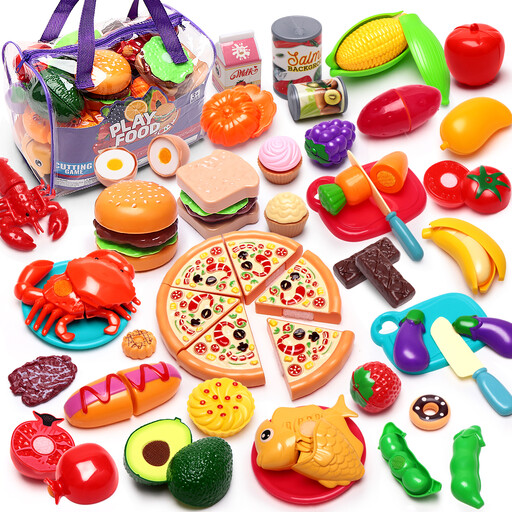
Why This Fits Their Persona: Ideal for getting started, as it offers a huge variety with 78 food items and focuses on the popular play mechanic of "cutting." Perfect for training motor skills and initiating the first cooking role-plays.
According to the manufacturer, the set is made of BPA-free plastic with smooth edges. The Velcro connections are designed for repeated play, and the included bag solves the storage problem.
Large scope for varied play. Specifically promotes fine motor skills through the cutting function. Includes a practical storage bag.
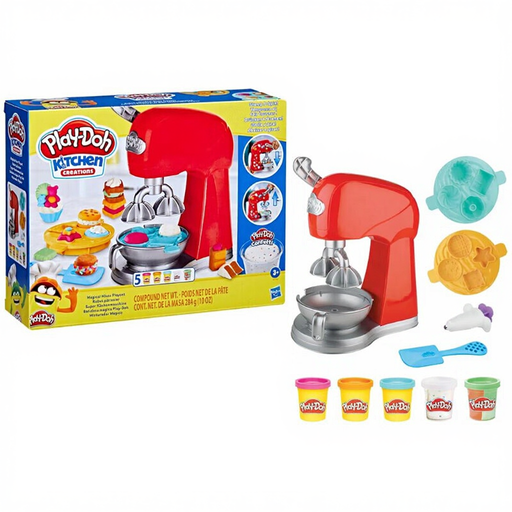
Why This Fits Their Persona: A great alternative to classic play food. This set combines kitchen role-play with the creative and tactile experience of modeling clay. Kids can "bake" their own cakes and cookies.
Instead of relying on short-lived connections, the focus is on limitless creativity with modeling clay. The set is from an established manufacturer and designed for safe handling by children aged 3 and up.
Promotes creativity and sensory perception. Offers high replayability, as new creations can always be made. No batteries required.
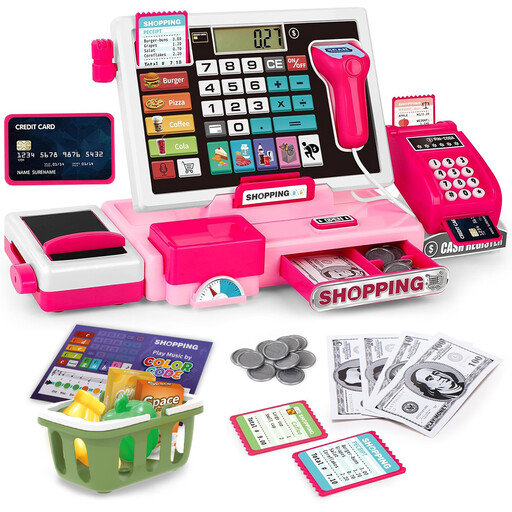
Why This Fits Their Persona: Expands the play from the kitchen to the shop. This set is ideal for children who enjoy selling and working with numbers. The working calculator provides a real learning effect.
Instead of being just a prop, the cash register offers a meaningful function with its real calculator. The design with soft edges and the use of non-toxic materials meet safety requirements.
Integrates a working calculator for early maths practice. Includes accessories like a scanner, play money, and a shopping basket for a complete toy shop experience.
We have compiled a complete, up-to-date list of products that fully meet these strict selection criteria and European safety regulations.
At what age are play kitchen accessories appropriate? Most manufacturers recommend play kitchen accessories for children aged 3 and up. At this age, children begin to develop complex role-playing games, and their fine motor skills are sufficiently developed to handle smaller parts safely. Always pay attention to the manufacturer's age recommendation, especially regarding small parts that can be swallowed.
How do you clean plastic or wooden play food? Plastic toys can usually be cleaned easily with a damp cloth and mild soapy water. Avoid harsh cleaning agents. Wooden accessories should only be wiped with a slightly damp cloth and dried immediately to prevent the material from swelling. Electronic components must not come into contact with water and should only be wiped dry.
What should I look for in electronic accessories like cash registers or mixers? Check that the battery compartment is securely screwed shut so that children cannot open it themselves. Look for the CE marking. Features like lights and sounds should be pleasant and not too loud or bright to avoid sensory overload. Carefully read the manufacturer's instructions for operation and battery replacement.