
Lieferung heute & morgen

Qualitätsgarantie

Willkommens-Angebote freischalten: KOSTENLOSE Lieferung | Bis zu 80 % RABATT | Kostenlose 30-Tage-JoyPlus-Testphase
App herunterladen
A play kitchen is more than just a toy. It's a space for creativity, role-playing, and a child's first playful introduction to everyday routines. However, the selection is vast, and not every model lives up to its advertising promises. As a Joybuy Product Recommendation Officer, I'll help you identify the crucial features and avoid common purchasing traps, so you can create a durable and safe play environment for your child.
Before we dive into recommended features, it's important to be aware of the most common problems that often only become apparent after the purchase.
To make an informed decision, you should examine three central aspects. These will help you objectively assess a model's quality.
The choice of material is one of the most fundamental decisions. Both options have their merits, but the quality of the craftsmanship is what truly counts.
Consider where the kitchen will primarily be used. This will determine the requirements for materials and features.
The features should match the child's age and interests. Sometimes, less is more.
Instead of making a one-size-fits-all recommendation, we have matched models to different needs and play scenarios.
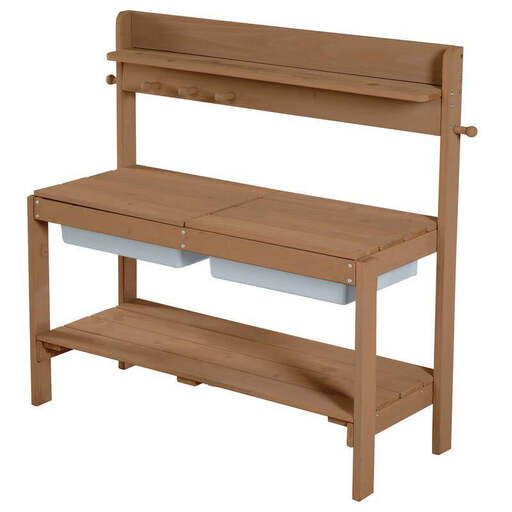
Why This Fits Their Persona: Ideal for children who love being outdoors. This mud kitchen is designed for play with sand, water, and natural materials, promoting sensory development and creativity in the open air.
The construction from weather-resistant glazed solid wood is robust and stable, thereby avoiding the stability trap. The focus is on physical play rather than failure-prone electronics.
Versatile use as a play table, workbench, or mud table. The removable plastic tubs are easy to clean. In winter, it can be used indoors as a craft table.

Why This Fits Their Persona: Perfect for children who appreciate a realistic play environment. This kitchen grows with the child and offers thoughtful features for long-lasting fun in the playroom.
The FSC-certified wood (according to the manufacturer) and sturdy construction bypass the material and stability traps. As a branded toy from Theo Klein, the light and sound effects are designed for durability.
The height adjustability is a clear plus for long-term use. The hob with sound and light, as well as the high-quality stainless steel-look and wooden accessories, promote realistic role-playing.
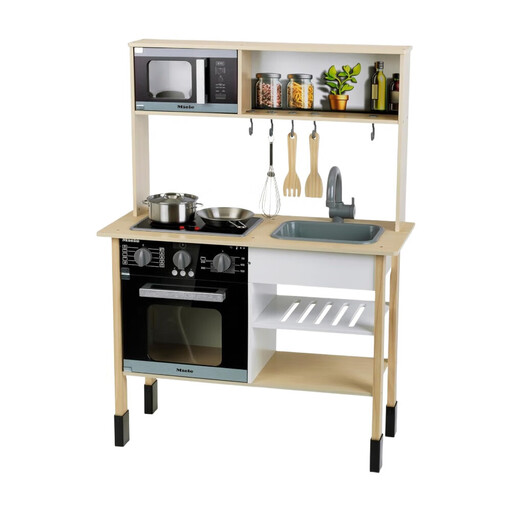
Why This Fits Their Persona: An excellent choice for families looking for a fully equipped, durable wooden kitchen without breaking the bank. It offers all the essential functions for a comprehensive play experience.
According to the manufacturer, this model is made from high-quality wood and offers a stable construction. It focuses on the core functions of a play kitchen, avoiding superfluous, failure-prone extras.
Offers a complete set with a hob (incl. light/sound), microwave, sink, and high-quality accessories. The well-known Miele design provides high recognition value and encourages play.
We have compiled a complete, up-to-date list of products that fully meet these strict selection criteria and UK safety regulations.
1. From what age is a play kitchen recommended? Most manufacturers recommend their models for children aged 18 months or 3 years and up. Simple, robust models without small parts are suitable for toddlers from around 1.5 years to help train motor skills. More complex kitchens with lots of accessories are better suited for children aged 3 and up who are already capable of developing more complex role-playing games.
2. What should you pay special attention to with a wooden play kitchen? Check the origin and material specifications. An FSC seal indicates wood from responsible forestry. Inspect the surfaces for a smooth finish and ensure all edges are rounded to prevent injuries. A sturdy construction without visible screws on the upper work surfaces is also a sign of quality.
3. How do you clean and maintain a mud kitchen? A garden kitchen made of wood should be regularly cleared of heavy dirt. The plastic tubs can be easily removed and cleaned with water and mild soap. The wooden surfaces can be wiped with a damp cloth. To ensure the longevity of the wood, it is advisable to cover the kitchen when not in use or store it in a sheltered area, especially during winter.