
Lieferung heute & morgen

Qualitätsgarantie

Willkommens-Angebote freischalten: KOSTENLOSE Lieferung | Bis zu 80 % RABATT | Kostenlose 30-Tage-JoyPlus-Testphase
App herunterladen
A play kitchen is more than just a toy—it's a space for creativity, role-playing, and learning about daily routines in a fun way. But the selection is vast, and not every model lives up to its advertising promises. As your Joybuy Product Recommendation Officer, I'll help you navigate the common pitfalls and make an informed decision that will bring your child lasting joy.
Before you choose a model, you should be aware of three common problems that often only become apparent after the purchase:
To avoid a bad purchase, you should focus on three core aspects. These objective criteria will help you evaluate the quality of a play kitchen, regardless of marketing promises.
The choice of material is one of the most fundamental decisions and depends heavily on the intended location and personal priorities.
Modern play kitchens offer a variety of features. The crucial factor is not the quantity, but their quality and contribution to creative play.
Safety comes first. Always check the manufacturer's age recommendation. For children under three, there must be no small parts that can be swallowed. A stable base to prevent tipping is essential. Look for recognised safety seals like the GS mark and the CE marking, which confirm compliance with European safety standards.
Based on these objective criteria, we have selected a few models from our range that are suitable for different needs and play scenarios.
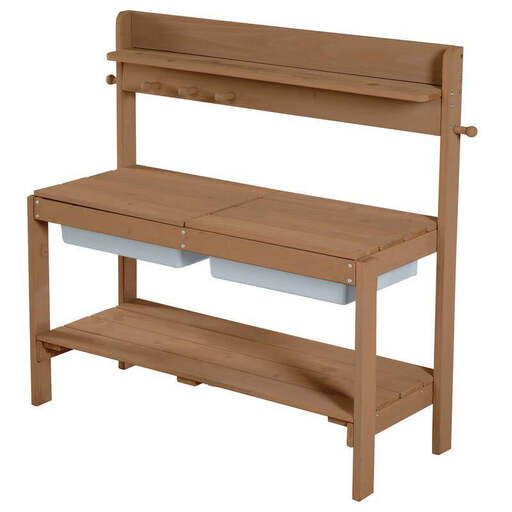
Why This Fits Their Persona: Ideal for children who love to play outside. This mud kitchen is specially designed for use in the garden or on the patio and encourages experimentation with sand, water, and natural materials.
The construction from weather-proof glazed solid wood is robust and designed for outdoor use, which prevents instability. The focus is on tactile play rather than failure-prone electronics.
Two removable plastic tubs for water and sand; plenty of storage space; can be used indoors as a craft table during winter.

Why This Fits Their Persona: For families looking for a durable, high-quality indoor solution that grows with their child. The Miele design and realistic functions offer a sophisticated play experience.
The robust construction from FSC-certified wood ensures stability. The integrated light and sound effects on the hob are purposefully designed and high-quality, enriching the play without being disruptive.
Height-adjustable to grow with the child; hob with realistic sound and light effects; includes high-quality stainless steel and wooden accessories.
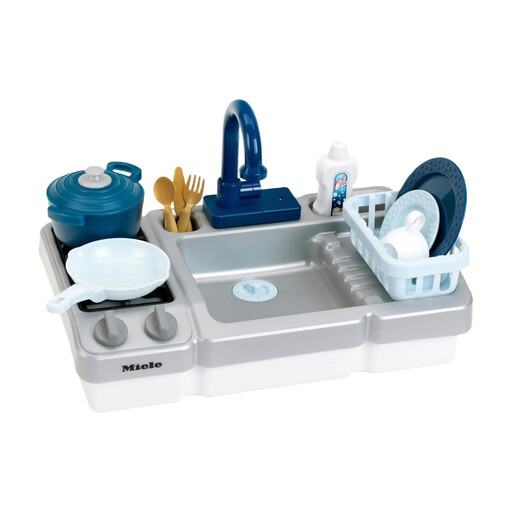
Why This Fits Their Persona: Perfect for smaller apartments or as an addition to an existing play corner. This compact module can be easily placed on a table while still offering a central play feature.
Instead of offering many mediocre features, this set focuses on a single, well-executed function: the water pump. This avoids cluttered electronics and encourages focused play.
Real water pump function for interactive fun; very compact and portable; includes accessories like a pot, dishes, and cutlery.
We have compiled a complete, up-to-date list of products that fully meet these strict selection criteria and UK/EU safety regulations.
Simple, sturdy models, especially a mud kitchen, are often suitable for children as young as 18 months. More complex play kitchens with lots of accessories and electronic features are generally recommended for children aged 3 and up. Always pay attention to the manufacturer's specific age recommendation to ensure there are no small parts that could pose a choking hazard.
A wooden play kitchen should be regularly wiped down with a soft, slightly damp cloth. Avoid harsh cleaning agents as they can damage the paint. It's advisable to periodically check all screws to ensure they are tight, maintaining the kitchen's stability. For outdoor models, it's best to cover them or store them in a sheltered area when not in use to protect the wood from the elements.
A basic set is often sufficient to get started. A pot with a lid, a pan, and a few plates and cutlery pieces are enough to spark the imagination. Many play kitchens already come with such a starter set. Additional play kitchen accessories like toy food, a coffee machine, or a toaster can be wonderful additions later on to expand the play.