
Lieferung heute & morgen

Qualitätsgarantie

Willkommens-Angebote freischalten: KOSTENLOSE Lieferung | Bis zu 80 % RABATT | Kostenlose 30-Tage-JoyPlus-Testphase
App herunterladen
A play kitchen is more than just a toy—it's a hub for creativity, role-playing, and the development of crucial motor skills. But the market is vast, and not every model lives up to its promises. As a Joybuy Product Recommendation Officer, I'm here to help you separate the wheat from the chaff and make an informed decision that guarantees years of fun. We'll highlight the most common pitfalls and show you what really matters.
Many well-intentioned purchases end in disappointment because certain aspects were overlooked. Watch out for these three typical problems to avoid buyer's remorse.
To make the right choice, you should focus on a few crucial features. These parameters are the primary determinants of quality, safety, and fun.
The choice of material is one of the most fundamental decisions. Both options have their merits, as long as the quality is right.
A kitchen that forces a child to stoop or stand on their tiptoes won't be fun in the long run. Before buying, be sure to check the worktop height. Some models are even height-adjustable and grow with your child—a very practical feature for long-term use. You should also measure the available space in the playroom or living room to ensure the new kitchen will actually fit.
An empty kitchen is only half the story. The right play kitchen accessories are what truly bring it to life. Look for sets that include a good starter kit, or plan to purchase supplementary accessories at the same time. Especially popular and educationally valuable is play food that can be "cut" apart thanks to Velcro fasteners. Pots, pans, and cooking utensils should also be child-sized and made from durable material. Often, play shop accessories can also be integrated perfectly into the game.
Instead of a one-size-fits-all recommendation, we have matched products to different needs and play scenarios.
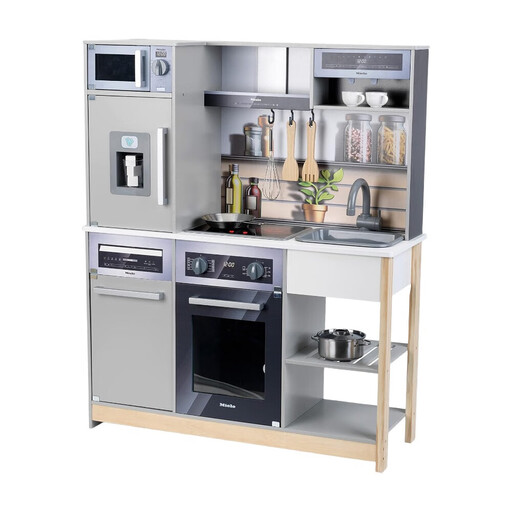
Why This Fits Their Persona: Ideal for families looking for a durable, aesthetically pleasing, and fully equipped wooden play kitchen that can withstand years of intensive play and offers numerous realistic functions.
The sturdy construction of FSC-certified wood prevents the instability found in cheaper models. The stove's well-designed light and sound effects offer real added value rather than just being a distraction.
Comprehensive features including a stove with sound/light, a microwave, a refrigerator with an ice dispenser, and high-quality metal and wood accessories.
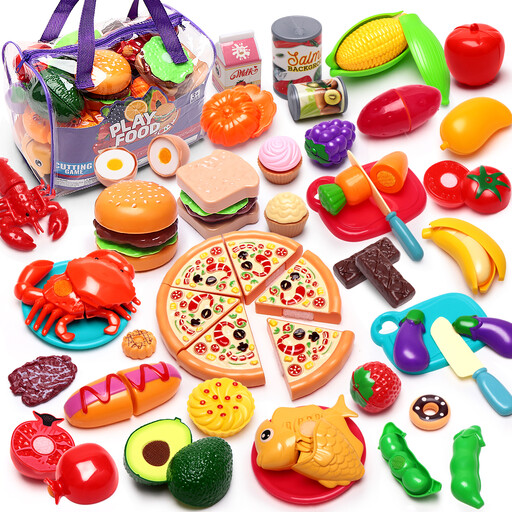
Why This Fits Their Persona: Perfect for families who already own a basic kitchen or want to enhance its play value with a comprehensive accessory set, without having to buy a whole new kitchen.
This set directly addresses the most common shortcoming: missing or impractical accessories. Instead of a wobbly kitchen, it provides an abundance of high-quality play food for cutting.
Very extensive, with 78 food items. The Velcro connections allow for a realistic cutting experience and promote fine motor skills. Made from BPA-free plastic.
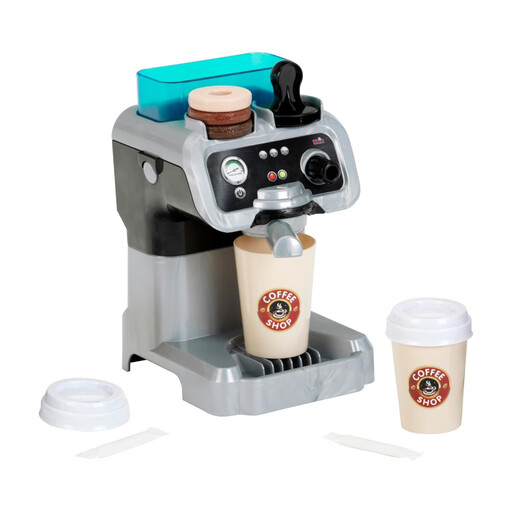
Why This Fits Their Persona: An excellent addition to any play kitchen or as a standalone toy for children who are fascinated by how adults prepare coffee and want to mimic the ritual.
It focuses on a single, well-executed function (real water flow) instead of multiple, poorly implemented electronic features. It specifically encourages imitative play without unnecessary distractions.
Realistic water flow function for authentic play. The set includes extensive accessories like coffee pods, a tamper, and cups, which significantly increases its play value.
A play kitchen thrives on its ingredients. If you're looking for high-quality and diverse play food, we've put together a curated selection for you.
1. At what age is a play kitchen a good idea? As a rule, play kitchens are suitable for children from around 3 years of age. At this age, children begin to take a keen interest in role-playing, and their motor skills are developed enough to handle the accessories safely. Always pay attention to the manufacturer's age recommendation, especially regarding small parts that could be a choking hazard in models for older children.
2. How much space does a play kitchen require? The dimensions vary greatly. Compact tabletop models or individual appliances like a coffee machine require very little space. Fully equipped, freestanding kitchens can be anywhere from 70 cm to over 100 cm wide. It's advisable to measure the available space in the playroom or living room carefully before purchasing.
3. What should I look for in electronic features? Electronics should enrich play, not dominate it. Realistic cooking sounds or a gently glowing hob are often more conducive to play than loud music or harsh flashing lights. Check which batteries are required and whether the battery compartment is easily accessible for adults but securely closed for children. Features with an automatic shut-off function will help conserve battery life.