
Lieferung heute & morgen

Qualitätsgarantie

Willkommens-Angebote freischalten: KOSTENLOSE Lieferung | Bis zu 80 % RABATT | Kostenlose 30-Tage-JoyPlus-Testphase
App herunterladen
A play kitchen is more than just a toy. It's a space for creativity, where children learn about daily routines through play and develop social skills. However, the market is vast, and not every model lives up to its advertising promises. As your Joybuy Product Recommendation Officer, I'll help you identify the key features and avoid common purchasing traps, so you can find a durable and safe play kitchen for your child.
Many products advertise with impressive images and long lists of accessories. In practice, however, weaknesses often emerge that quickly spoil the fun. Pay special attention to these three points:
To make an informed decision, you should focus on objective criteria rather than marketing promises. The following three aspects are crucial for safety, durability, and play value.
The choice of material affects stability, longevity, and ease of cleaning. Both options have specific pros and cons.
Safety is the top priority. Check if the product has a CE marking, with which the manufacturer declares compliance with EU standards. Additional seals like the GS mark (Geprüfte Sicherheit / Tested Safety) indicate voluntary testing by independent institutes. Important safety aspects include:
Ergonomics are just as important. The worktop height should match your child's height so they can play comfortably while standing. Some models are height-adjustable and grow with the child.
Features like turning knobs with a clicking sound, doors that open, or a removable sink are tried-and-true elements that enrich role-play. For electronic features like cooking sounds, solid craftsmanship is essential.
When it comes to a play kitchen with accessories, less is often more. A set of sturdy wooden or metal dishes is more valuable than a large quantity of flimsy plastic toys. High-quality accessories foster creativity and stand up to everyday play.
To help you get your bearings, we have matched some products to different user profiles.
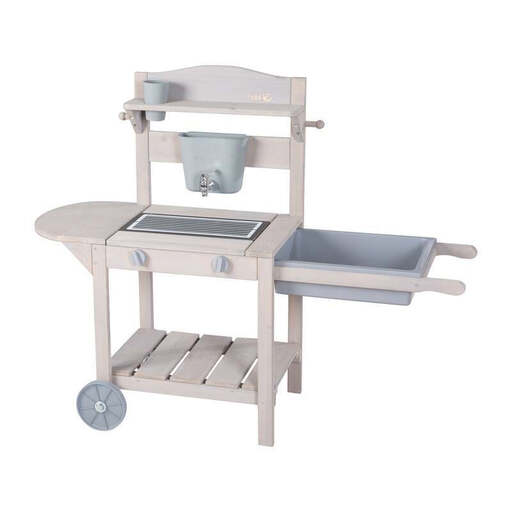
Why it's a great fit: Ideal for families looking for a robust children's garden kitchen. It is specially designed for outdoor use and encourages creative play with sand, water, and natural materials. Thanks to its wheels, it can be flexibly positioned in the garden or on the patio.
This model avoids the pitfall of poor stability and weather resistance. According to the manufacturer, it is made of weather-proof finished solid wood and is explicitly designed as a mud kitchen for outdoor use, rather than being an unsuitable indoor kitchen.
The combination of mobility via wheels, a durable plastic basin, and a functional water tap offers diverse and long-lasting play opportunities outdoors.
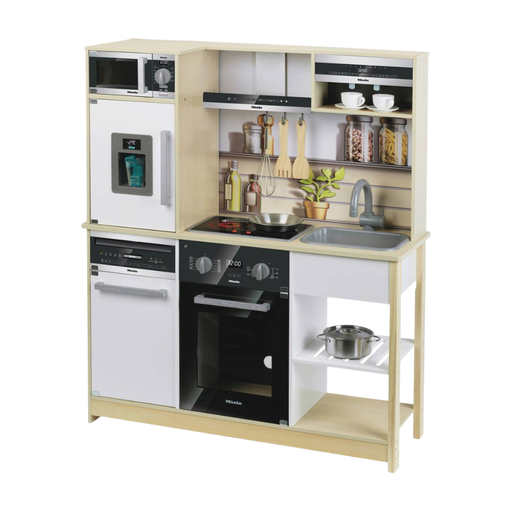
Why it's a great fit: For parents seeking a durable, aesthetically pleasing, and fully equipped Miele play kitchen for indoor use. The FSC-certified wood and well-known brand design represent a high standard of quality.
It avoids the trap of short-lived electronics by having the sound and light effects solidly integrated into the hob. The metal and wood accessories are high-quality, avoiding the pitfall of cheap plastic accessories.
The sturdy construction from FSC-certified wood, combined with realistic features like an ice cube dispenser and an espresso machine, offers a comprehensive and long-lasting play experience.
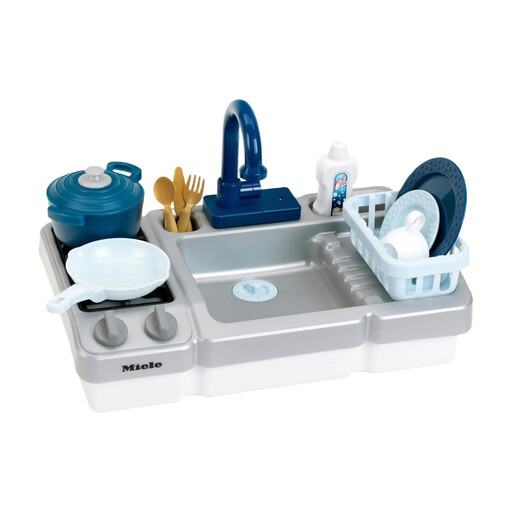
Why it's a great fit: A compact solution for getting started with role-play or for homes with limited space. It focuses on a core function—washing up with real water—and offers high play value without cluttering the room with a full kitchen.
This set avoids the trap of superfluous accessories. It delivers a central, functional unit with a real water pump that has a tangible purpose, rather than relying on a mass of small, useless parts.
The working water pump provides a realistic play experience. Its compact design makes it an ideal add-on or a space-saving starting point for kitchen role-play.
We've compiled a complete, up-to-date list of products that fully meet these strict selection criteria and safety standards.
From what age is a play kitchen a good idea? A play kitchen is generally a good idea from around 18 months to 2 years of age, when children begin to imitate the actions of adults. For younger children, simpler, lower models with large, easy-to-grip elements are suitable. For children aged 3 and up, more complex kitchens with more details and functions can further encourage creativity.
What should you look for in a wooden play kitchen? With a wooden play kitchen, material quality and craftsmanship are crucial. Look for solid wood or thick, sturdy MDF boards. FSC certification is a good sign of sustainable sourcing. The surfaces should be smoothly sanded and treated with saliva-resistant, non-toxic paints. Sturdy screw connections are more important than quick snap-together systems to ensure long-term stability.
Can a regular play kitchen be used outdoors as a mud kitchen? This is strongly discouraged. Most play kitchens designed for indoor use, especially those made of untreated wood or particleboard, are not weather-resistant. Moisture will cause the material to swell and can lead to mould growth. For use in the garden, you should exclusively choose a model declared as an outdoor play kitchen or children's garden kitchen, which is made from weather-proof materials like pressure-treated wood or UV-stable plastic.