
Lieferung heute & morgen

Qualitätsgarantie

Willkommens-Angebote freischalten: KOSTENLOSE Lieferung | Bis zu 80 % RABATT | Kostenlose 30-Tage-JoyPlus-Testphase
App herunterladen
A play kitchen is more than just a toy—it's a space where children can unleash their creativity, explore social roles, and develop motor skills. But the market is vast, and not every model lives up to its promises. As a Joybuy Product Recommendation Officer, I'm here to help you navigate the common pitfalls and make an informed decision that guarantees long-lasting enjoyment.
Many well-intentioned purchases end in disappointment. Pay attention to these three points to avoid a poor investment:
To find the right play kitchen, you should focus on objective and verifiable features.
The choice of material affects durability, stability, and maintenance.
Your child's safety is the top priority. Two certifications are relevant here:
Always check the manufacturer's age recommendation and pay attention to warnings about swallowable small parts, which can be a hazard for children under 3.
The dimensions and range of functions should be appropriate for the child's age and height, as well as the available space.
Instead of making a one-size-fits-all recommendation, we've matched models to different needs and play scenarios.
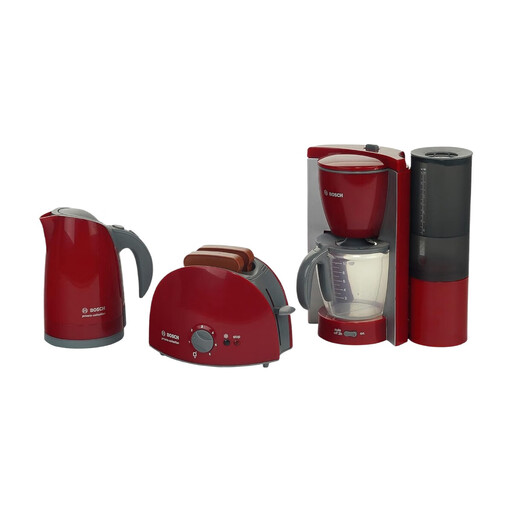
Why it's a match: Ideal for smaller apartments or as an addition to an existing play area. It provides an entry point into kitchen role-play without the commitment of a full-sized play kitchen.
The set focuses on sturdy, mechanical functions (like the toaster pop-up) and a simple water feature in the coffee machine. It avoids complex electronics that are prone to failure.
Offers high play value in a small footprint, thanks to the familiar Bosch design and its interactive, battery-free functions.
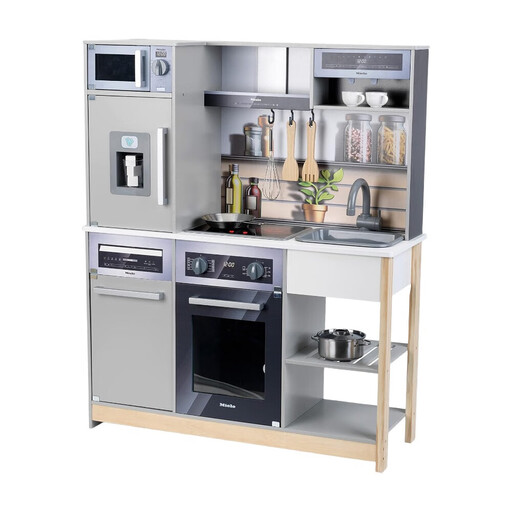
Why it's a match: A fully equipped wooden kitchen for long-lasting and versatile fun. It offers enough space and features for multiple children to play at the same time.
The construction from FSC-certified wood ensures high stability and durability. The hob with light and sound effects is a tried-and-tested module from the brand-name manufacturer, Theo Klein.
Comprehensive features, including a refrigerator with an ice dispenser, an espresso machine, and high-quality accessories made of metal and wood.
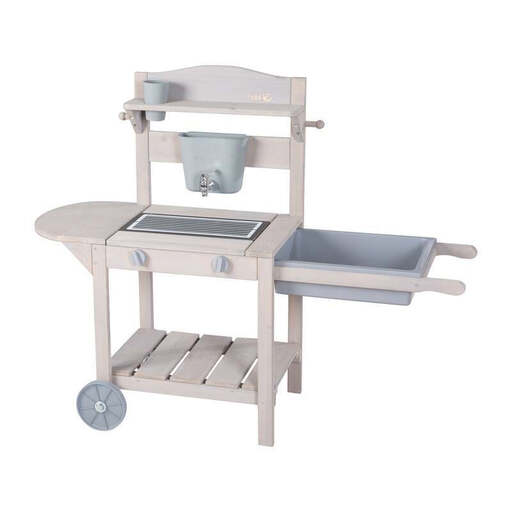
Why it's a match: This mobile kitchen is designed for outdoor use and can also function as a mud kitchen. It's perfect for families who enjoy spending time in the garden or on the balcony.
The weather-resistant glazed solid wood is specifically designed for outdoor use and withstands moisture better than conventional indoor wooden kitchens. The construction is engineered for stability and mobility.
Multifunctional: It's a grill, sink, and work surface all in one. The working tap and removable basin allow for real water play.
We have compiled a complete, up-to-date list of products that fully meet these strict selection criteria and all relevant safety regulations.
Most manufacturers recommend their play kitchens for children aged 3 and up. At this age, children begin to develop complex role-playing games and have the motor skills to handle accessories safely. For younger children from around 18 months, there are simpler models without small parts, such as the roba BBQ Play Kitchen.
With a wooden play kitchen, material quality and craftsmanship are crucial. Look for solid wood or thick, sturdy MDF. Edges and corners should be rounded to prevent injuries. An FSC seal is a good indicator of responsibly sourced material. Also, check that the paints and finishes used are water-based and saliva-resistant.
A good basic set of play kitchen accessories encourages creativity. Essentials include pots, pans, cooking utensils, and some play dishes. A toy breakfast set or a toy coffee machine are popular additions. Play food, made of either wood or plastic, also makes the cooking experience more realistic and inspires endless new play scenarios. Sometimes it makes more sense to choose a simpler kitchen and supplement it with high-quality, separate accessories.