
Lieferung heute & morgen

Qualitätsgarantie

Willkommens-Angebote freischalten: KOSTENLOSE Lieferung | Bis zu 80 % RABATT | Kostenlose 30-Tage-JoyPlus-Testphase
App herunterladen
By Joybuy Product Recommendation Officer, August 28, 2026
A play kitchen is more than just a toy. It's a space for creativity, role-playing, and learning about everyday routines for the first time. But with so many models on the market, choosing the right one can be overwhelming. Many products overpromise and underdeliver, leading to disappointment for children and parents alike. Before you make a decision, it's crucial to understand the common pitfalls that often only become apparent after the purchase.
The 3 Most Common Problems with Play Kitchens and How to Avoid Them:
To avoid a bad purchase, you should focus on objective and measurable features. These three parameters are crucial for the longevity, safety, and educational value of a play kitchen.
The choice of material has a major impact on stability and durability.
The most important measurement is the height of the countertop. Measure your child's height and compare it with the manufacturer's specifications. An ergonomically suitable counter height is approximately at the child's hip level. This allows for comfortable play while standing. Some models are even height-adjustable and grow with the child, significantly extending their useful life.
A good play kitchen needs a well-thought-out set of basic features.
Based on these criteria, we have identified models that are suitable for various needs and use cases.
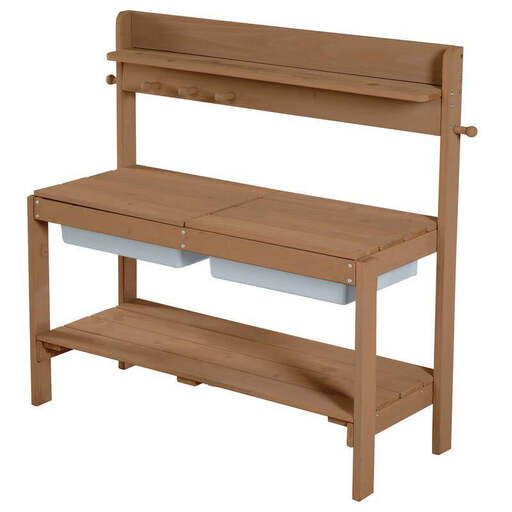
Why it's a great fit: Ideal for outdoor use. This mud kitchen is specially designed for playing with sand, water, and natural materials, encouraging creativity in the fresh air.
The weather-resistant glazed solid wood is robust and durable, avoiding the pitfall of unstable construction. It's built for the outdoors.
Two removable plastic tubs and a large storage surface make it extremely versatile—as a play table, mud kitchen, or even an indoor craft table in winter.
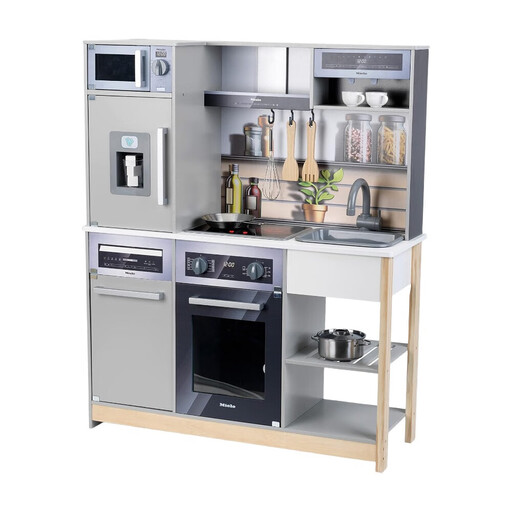
Why it's a great fit: For families looking for a fully equipped, realistic, and durable play kitchen for the playroom. The Miele design ensures an authentic play experience.
Made from FSC-certified wood, it offers high stability. The electronics for light and sound are solidly integrated into the hob and designed for durability.
Comprehensive features including an espresso machine, a fridge with an ice dispenser, and high-quality metal and wood accessories for immediate fun.
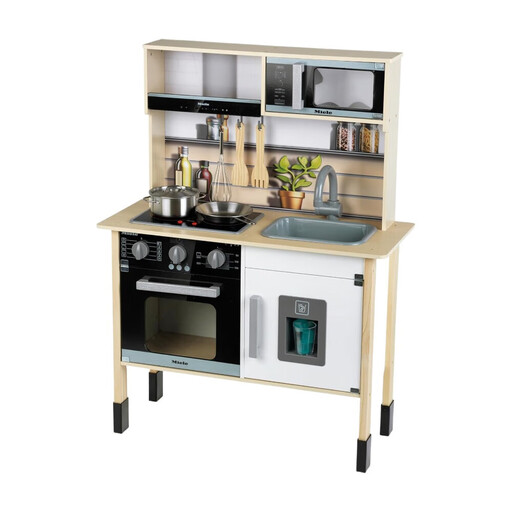
Why it's a great fit: A compact solution that fits into smaller apartments or children's rooms without sacrificing key features and a high-quality feel.
Despite its compact dimensions, this model uses sturdy MDF wood. The size is clearly defined and ideal for younger children, avoiding the pitfall of improper proportions.
Offers a full set of features in a small footprint, including a hob (light/sound), oven, microwave, and fridge. The included wood and metal accessories are high-quality.
We have compiled a complete, up-to-date list of products that fully meet these strict selection criteria and all relevant safety regulations.
Most manufacturers recommend their models for children aged 3 and up, mainly due to small parts that pose a choking hazard. However, there are also more robust, simpler models, such as a mud kitchen, which are suitable for children as young as 18 months. The key is that the child can stand securely and easily reach the work surface.
A wooden play kitchen should only be wiped with a slightly damp cloth. Avoid harsh cleaning agents or too much water, as the wood could swell. Removable sinks made of plastic or metal can be cleaned normally with soap and water. For a children's garden kitchen, the wood glaze should be checked regularly and renewed if necessary, depending on weather exposure.
Many play kitchens already come with a basic set of play kitchen accessories. This is often sufficient to get started. To expand the fun, additional sets like play food, a toaster, or a coffee machine are a great addition. Make sure that the accessories are appropriately sized for the kitchen.