
Lieferung heute & morgen

Qualitätsgarantie

Willkommens-Angebote freischalten: KOSTENLOSE Lieferung | Bis zu 80 % RABATT | Kostenlose 30-Tage-JoyPlus-Testphase
App herunterladen
A play kitchen is often the centrepiece of a child's room and a place for countless hours of creative play. But the vast selection of models can quickly become overwhelming. Before you make a decision, it's important to know the common pitfalls that often lead to disappointment and unnecessary expense. Many products look appealing at first glance but quickly prove to be impractical or short-lived.
This guide helps you separate the good from the bad by focusing on the crucial quality features. We'll highlight three typical problems when choosing a kids' kitchen:
To avoid making a bad purchase, you should focus your attention on a few, but essential, technical parameters. These determine the safety, durability, and long-term play value.
The choice of material is one of the most fundamental decisions. Both options have specific pros and cons.
The kitchen's dimensions are crucial for long-lasting fun. The most important measurement here is the worktop height (the height of the countertop).
Interactive elements significantly enhance realism and play value.
Instead of presenting an overwhelming list, we have selected models that meet specific needs and purposefully avoid the pitfalls mentioned earlier.
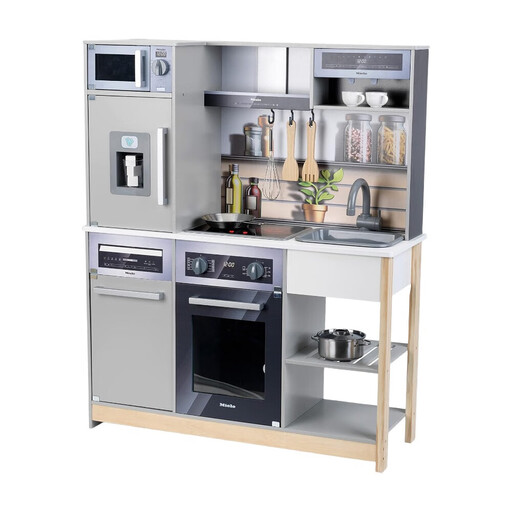
Why It's a Match: Ideal for families looking for a durable, fully equipped wooden kitchen that can be used by several children at once and will bring joy for years to come.
The FSC-certified wood construction ensures high stability, avoiding the problem of wobbly, low-cost kitchens. The included metal and wood accessories are high-quality and durable.
Comprehensive features including a hob with light/sound, an espresso machine, and an ice dispenser for a particularly realistic play experience.
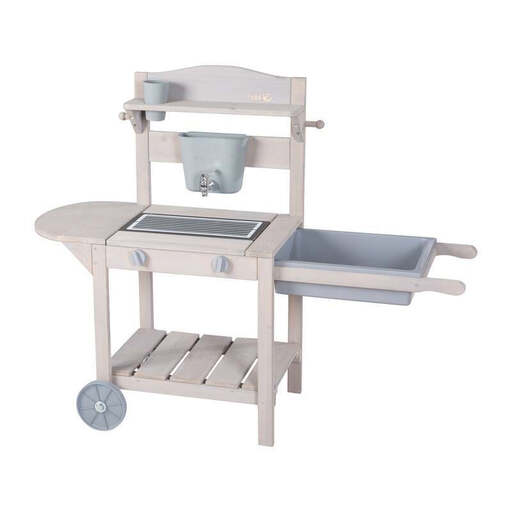
Why It's a Match: Perfect for the garden or balcony. This mud kitchen is designed for play with water, sand, and natural materials, and its wheels make it flexible to use.
The weather-resistant, stained solid wood prevents moisture damage—a problem that inevitably occurs when using a regular indoor kitchen outside. The sturdy construction withstands active play.
Multifunctional with a grill area, removable plastic tub, and a working tap. The 52 cm worktop height is suitable for children from 18 months up to primary school age.
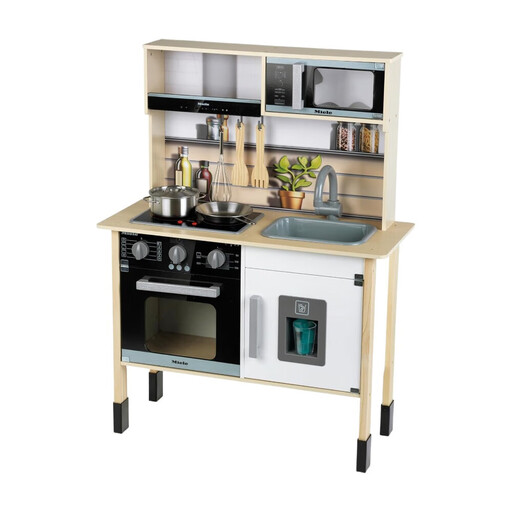
Why It's a Match: An excellent choice for smaller rooms without compromising on quality or play features. It offers the charm of a wooden kitchen with a compact footprint.
The clear "Midi" dimensions (70 cm width) avoid the pitfall of misleading size specifications. The high-quality MDF construction is significantly more stable than many plastic alternatives in this price range.
Despite its compact size, the kitchen features a hob with light and sound effects, a refrigerator with an ice dispenser, and high-quality metal and wood accessories.
We have compiled a complete, up-to-date list of products that fully meet these strict selection criteria and European safety regulations.
A play kitchen for ages 3 and up is ideal, as children at this age begin to develop complex role-playing games and have the motor skills to handle accessories. However, there are also simpler, lower models or mud kitchens that are suitable for children as young as 18 months. These promote early sensory experiences and simple imitative play.
A classic kids' kitchen is designed for indoor use and is often made of painted wood (MDF) or plastic. It mimics a real kitchen with appliances like a stove and microwave. A mud kitchen or outdoor play kitchen is built specifically for outdoor use. It is made of weather-resistant material, usually stained solid wood, and has sturdy tubs for playing with water, sand, and dirt. Its features are geared towards a nature-based experience.
For a wooden play kitchen, several safety aspects are crucial. Look for the CE mark, which confirms compliance with EU toy safety standards. The construction should be stable and not tip over. All edges and corners must be rounded to prevent injuries. Additionally, the paints and finishes used should be water-based and non-toxic, which is certified by standards like EN 71-3.