
Lieferung heute & morgen

Qualitätsgarantie

Willkommens-Angebote freischalten: KOSTENLOSE Lieferung | Bis zu 80 % RABATT | Kostenlose 30-Tage-JoyPlus-Testphase
App herunterladen
A play kitchen is more than just a toy—it's a space that fosters creativity, social skills, and fine motor development. But the selection is vast, and not every model lives up to its advertising promises. As a Joybuy Product Recommendation Officer, I'm here to help you separate the quality options from the clutter and make an informed decision. In this guide, I'll show you the three most common pitfalls to watch out for and which criteria truly matter.
Many well-intentioned purchases turn out to be a disappointment. Look out for these typical problems to avoid a bad investment:
To find the right kids' kitchen, you should focus on objective and verifiable criteria. The following three points are crucial for durability, safety, and play value.
The decision between wood and plastic is fundamental and affects the tactile feel, durability, and maintenance.
Your child's safety is the top priority. In Germany and the EU, certain labels provide guidance:
A kids' kitchen with lights and sounds can significantly enhance realism and fun. Check which functions are offered and whether they provide real added value:
Here are three recommendations tailored to different needs and priorities.
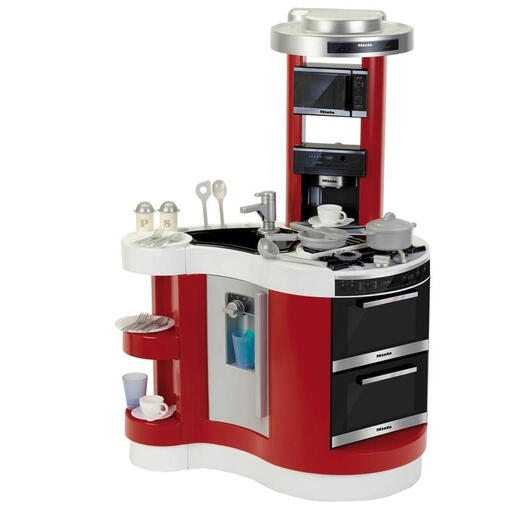
Why This Fits Their Persona: Ideal for children who want a comprehensive and interactive play experience. With numerous appliances and accessories, this set provides a complete world of play right from the start.
The extensive accessory set, including a Bosch breakfast set, is of solid quality and perfectly matched to the kitchen, avoiding the need to buy low-quality add-ons.
The kitchen is equipped with realistic cooking sounds and a microwave, enabling particularly immersive role-playing. The generous design offers plenty of room to play.

Why This Fits Their Persona: Perfect for families who value sustainability, stability, and a classic design. This wooden kitchen grows with the child and is a long-term investment.
Thanks to its robust wooden construction (FSC-certified), it bypasses the pitfall of instability. Its heavy weight ensures a secure footing, even during more boisterous play.
The kitchen is height-adjustable (91 cm) and adapts to the child's size. The included stainless steel and wooden accessories are exceptionally high-quality and durable.
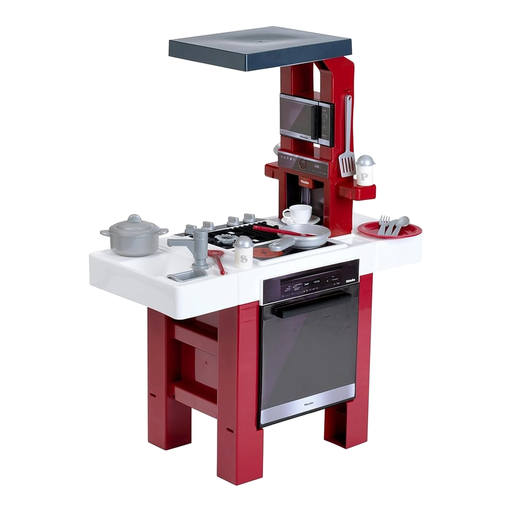
Why This Fits Their Persona: A great choice for families with limited space who don't want to compromise on interactive features. The design, which is playable from both sides, maximizes play value in a small footprint.
Despite its compact size, the Theo Klein construction is well-designed and stable. The included accessories are functional and provide a good starting point without creating an immediate need for more purchases.
Offers many features in a small space: an espresso machine with sound, a hob with lights and sounds, and a tap with a pump function. Being playable from both sides allows multiple children to play at once.
A great kitchen comes to life with its ingredients. Discover our selection of high-quality play food to perfectly equip the new play kitchen.
1. From what age is a play kitchen a good idea? Most manufacturers recommend their play kitchens for children aged 3 and up. At this age, children begin to develop complex role-playing games and imitate everyday situations. For younger children, you should absolutely choose models without small, swallowable parts and only let them play under supervision.
2. How do you clean a wooden or plastic play kitchen? A plastic play kitchen can be easily cleaned with a damp cloth and mild detergent. For a wooden play kitchen, you should only use a lightly dampened cloth to prevent the material from swelling. Avoid harsh cleaning agents, as they can damage the surfaces.
3. What batteries are needed for a kids' kitchen with lights and sounds? The required battery types and quantity vary by model. AA or AAA batteries are common. You can find this information in the product description or on the packaging. It is advisable to remove the batteries when not in use to prevent leakage. As a rule, batteries are not included.