
Lieferung heute & morgen

Qualitätsgarantie

Willkommens-Angebote freischalten: KOSTENLOSE Lieferung | Bis zu 80 % RABATT | Kostenlose 30-Tage-JoyPlus-Testphase
App herunterladen
A play kitchen is more than just a toy—it's a space for creativity, role-playing, and learning everyday routines through play. However, the market is crowded, and many models promise more than they deliver. Before you make a decision, it's crucial to understand the common pitfalls that often only become apparent after the purchase, leading to disappointment.
As a Joybuy Product Recommendation Officer, I analyse product data to provide you with objective and practical guidance. This guide focuses on the key features that define a durable and educationally valuable play kitchen, helping you distinguish marketing hype from genuine quality.
Many well-intentioned purchases end up as a wobbly, unused plastic frame in the corner of the playroom. This can be avoided by keeping the following three points in mind:
To avoid a bad purchase, you should focus your attention on three fundamental aspects. These are the primary determinants of a play kitchen's safety, durability, and play value.
The choice of material is one of the most fundamental decisions. Both options have specific advantages and disadvantages.
The worktop height of the kitchen must match the child's height. A work surface that is too high or too low is uncomfortable and can spoil the fun. Many manufacturers provide an age recommendation, such as a play kitchen for ages 3 and up. However, it's best to measure the height and compare it with your child's height. A good worktop height is typically between 45 and 55 cm for kindergarten-aged children. Some wooden models even offer height-adjustable feet to grow with the child.
The scope of delivery varies greatly. Some models are fully equipped play worlds, while others offer only the basic structure. Check carefully whether a play kitchen with accessories such as pots, pans, and play food is included. This can save on additional costs. Features like a tap with a pump function or rotating knobs with a clicking sound encourage interaction and are often more valuable than purely electronic effects.
Based on the quality criteria mentioned, we have identified several models that represent a considered choice for different needs and applications.
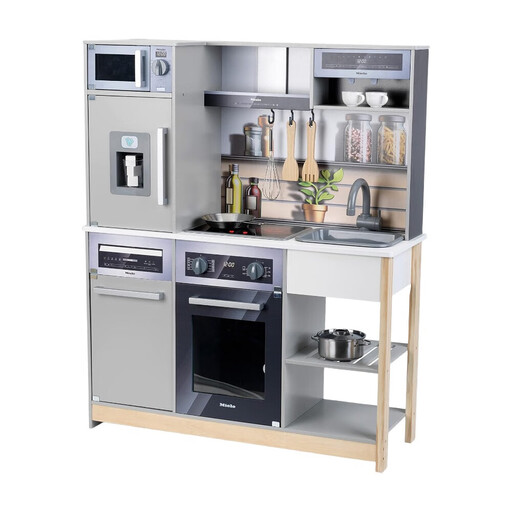
Why this model is a good fit: Ideal for families who value durability, a sophisticated design, and comprehensive play functions. The combination of wooden elements and Miele brand design provides a solid foundation for years of creative role-play.
According to the manufacturer, the model is made from FSC-certified wood, which minimises the risk of an unstable construction. The electronic functions (light/sound) are integrated into a robust hob and serve as a supplement, not the main attraction.
Comprehensive features including a refrigerator with an ice dispenser and an espresso machine. High-quality metal and wood accessories are included in the delivery.
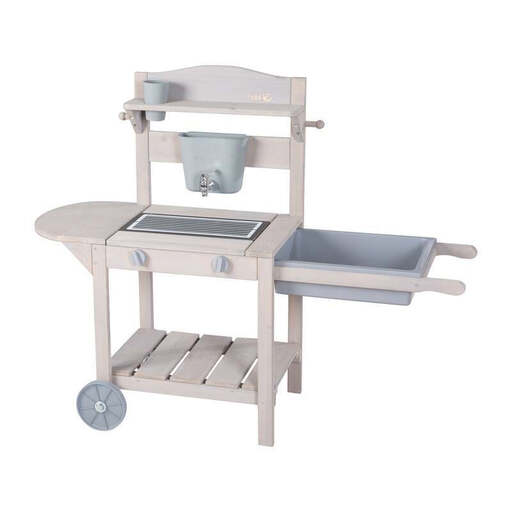
Why this model is a good fit: This mud kitchen is specially designed for use in the garden or on the balcony. It combines the functions of a play kitchen with the ability to experiment with water and sand, making it ideal for nature-based play.
According to the manufacturer, the model is made of weather-resistant solid wood that has been specially treated for outdoor use. It bypasses the pitfall of unsuitable material and relies on a robust, mechanical water function instead of fragile electronics.
Mobile thanks to wheels, which makes changing locations easy. Includes a removable play tub and a water container with a functional tap for realistic play.
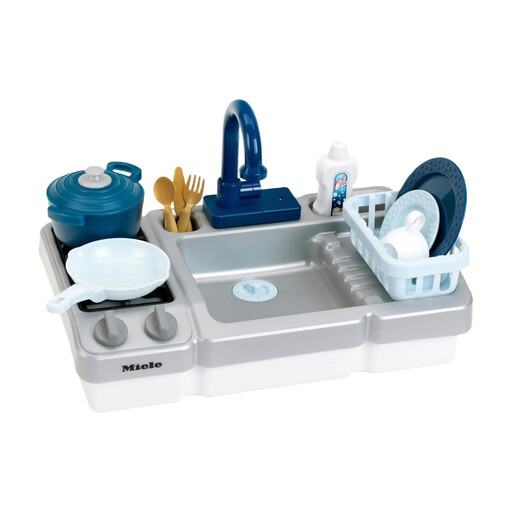
Why this model is a good fit: An excellent option for beginners or when space is limited. It focuses on a central, highly interactive feature—washing up with real water—and offers high play value without the footprint of a full kitchen.
This compact model avoids the instability problem of large, cheap kitchens. It focuses on a robust, mechanical water pump function instead of fragile electronics, thus providing long-lasting fun.
Real water function via a manual pump. The set includes accessories like plates, a pot, and cutlery, and is visually appealing with its Miele design.
We have compiled a complete, up-to-date list of products that fully meet these strict selection criteria and UK safety regulations.
A play kitchen is generally recommended from around 18 months to 2 years of age, when children begin to imitate adults in role-play. Simple, sturdy models without small, swallowable parts are suitable for this age. More complex kitchens with more accessories and features, like a play kitchen for ages 3 and up, are ideal, as motor skills and imagination are more developed at this age.
A wooden play kitchen should not be treated with wet cloths or harsh cleaning agents, as the material could swell or the finish could be damaged. A slightly damp cloth is usually sufficient for cleaning. Stains can be carefully removed with a little mild soapy water. The surface should then be wiped dry immediately.
Whether additional play kitchen with accessories is needed depends on the scope of delivery of the chosen model. Many kitchens already come with a basic set of pots, dishes, and play food. However, additional accessories can significantly increase the play value and further stimulate creativity. Sets like toasters, coffee machines, or a larger selection of play food are popular additions.