
Lieferung heute & morgen

Qualitätsgarantie

Willkommens-Angebote freischalten: KOSTENLOSE Lieferung | Bis zu 80 % RABATT | Kostenlose 30-Tage-JoyPlus-Testphase
App herunterladen
A play kitchen, often called a kid's kitchen, is a staple in many playrooms. It provides a platform for creative role-playing and mimics a central activity of family life: cooking. However, the range of models is vast, from simple wooden constructions to detailed play stations with electronic features.
This guide is designed to give you an objective overview of the crucial criteria when purchasing a play kitchen. We will introduce different concepts and present a selection of models to help you navigate the market.
To make an informed decision, several fundamental features should be considered. These factors determine not only the durability but also the quality of the play experience.
The material is a key indicator of quality. The most common options are wood and plastic.
The range of features influences the variety of play possibilities. A play kitchen with accessories offers the advantage that pots, pans, and cooking utensils are already included in the box. Other features may include:
The intended location is crucial. While most play kitchens are designed for indoor use, there are special models for the garden or balcony. An outdoor play kitchen, also known as a mud kitchen, is made from weather-resistant materials like treated wood or robust plastic. It is designed to facilitate play with water, sand, and natural materials.
Here you will find a curated selection of different play kitchen models. The descriptions are based on product data provided by the manufacturer and are intended to allow for an objective comparison.

Theo Klein 7199 Miele Kitchen | Height-Adjustable Wooden Kitchen
Why it stands out: This Miele-design model from Theo Klein combines a sturdy wooden construction with a practical feature: it's height-adjustable. This allows the kitchen to grow with your child, providing an ergonomic playing height over a longer period.
Benefits:
Who it's for: This model is an excellent choice for families looking for a durable wooden play kitchen that can adapt to the child's height and combines a classic play experience with modern effects.
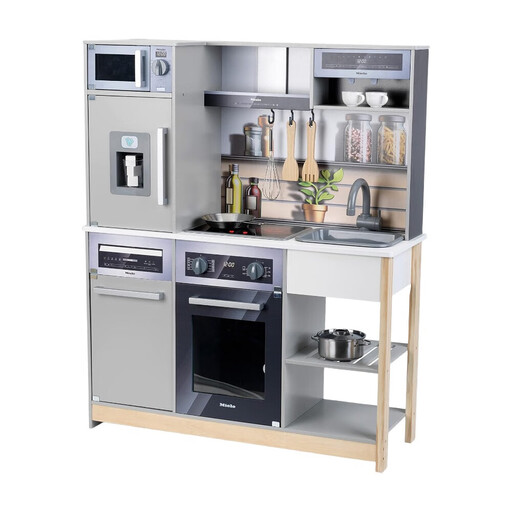
Theo Klein 7194 Miele Family Kitchen | Wooden Kitchen with Appliances
Why it stands out: The Miele "Family" play kitchen is a comprehensively equipped model designed to resemble a modern kitchenette. With a variety of integrated play appliances, it offers numerous incentives for diverse role-playing games.
Benefits:
Who it's for: This model is aimed at children who prefer a detailed and fully equipped play experience. The variety of appliances allows them to reenact complex routines from everyday kitchen life.

Roba Mud Kitchen for Kids in a House Design
Why it stands out: This mud kitchen from Roba is specifically designed for outdoor use. Its central feature is the integration of water and sand play options, making it a versatile outdoor play kitchen.
Benefits:
Who it's for: Ideal for families with a garden, patio, or balcony. This kitchen promotes sensory play with natural materials and combines classic cooking role-play with outdoor experiences.
The models presented here cover a range of different needs. If you haven't found the right option for you yet, you can find a broader selection of toys for various age groups and interests.
Discover more models and matching accessories in our Toys and Accessories category.
Play kitchens are generally suitable for children from around 18 months to two years old. During this phase, children begin to imitate the actions of adults (imitative play). Simpler, sturdy models without small, swallowable parts are suitable for younger children. More complex kitchens with many details and electronic functions are often recommended for children aged three and up.
A play kitchen supports development in several areas. Handling accessories trains fine motor skills. Playing together with other children or parents promotes social skills like sharing and communication. Naming foods and cooking processes expands vocabulary. Above all, it stimulates creativity and imagination as children invent their own stories and scenarios.
To clean a wooden play kitchen, a slightly damp cloth is usually sufficient. For more stubborn dirt, a mild cleaning agent can be used. It is important not to soak the wooden surface and to wipe it dry immediately after cleaning to prevent the material from swelling. The use of harsh or abrasive cleaning agents should be avoided, as they can damage the paint or the wood itself.