
Lieferung heute & morgen

Qualitätsgarantie

Willkommens-Angebote freischalten: KOSTENLOSE Lieferung | Bis zu 80 % RABATT | Kostenlose 30-Tage-JoyPlus-Testphase
App herunterladen
A play kitchen is more than just a toy—it's a space for creativity, role-playing, and learning everyday routines through play. However, with the sheer number of models on the market, making a choice can quickly become overwhelming. All too often, exaggerated marketing promises or hidden defects lead to disappointment in the playroom. As your Joybuy Product Recommendation Officer, I'll help you identify the crucial features and make an informed choice.
Before we dive into the selection criteria, let's look at the typical problems that often only become apparent after the purchase:
To avoid a bad buy, focus on three objective parameters that determine the quality and long-term play value of a toy kitchen.
The choice of material is a fundamental decision that affects stability, durability, and the tactile feel.
For a child to enjoy their kids' kitchen for several years, the counter height must be appropriate for their body size.
Some models are height-adjustable and grow with the child, making them a particularly sustainable investment. Measure the available space in the playroom to ensure the kitchen fits well and leaves enough room to move around.
The features determine how realistic and varied the play experience is.
Here are some models that represent a considered choice for different needs and profiles, based on objective features.
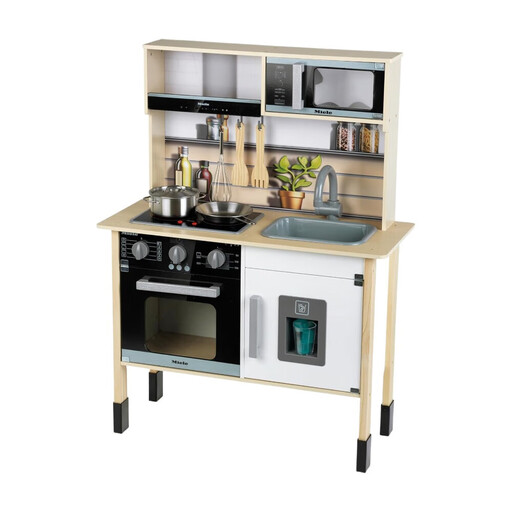
Why This Fits Their Persona: Ideal for parents looking for a stable, high-quality wooden kitchen without immediately investing in a very large model. It offers a balanced combination of size, features, and brand quality for long-lasting fun.
The construction from MDF wood ensures high stability and avoids the wobbling problem of cheap plastic kitchens. The electronics are focused on a robust hob with light and sound effects.
A combination of FSC-certified wood, Miele brand design, and solid basic features, including high-quality metal and wood accessories.
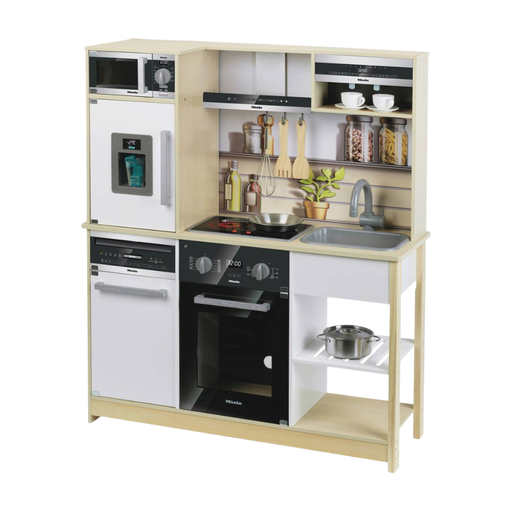
Why This Fits Their Persona: Perfect for families who want to establish a large, fully-equipped play kitchen as a central feature in the playroom. The extensive features with many appliances provide long-lasting and varied play incentives.
Instead of relying on many small, flimsy gimmicks, this model integrates well-designed features like an espresso machine and an ice dispenser into a robust, FSC-certified wood construction.
Generous dimensions (101 cm height) and fully equipped with a hob, oven, microwave, refrigerator, and espresso machine. High-quality accessories are already included.
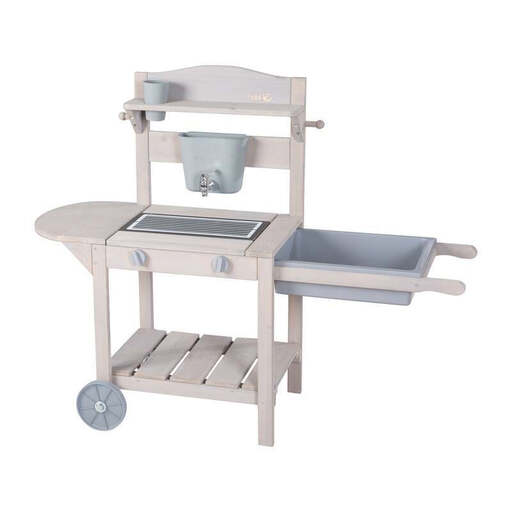
Why This Fits Their Persona: The right choice for families who want to extend the play area outdoors. This mud kitchen is designed for use in the garden or on the balcony and encourages play with natural materials like water, sand, and leaves.
Made from weather-resistant solid wood from sustainable forestry, it is specifically designed for outdoor use, unlike indoor kitchens that would be quickly damaged by moisture.
Multifunctional, can be used as a grill and a washing station. Thanks to its wheels, the kitchen is mobile and flexible. The removable basin and water container with a tap allow for real water play.
We have compiled a complete, up-to-date list of products that fully meet these strict selection criteria and German safety regulations.
1. From what age is a play kitchen a good idea? A play kitchen is generally suitable for children from around 2 to 3 years old. At this age, they begin to imitate adults in role-playing games. Simple models are suitable for two-year-olds, while more complex kitchens with many details and functions can delight children well into their primary school years.
2. How do you clean and care for a wooden play kitchen? A wooden play kitchen should be wiped with a slightly damp cloth. Avoid harsh cleaning agents or too much water, as this can cause the wood to swell. Removable plastic sinks can be cleaned normally with water and washing-up liquid. Regularly checking the screw connections ensures lasting stability.
3. Do you need extra accessories for a children's kitchen? That depends on what's included. Many kitchens already come with a basic set of kitchen accessories for kids. However, additional play food, dishes, or special appliances like a toaster or a coffee machine can enhance the fun and create new incentives to play. Sets like the Theo Klein Bosch Breakfast Set are a popular addition.