Joybuy Insights

Play Kitchen Buyer’s Guide: Choose the Right Model With Confidence

A play kitchen is more than just a toy—it's a space for creativity, role-playing, and learning everyday routines through play. However, the market is vast and overwhelming. Many models lure you in with promises that prove impractical in reality. As your Joybuy Product Recommendation Officer, I'll help you identify common purchasing pitfalls and make an informed decision that will bring long-term joy.

The 3 Most Common Pitfalls When Buying a Play Kitchen

Before you invest, you should be aware of the most common issues that often only become apparent after the purchase, dampening the fun.

  1. Unstable Construction: Many low-cost models, especially those made of thin plastic, tend to be unstable. They wobble during active play or can even tip over. This not only poses a safety hazard but also quickly leads to frustration for the child. Therefore, a sturdy build is not a luxury, but a necessity.
  2. Short-Lived Electronics: A play kitchen with lights and sound seems appealing at first glance. However, these electronic modules are often prone to defects. A hob that stops lighting up after a few weeks or a blender that falls silent significantly diminishes the play value and leads to disappointment.
  3. Unsuitable Materials and Accessories: Not all materials are equally suitable for children's toys. A lack of certifications for wood (e.g., FSC) or the use of plastic that isn't BPA-free can be a cause for concern. Likewise, many products are advertised with an abundance of play kitchen accessories that turn out to be low-quality, too small, and a potential choking hazard.

What Really Matters: The Decisive Selection Criteria

To avoid a bad buy, you should focus on objective and practical features. These three parameters are crucial for selecting a durable and safe play kitchen.

1. Material and Safety: A Wooden or Plastic Play Kitchen?

The choice of material affects stability, durability, and maintenance. Both materials have their advantages, provided the quality is high.

  • Wooden Play Kitchen: Models made of wood, ideally from sustainable forestry (FSC-certified), are generally very stable and durable. They have a heavier weight, which increases their stability. Look for a clean finish with rounded edges and water-based paint. A mud kitchen for outdoor use should be made from weather-treated solid wood.
  • Plastic Kitchens: High-quality plastic is lightweight, shatterproof, and very easy to clean. Models from established manufacturers, like the Theo Klein kitchen in Miele design, often use robust and tested materials. It is crucial here that the plastic is declared BPA-free and the construction has no sharp edges or burrs. Safety certification marks like the GS mark (Geprüfte Sicherheit / Tested Safety) provide additional guidance.

2. Ergonomics: The Right Size and Counter Height

A play kitchen should match the child's height to allow for a comfortable and ergonomic posture during play. Ideally, the countertop should be at the child's hip level.

  • Fixed Counter Height: Measure your child's hip height before buying. Many manufacturers specify the counter height in the product data.
  • Height-Adjustable Models: Some wooden kitchens offer the option to adjust the feet. These models grow with the child, representing a particularly sustainable investment that can be used for several years.

3. Features and Accessories: Quality Over Quantity

Features like lights, sound, or water can enhance play value, but they must be robust and safely implemented.

  • Electronic Features: A hob with light and sound functions is a popular feature. Check that the battery compartment is securely screwed shut and that the electronics appear well-made.
  • Water Feature: A sink with a working water pump offers great fun but requires adult supervision to prevent spills and messes.
  • Accessories: Instead of an overwhelming quantity of small items, a set of high-quality play shop accessories or a themed add-on like a toy coffee machine is often more sensible. Ensure that the accessories are age-appropriate and do not contain small parts that could be swallowed, especially for children under three.

Our Top Picks for Different Needs in 2026

Here are some recommendations tailored to different needs and play scenarios, all of which meet the quality criteria mentioned.
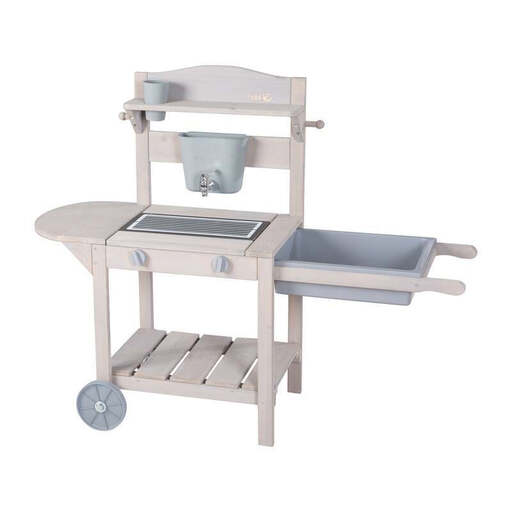
SUITABLE FOR: OUTDOOR ADVENTURERS & MUD CHEFS
roba Mobile BBQ Play Kitchen for Kids, Made from FSC-Certified Wood - with Wheels & Play Tray - Indoor & Outdoor Use - Ages 18+ Months - Grey Stained

roba Mobile BBQ Play Kitchen for Kids

Why this model is a great fit: Ideal for families whose children love to play outdoors. This mud kitchen, made from weather-resistant wood, is designed for use in the garden or on the balcony and is mobile thanks to its wheels. It is suitable for children from 18 months and up.

How It Avoids the Pitfall

The sturdy solid wood construction (from sustainable forestry) is stable and durable. The focus is on tactile play features like the water basin and tap, not on fragile electronics.

Key Advantage

Multifunctional for both indoor and outdoor use. Encourages creative play with natural materials like water, sand, and leaves.

SUITABLE FOR: ASPIRING YOUNG CHEFS
Theo Klein 7199 Miele Kitchen | Height-Adjustable Wooden Kitchen with Hob with Sound and Light

Theo Klein 7199 Miele Kitchen, Height-Adjustable

Why this model is a great fit: For parents who value quality, durability, and an appealing design. This high-quality wooden play kitchen is a long-term investment that grows with the child, thanks to its height-adjustability.

How It Avoids the Pitfall

The stable wooden construction (FSC-certified) prevents wobbling. The electronics are limited to a robust hob with light and sound effects. The height-adjustability prevents an unergonomic posture.

Key Advantage

Grows with the child (three levels). High-quality stainless steel and wooden accessories are included.
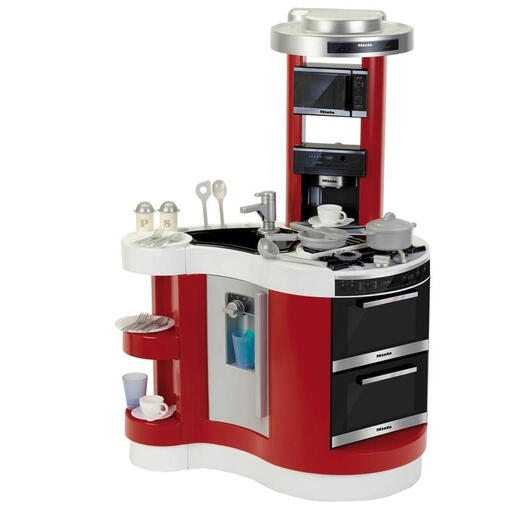
SUITABLE FOR: ALL-IN-ONE ENTHUSIASTS
Theo Klein 7101 Miele Küche Wave Spicy, Multicolor & 9564 Bosch Frühstücksset

Theo Klein 7101 Miele "Wave Spicy" Kitchen

Why this model is a great fit: Perfect for anyone looking for a complete, ready-to-play package. This Miele play kitchen comes with an extensive accessory set, including a Bosch breakfast set with a toaster, coffee machine, and kettle.

How It Avoids the Pitfall

Instead of many assorted small parts, this set offers a large, thematically coordinated accessory package from brand-name manufacturers. The sound effects are integrated into the main appliances (microwave, hob) and are robustly designed.

Key Advantage

Very extensive accessory package for immediate and varied fun. Realistic features like cooking sounds and an ice cube dispenser.

Looking for the perfect accessories?

A great play kitchen thrives on creative ingredients. We've curated a selection of high-quality, safe play food that sparks the imagination and perfectly complements your new kitchen.

## Frequently Asked Questions

From what age is a play kitchen a good idea?

Play kitchens are generally a good idea from around 18 months to 2 years of age. During this phase, children begin to imitate adult actions (role-playing). For the youngest children, simple, very sturdy models without any small parts that can be swallowed are most suitable. More complex kitchens with extensive accessories and electronic features are appropriate for children aged 3 and up.

How do you clean a wooden play kitchen?

A wooden play kitchen should only be cleaned with a slightly damp cloth and a mild soap solution. Do not use harsh cleaning agents or soaking wet cloths, as this can cause the wood to swell. Water spots should be dried immediately. Removable plastic or metal parts can usually be cleaned separately with soap and water.

What safety features are crucial for a play kitchen?

Safety is the top priority. Look for the following features:

  • Stability: The kitchen must not tip over, even during more boisterous play.
  • Rounded Edges: There should be no sharp corners or edges.
  • Non-Toxic Materials: Look for labels such as FSC-certified wood or BPA-free plastic.
  • Safe Small Parts: For children under 3, accessories must not contain any small parts that can be swallowed.
  • Tested Safety: Seals like the CE marking (required in the EU) and the voluntary GS mark confirm compliance with safety standards.