
Lieferung heute & morgen

Qualitätsgarantie

Willkommens-Angebote freischalten: KOSTENLOSE Lieferung | Bis zu 80 % RABATT | Kostenlose 30-Tage-JoyPlus-Testphase
App herunterladen
Choosing a play kitchen can be a challenge given the wide variety of models on the market. From classic wooden play kitchens to modern plastic versions with interactive features, the options are numerous. This article is designed to serve as your guide. As a Joybuy Product Recommendation Officer, my role is to provide you with an objective overview of key purchasing criteria and present a selection of models to simplify your decision-making process.
To make the right choice, a few fundamental aspects should be considered. These criteria will help you tailor the features, materials, and size of a kids' kitchen to your child's needs.
The choice of material affects not only the look but also the feel and maintenance of the play kitchen.
A realistic play kitchen with a variety of functions can stimulate the imagination and lead to long-lasting fun. Look for the following features:
Safety comes first. A kids' kitchen for ages 3 and up is typically designed to be free of small, swallowable parts. Always check the manufacturer's age recommendation. A sturdy construction, rounded edges, and the use of non-toxic materials are also crucial safety features.
Based on the criteria mentioned, we have compiled a selection of models that stand out for their diverse features and equipment.
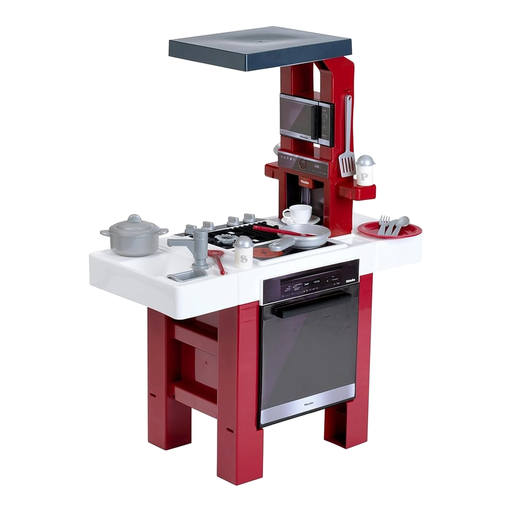
Why it stands out: This Theo Klein kitchen in a Miele design is a compact all-rounder. Its special feature is that it can be played with from both sides, allowing multiple children to play at the same time. It combines numerous interactive features in a small footprint.
Pros:
Best for: This model is a great choice for families looking for a feature-rich plastic kitchen with plenty of accessories that doesn't take up too much space.

Why it stands out: This Miele play kitchen combines the aesthetic of a wooden play kitchen with modern play functions. A standout feature is its height-adjustability, which allows the kitchen to grow with your child.
Pros:
Best for: Ideal for parents who value durable wooden toys and are looking for a kitchen that can be used for several years.
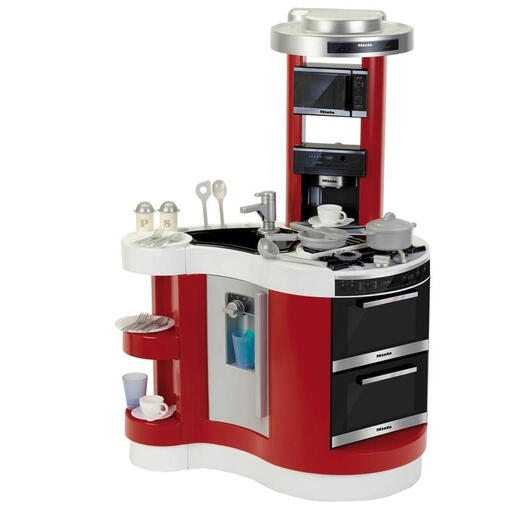
Why it stands out: The "Wave Spicy" model is a generously sized play station that leaves little to be desired. It comes with an impressive array of accessories, including a separate Bosch breakfast set, and offers maximum play space.
Pros:
Best for: Perfect for families with enough space who are looking for a comprehensive play kitchen with maximum features and interactive elements.
This selection represents just a small sample of the available options. Every child has different preferences, and you might be looking for a different size, design, or specific accessories.
Discover our full range of Kitchen & Food Toys and find the perfect addition to your child's room.
As a rule, play kitchens are suitable for children from around three years of age. At this age, their fine motor skills are sufficiently developed to handle the accessories, and their interest in role-playing begins to emerge. Always pay attention to the manufacturer's age recommendation, especially regarding potential small parts.
A kids' kitchen playfully promotes a variety of skills. These include creativity and imagination when inventing "recipes", fine motor skills when handling cooking utensils, social skills during collaborative play, and language development by naming foods and kitchen appliances.
Plastic kitchens are very low-maintenance and can simply be wiped down with a damp cloth and, if necessary, a mild cleaning agent. You should be more careful with a wooden kitchen: use only a slightly damp cloth and dry the surface thoroughly afterwards to prevent the wood from swelling. Harsh cleaning agents should be avoided.