
Lieferung heute & morgen

Qualitätsgarantie

Willkommens-Angebote freischalten: KOSTENLOSE Lieferung | Bis zu 80 % RABATT | Kostenlose 30-Tage-JoyPlus-Testphase
App herunterladen
A play kitchen is more than just a toy—it's a space that fosters creativity, social skills, and an understanding of everyday life. But the selection is vast, and not every model lives up to its advertising promises. As a Joybuy Product Recommendation Officer, I analyse the market to provide you with objective guidance. In this guide, I'll show you the three most common pitfalls when buying a kids' kitchen and what to look for to make a durable and safe choice.
Many well-intentioned purchases end in disappointment because crucial details were missed. Watch out for these three typical problems to avoid a bad buy.
To find the right play kitchen, focus on objective and verifiable criteria. The following three points are crucial for safety, durability, and long-lasting fun.
The choice of material significantly influences stability, feel, and maintenance.
The kitchen's dimensions must be appropriate for the child. A worktop that is too high is frustrating, while one that is too low leads to an uncomfortable posture.
A good play kitchen with accessories provides an immediate entry into the world of play.
Here are some models that represent a considered choice for different needs and profiles, based on objective features.

Why this model is a great fit: Ideal for families who value sustainable materials and a long lifespan. The classic wooden look blends well into living spaces.
The construction of FSC-certified wood counteracts the problem of unstable materials. Thanks to its height adjustability, the kitchen grows with your child, preventing it from becoming too small too quickly.
The combination of durable material and adjustable height ensures an above-average lifespan. The included accessories made of wood and metal are robust.
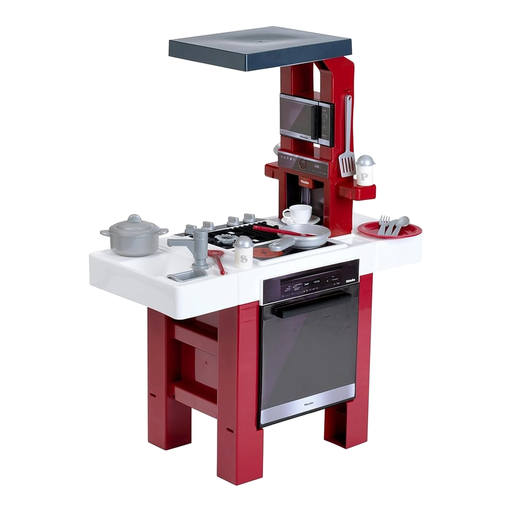
Why this model is a great fit: A great entry-level choice if you want lots of features and accessories. It can be played with from both sides, allowing for play with friends or siblings.
As a branded product from Theo Klein under a Miele licence, it offers a reliable standard of quality, avoiding the trap of unstable no-name products. The extensive range of accessories solves the problem of a missing starter set.
Offers high play density with its two-sided design and a variety of integrated appliances (oven, hob, espresso machine), as well as sound effects and a water pump function.
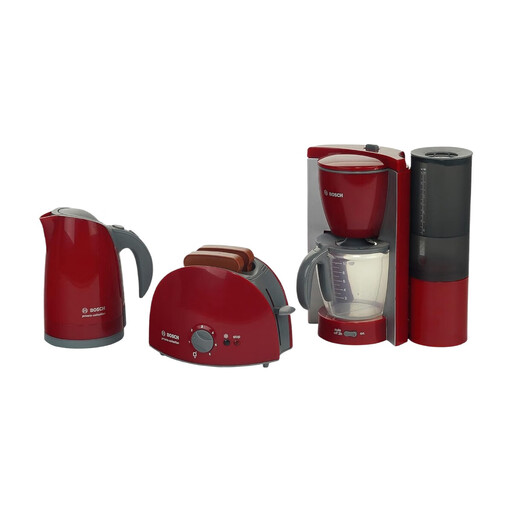
Why this model is a great fit: Perfect for upgrading an existing play kitchen or for children who specifically want to role-play "making breakfast."
This set directly solves the problem of poor expandability. The mechanical and water-fillable functions are robustly designed and don't rely on fragile electronics.
Offers realistic functions: The coffee machine can be filled with water, and the toaster has a mechanical pop-up function. The set is a thematically complete and high-quality addition.
We have compiled a complete, up-to-date list of products that fully meet these strict selection criteria and relevant safety regulations.
Most manufacturers recommend their models for children aged 3 and up. At this age, motor skills are usually developed enough for children to handle accessories safely, and interest in role-playing begins to emerge. Always check the manufacturer's age recommendation on the packaging, as many sets may contain small parts that could be a choking hazard.
Wooden surfaces should only be wiped with a slightly damp cloth. Do not use harsh cleaning agents or too much water, as this could cause the wood to swell. Removable parts made of plastic or metal, such as the sink, can usually be cleaned separately with mild washing-up liquid.
Batteries (usually AA or AAA type) are typically required for features like lights on the hob or realistic cooking sounds. These are almost never included with the product. The product description will specify which type and how many batteries are needed. Installation should always be carried out by an adult.