
Lieferung heute & morgen

Qualitätsgarantie

Willkommens-Angebote freischalten: KOSTENLOSE Lieferung | Bis zu 80 % RABATT | Kostenlose 30-Tage-JoyPlus-Testphase
App herunterladen
At first glance, buying a play mat seems straightforward. However, upon closer inspection, parents often face an overwhelming selection and marketing promises that don't hold up in practice. An unsuitable mat can be more than just a poor investment; it can also compromise your child's safety and comfort. As a Joybuy Product Recommendation Officer, I'll help you understand the crucial criteria and avoid common purchasing traps.
Before we dive into the features of a good mat, it's important to be aware of the typical problems that arise with cheap or poorly designed models.
To make an informed decision, you should focus on three essential product features. These define the safety, functionality, and durability of a play mat for your baby.
The material is the most important criterion. Finding a non-toxic play mat is crucial. Look for the following materials:
The thickness of the mat is directly responsible for safety and comfort. A floor mat in the nursery should not be less than 1 cm thick. This provides basic padding for the first motor skill exercises. For very active children or on hard floors, thicknesses from 1.5 cm to 4 cm are an even better choice. The size should correspond to the available space and the child's range of motion. A generously sized play surface for the baby gives them the freedom to turn and move without restriction.
A practical mat makes daily life easier. A foldable play mat can be quickly stowed away when not in use and takes up little space. Roll-up mats are also an option but are often bulkier. The surface should be smooth and water-repellent so it can be easily cleaned with a damp cloth. This ensures the play environment always remains hygienic.
Here are some recommendations tailored to the different requirements of families.
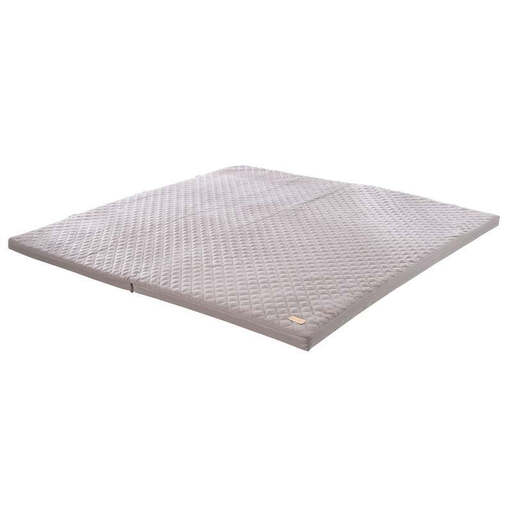
Why it's a great fit: Ideal for parents looking for a multifunctional solution. It serves as a large play mat and folds into a thick mattress for travel cots, making it exceptionally practical for flexible use at home or for overnight stays.
The removable cover, washable at 40°C, solves the hygiene problem. The PU foam core provides excellent cushioning (4 cm as a mat, 8 cm as a mattress) and insulates well against cold floors.
2-in-1 Functionality: Transforms from a 120x120 cm play mat into a 60x120 cm thick sleeping mattress. According to the manufacturer, all textiles are tested for harmful substances.

Why it's a great fit: Perfect for toddlers who are beginning to dive into role-playing. The large surface and double-sided designs (city and farm) provide a stimulating environment for creative play with vehicles and figures.
The polyester material is durable and, according to the manufacturer, easy to clean with a damp cloth, which solves the hygiene issue with older children. The 1.2 cm thickness provides solid cushioning for active play.
Reversible Design: Two play worlds in one product encourage long-lasting fun. The generous 100 x 190 cm surface is also suitable for siblings.
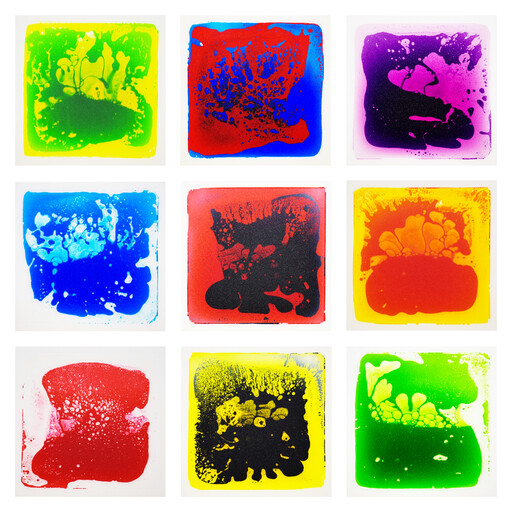
Why it's a great fit: For families who want to create an interactive and visually stimulating play environment. The tiles react to pressure and movement, which encourages sensory perception and curiosity.
According to the manufacturer, the tiles are made from non-toxic materials and filled with cosmetic-grade liquid. The reinforced, non-slip PVC backing ensures stability and safety on smooth floors.
Interactive Experience: The dynamic liquid movement with every step or jump promotes sensory development and creativity in a unique way. No installation required.
We have compiled a complete, up-to-date list of products that fully meet these strict selection criteria and UK safety regulations.
The cleaning method depends on the material. Mats made of XPE or PU foam with a smooth surface can be simply wiped down with a damp cloth and a mild soap solution. Avoid harsh cleaning agents. Fabric mats or covers should be machine-washed according to the manufacturer's instructions to ensure hygienic cleanliness.
A play mat is useful from the very first months of life. As soon as your baby starts spending time on their tummy (around the 2nd or 3rd month), a padded mat provides a comfortable and safe surface. It becomes indispensable when the child begins to roll over, scoot, and crawl (around 6-10 months).
Although the terms are often used interchangeably, there are differences. A play mat is typically made of foam (EVA, PU, XPE) and is characterised by its cushioning and insulating properties. It is often water-repellent. A play blanket is usually made of fabric, is softer and more flexible, but generally offers less padding and protection from bumps and cold. It works well as a soft layer on top of existing carpets.