
Lieferung heute & morgen

Qualitätsgarantie

Willkommens-Angebote freischalten: KOSTENLOSE Lieferung | Bis zu 80 % RABATT | Kostenlose 30-Tage-JoyPlus-Testphase
App herunterladen
A play mat for children should cover the floor, be easy to clean and stay securely in place during everyday use. In practice, unclear material details, undersized mats or poorly fitting connectors can often lead to the wrong purchase. This applies to families as well as nurseries, schools and childcare settings.
A non-slip backing can help limit movement, but it’s no substitute for a flat, clean surface. Dust, moisture and smooth flooring can all affect grip. With an interlocking play mat, the pieces should also fit together fully. Open gaps or raised edge pieces can get in the way in a play area.
Descriptions such as “safe”, “eco-friendly” or “free from harmful substances” shouldn’t be taken at face value. Check whether the material, manufacturer and relevant safety information are listed. With an EVA foam mat, for example, the type of material, thickness, smell when first unpacked and care instructions are all useful points to consider.
A single baby play mat may be enough for a baby or a small play area, while a children’s play rug for several children will need considerably more space. With interlocking mats, it’s not just the number of pieces that matters, but also the usable inner dimensions, excluding the edge pieces. For movement activities, remember to leave extra space around the mat.
EVA foam is widely used in foam mats for children. It’s lightweight, can usually be wiped clean with a damp cloth and can provide a soft surface. Terms such as “non-toxic” or “harmless” should be understood as claims made by the manufacturer, not as blanket guarantees for every use.
Look for:
You can’t judge whether a play mat is free from harmful substances based on a marketing term alone. Products marketed as toys may need to meet European requirements, depending on their design. However, a CE mark is not a general quality assessment for every floor mat. If you’re unsure, refer to the product information and safety guidance provided with the specific item.
A non-slip floor mat should be used on a dry, flat and clean surface. For interlocking systems, check whether the pieces fit snugly together and whether edge strips are included. A folding play mat should lie flat along the folds, without the edges easily lifting up.
For sensory floor tiles, there are a few additional practical points to consider: are they intended for indoor use only? Is the surface still suitable if it gets wet? According to the product details, the Art3d tiles have a reinforced PVC anti-slip base. The description specifies that they’re designed for indoor use.
Measure the space before you buy. For a group of children or a movement room, a modular system made up of several pieces may be more flexible than a single mat. Clean a play mat regularly with a slightly damp cloth. Strong cleaning products, prolonged exposure to sunlight and sharp objects can damage the material.
A fitness mat or yoga mat isn’t automatically suitable for babies or play. NBR models such as the Capelli Sport mat are designed for floor exercises and should be used according to the manufacturer’s instructions.
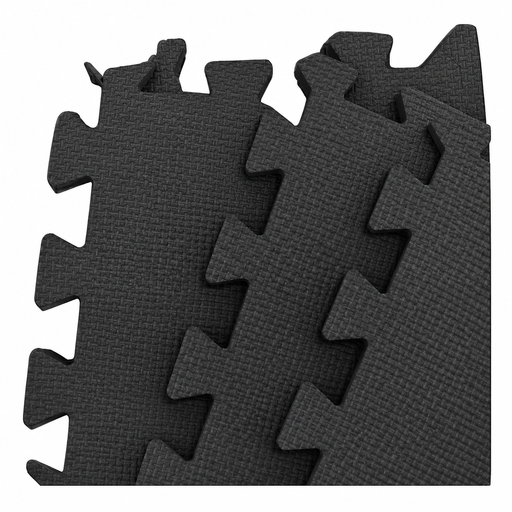
Why this product suits this profile: This compact set is ideal for a small play area, individual floor exercises or a limited space in the classroom.
The stated number of pieces and included edge strips make it easier to plan the area. Before buying, remember to allow for the inner dimensions of 12 × 12 inches per square.
According to the product description: EVA foam, an interlocking design and easy cleaning.
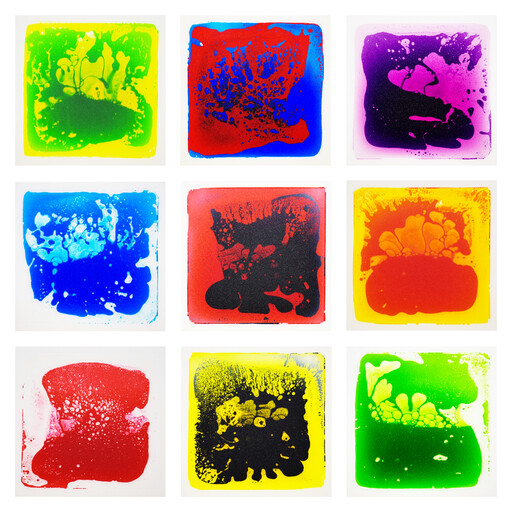
Why this product suits this profile: These nine sensory floor tiles combine a surface you can walk on with visible movement of the liquid inside. They’re suited to indoor play areas and educational settings.
The product description specifies a reinforced PVC anti-slip base and indoor use only. This makes it easier to plan where the tiles can be used.
According to the manufacturer: nine tiles, dynamic liquid movement and no assembly required.
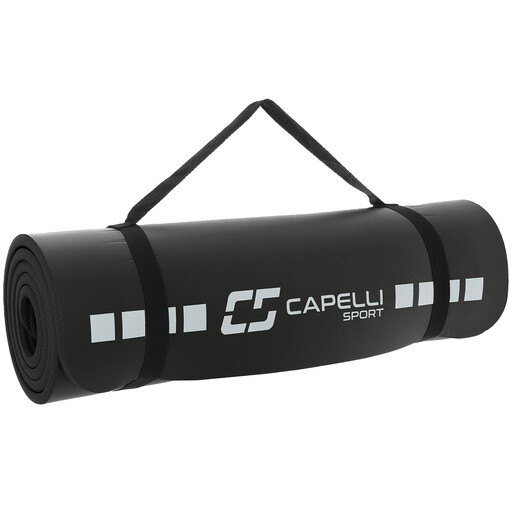
Why this product suits this profile: As a fitness mat, yoga mat or surface for stretching, it’s aimed at adults and families looking for a mat that can be used for different types of exercise.
The dimensions, material and care instructions are all clearly stated. However, it’s designed as an exercise mat and shouldn’t automatically be treated as a play mat for toddlers.
According to the product description: 12 mm NBR foam, a textured surface, a carry strap and dimensions of 61 × 183 cm.

Why this product suits this profile: This reversible play rug gives children a long space for imaginative play in a bedroom or childcare setting.
The product page gives a recommended age of two years and up, along with a warning for younger children. This makes it easier to check whether it’s suitable for the intended age group.
According to the product description: reversible road and animal designs, 100 × 190 cm and a polyester surface.
We’ve put together a complete, regularly updated list of products that fully meet these strict selection criteria and the safety regulations in force in the EU.
A clean, dry surface and a backing with sufficient grip are essential. With interlocking mats, all the pieces should fit together flush. Depending on the floor, an additional non-slip underlay may be useful, provided the manufacturer recommends one.
Its lifespan depends on how heavily it’s used, as well as how it’s cleaned, stored and how thick the material is. Check the joins, edges and surface regularly. If you notice tears, peeling or areas that have become permanently misshapen, stop using the mat.
That depends on its construction and intended use. A fitness mat or yoga mat is usually designed with suitable dimensions and cushioning for floor exercises. An interlocking play mat, on the other hand, is better suited to modular play areas, light gymnastics or use as a classroom mat. Always follow the relevant manufacturer’s instructions.