
Lieferung heute & morgen

Qualitätsgarantie

Willkommens-Angebote freischalten: KOSTENLOSE Lieferung | Bis zu 80 % RABATT | Kostenlose 30-Tage-JoyPlus-Testphase
App herunterladen
A playhouse is more than just a toy; it's a little world of its own where children can let their imagination run wild. Whether it's an intricately detailed dollhouse, an action-packed toy garage, or a classic wooden playhouse, the selection is vast. But this very variety also has its pitfalls. Many products that look great at first glance turn out to be flimsy or impractical. This guide will help you separate the good from the bad and find a toy house that delivers lasting joy.
Before we dive into the selection criteria, let's look at the most common issues that lead to disappointment in the playroom.
To avoid the pitfalls mentioned above, you should check three key aspects before making a purchase. These will give you an objective basis for your decision.
Your child's safety is the top priority. The CE mark is an essential indicator here. It confirms that the product meets the basic EU health and safety requirements, specifically the EN 71 toy safety standard.
A children's playhouse must match the child's developmental stage.
Consider what type of play your child prefers. Are they a little builder, a caring animal keeper, or a fan of fast-paced car races? An open-ended play concept that can be adapted to different scenarios offers the greatest long-term value. Modular systems from brands like LEGO or Playmobil can be combined with other sets, growing with the child's interests. For example, a toy garage can later be expanded with a car wash or a workshop.
Based on the criteria above, we have compiled a few models for different needs and age groups.
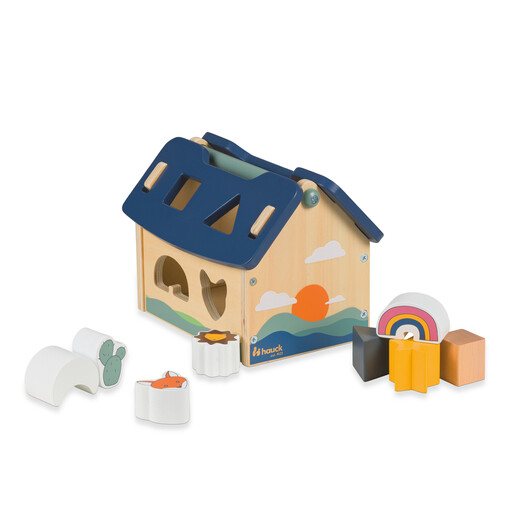
Why It's a Great Fit: Perfect for the youngest children, as it uses the concept of a house to teach fundamental skills like hand-eye coordination and recognising shapes and colours. It is specifically designed for the needs of toddlers.
The toy is made from FSC-certified wood and is robustly constructed, avoiding the pitfall of unstable construction. The clear learning concept ensures lasting, age-appropriate play value.
Specifically promotes fine motor and cognitive skills. The material is sustainable and provides a great sensory experience for little hands.
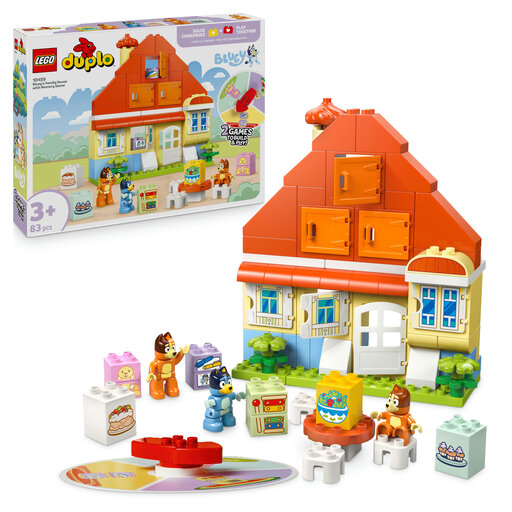
Why It's a Great Fit: This set combines the popular world of the TV series "Bluey" with the creative building and role-playing of LEGO DUPLO. Children can recreate familiar scenes or invent their own family stories.
The proven LEGO quality avoids the pitfall of unstable materials. As part of the DUPLO system, the set is infinitely expandable, thus bypassing the problem of limited play depth.
Combines building, role-playing, and an integrated memory game to promote various skills. High recognition value for fans of the series.
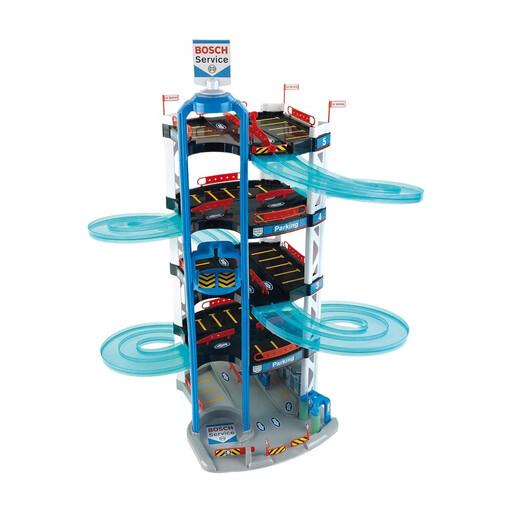
Why It's a Great Fit: This toy garage is perfect for kids who love action and vehicles. With five levels, a lift, and a double-lane ramp for races, it offers a dynamic play experience that promotes spatial reasoning.
Standing 85 cm tall, this garage avoids the misleading size pitfall. The sturdy construction and clear, action-packed play concept ensure long-lasting fun.
The double-lane ramp allows for exciting races. The integrated fuelling and washing station on the ground floor expands the role-playing possibilities.
We have compiled a complete, up-to-date list of products that fully meet these strict selection criteria and European safety regulations.
Always look for the CE marking, which confirms that the product complies with EU safety standards (especially EN 71). Check the toy for a stable construction, rounded edges, and the absence of small, swallowable parts, particularly for toys intended for children under three. For a wooden playhouse, an FSC certification is an additional quality mark for tested materials.
Both materials have their advantages. A wooden playhouse is often very durable, has a pleasant tactile feel, and can be a sustainable choice if properly certified. Plastic models, such as a toy garage or a dollhouse from brands like Playmobil or Barbie, are often more colourful, lighter, and offer more detailed, moulded play worlds. The decision ultimately depends on the desired aesthetic and your child's preferred style of play.
Choose models that are expandable or encourage open-ended play concepts. Modular systems like LEGO or Playmobil can be combined with other sets and grow with the child. A more thematically neutral playhouse can be reimagined again and again with different figures and accessories—sometimes as a toy horse stable, other times as a play kitchen, or as a home for an entire family of figures.